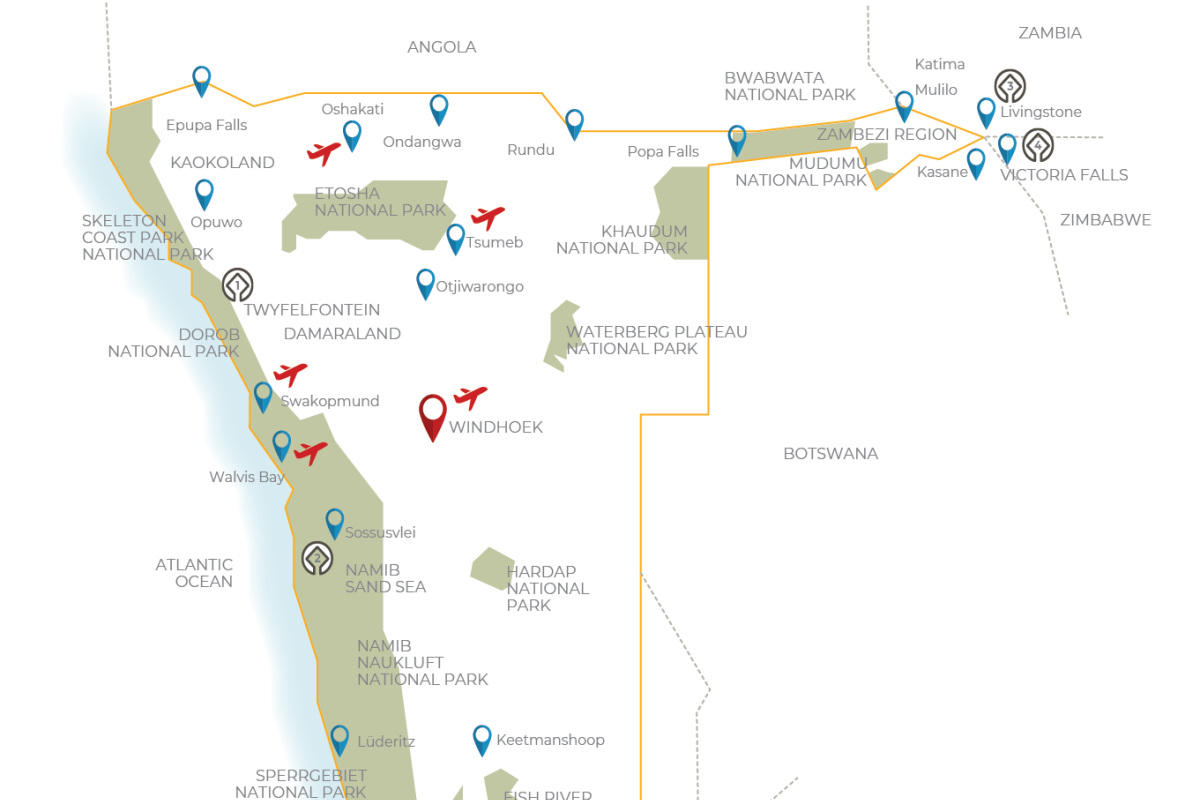
Desert, shipwrecks and wildlife
Desert, shipwrecks and wildlife
13-day/12-night desert safari
Namibia is big sky country
At least 55-million years old, the Namib Desert – which covers most of Namibia’s territory – is the world’s most ancient desert, featuring the highest dunes. But don’t be fooled: there is so much more to this country than heat and sand.
Look a little closer and you’ll soon discover that Namibia boasts incredible wildlife experiences, from desert-adapted elephants and rhinos to the beautiful oryx. Look down to see amazing flora, such as the peculiar Welwitschia mirabilis, a desert plant that lives for 3 000 years. And look up, to be dazzled by millions and millions of stars.
Everywhere you go in Namibia, you will feast on experiences found nowhere else on Earth. And no matter where you are, Namibia will welcome you with open arms and a generous heart.
 At a Glance
 Highlights
 Eco-friendly camps with minimal environmental footprints
World-class stargazing
Namib Desert – highest dunes and Deadvlei
Cultural experiences
Seal colony at Möwe Bay
Desert-adapted wildlife
Four of the Big Five in abundance
Eco-friendly camps with minimal environmental footprints
World-class stargazing
Namib Desert – highest dunes and Deadvlei
Cultural experiences
Seal colony at Möwe Bay
Desert-adapted wildlife
Four of the Big Five in abundance Location
13-day/12-night desert safari
Create your African story, your way
Does this itinerary inspire you to create your own unforgettable African story? Speak to your Travel Architect about curating your perfect African journey.Tell us the Africa you imagine. We’ll take you there!
Book a time to chat

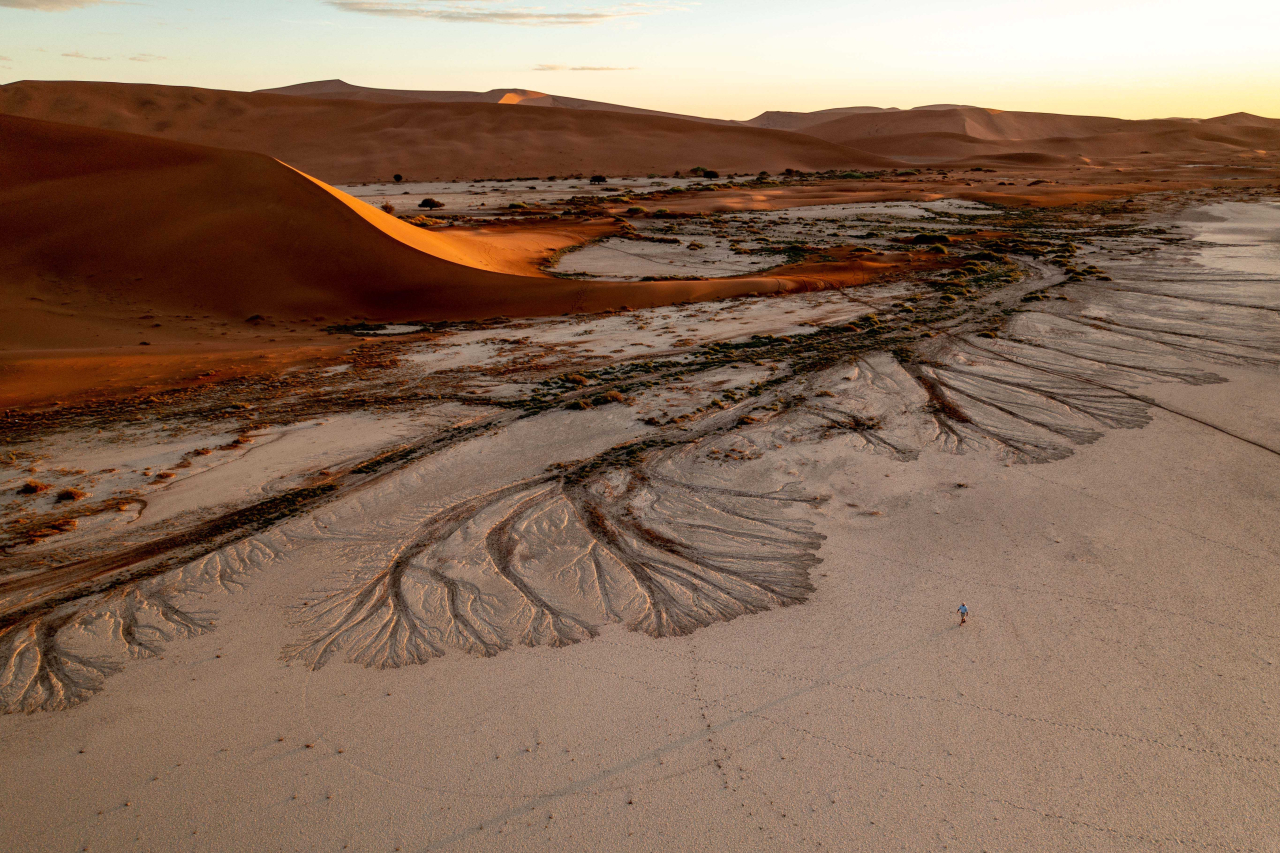
NamibRand Nature Reserve
NamibRand Nature Reserve is found near the famous Sossusvlei in south-west Namibia and shares a 100km (62mi) border with the Namib-Naukluft National Park, Africa’s largest national park that protects the world’s oldest desert (including the Namib Sand Sea, a UNESCO World Heritage Site).
NamibRand is a private conservation area covering a vast 215 000ha
(531 000 acres) – one of the largest private reserves in Southern Africa. The reserve, dubbed a “desert miracle”, is a non-profit initiative established to conserve the desert’s unique environment and ecology.
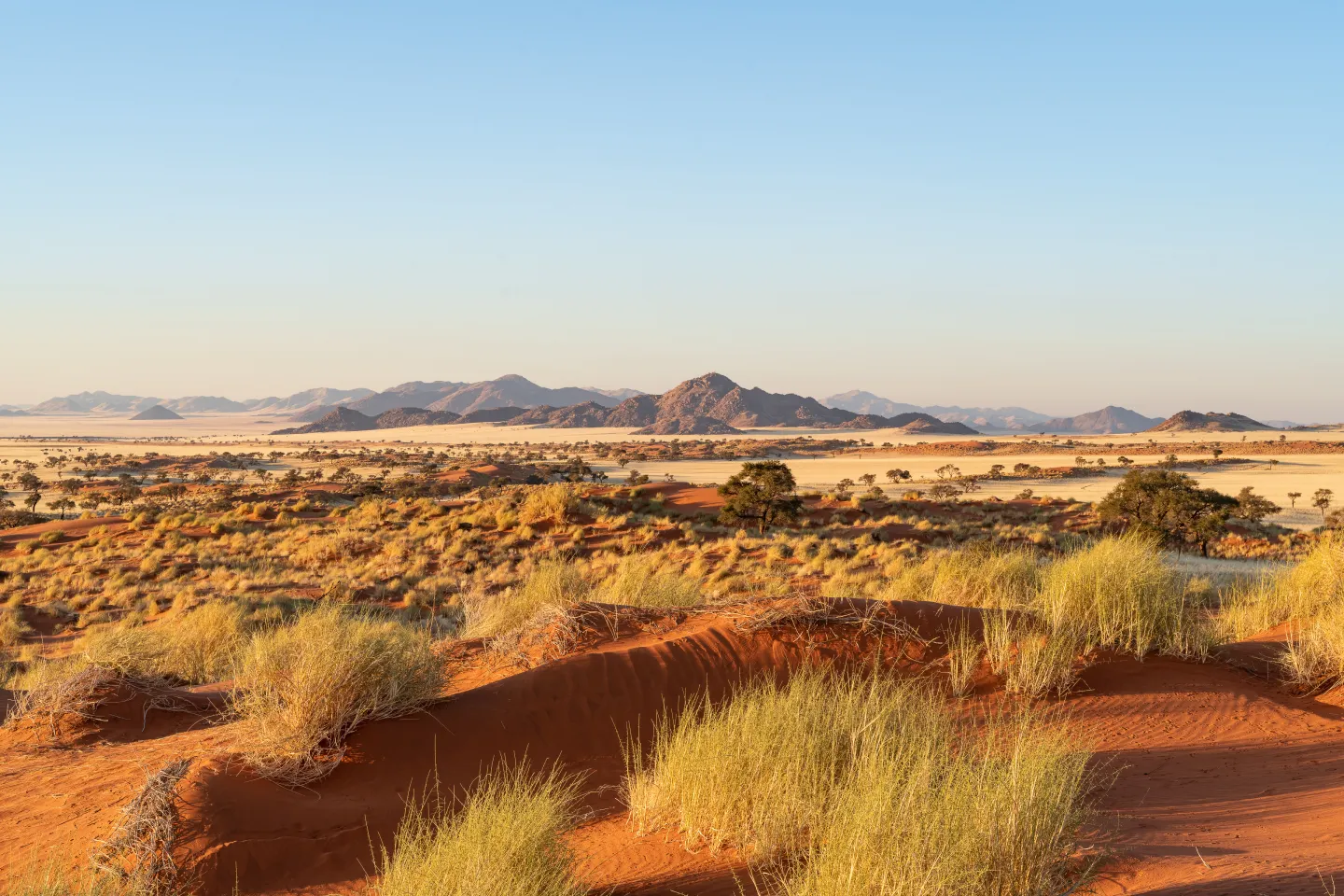
The landscape is extraordinary, with vast swathes of arid desert, gravel and sand plains, and the distinct reddish dunes that made the area famous. Pockets of green vegetation, with rocky outcrops filling the skyline, are backed by beautiful mountains.
One of the naturally darkest places on Earth, it is the first reserve in Africa, and in any developing nation, to be awarded International Dark Sky Reserve Gold Tier status for unparalleled stargazing.
Excessive artificial lighting can have a major negative effect on plant species as well as nocturnal and diurnal animal species, so here conservation efforts are taken a step further – lighting guidelines, such as the maximum allowable brightness of outdoor light fixtures and the use of vehicle headlights, are enforced to further protect the pristine night sky and enhance the experience for guests.
The reserve was awarded Wilderness Quiet Park status by Quiet Parks International (QPI) in 2024 – also a first for Africa and only the fourth in the world – in recognition of preserving the tranquillity of the reserve, promoting quiet places, and conserving our natural world through responsible and low-impact tourism.
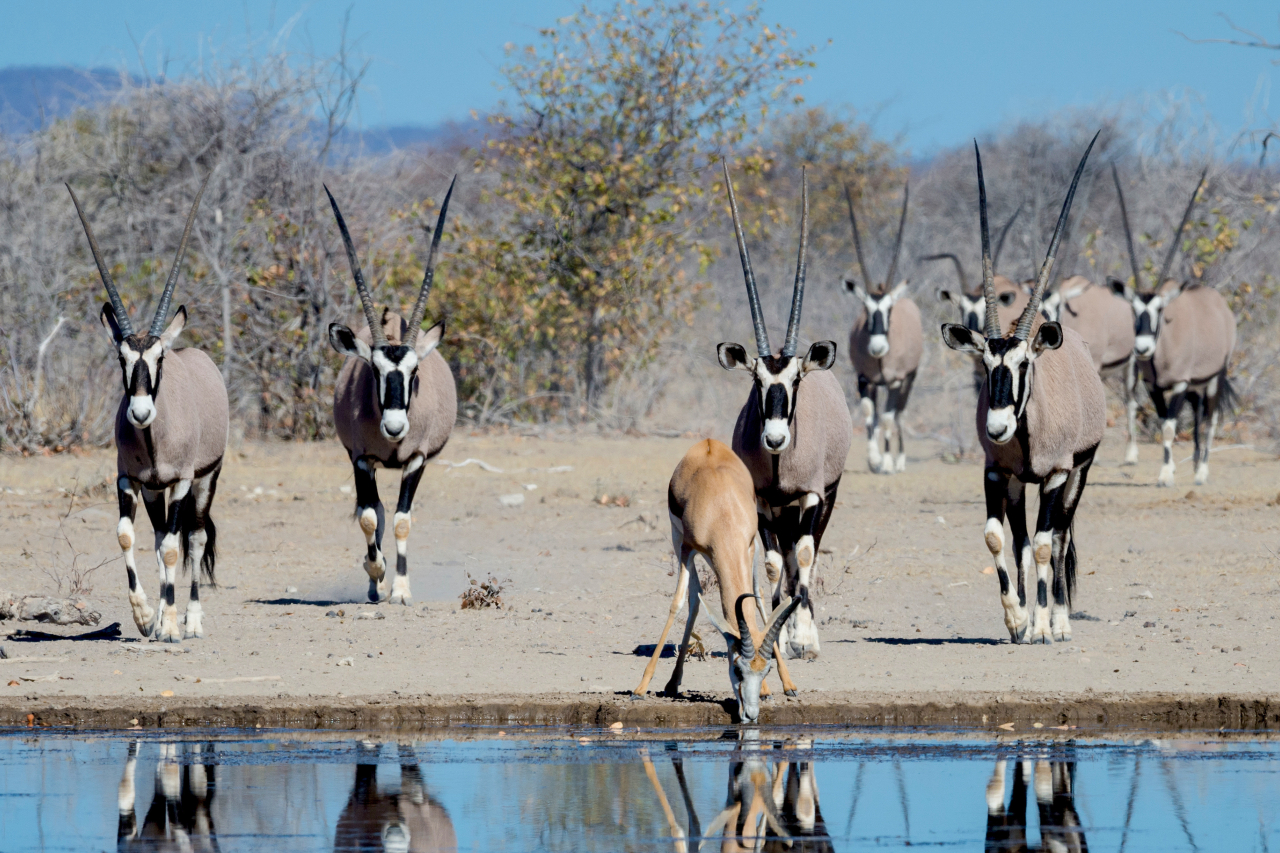
NamibRand supports wildlife uniquely adapted to desert conditions. Along with the iconic oryx, other wildlife found here includes springbok, kudu, Hartmann’s and Burchell’s zebra, giraffe, klipspringer, steenbok, hartebeest, baboons, and predators such as leopard, spotted and brown hyena, black-backed jackal, aardwolf, bat-eared fox, Cape fox, African wildcat, caracal and genet. To date, 150 bird species have been recorded.
Kwessi Dunes
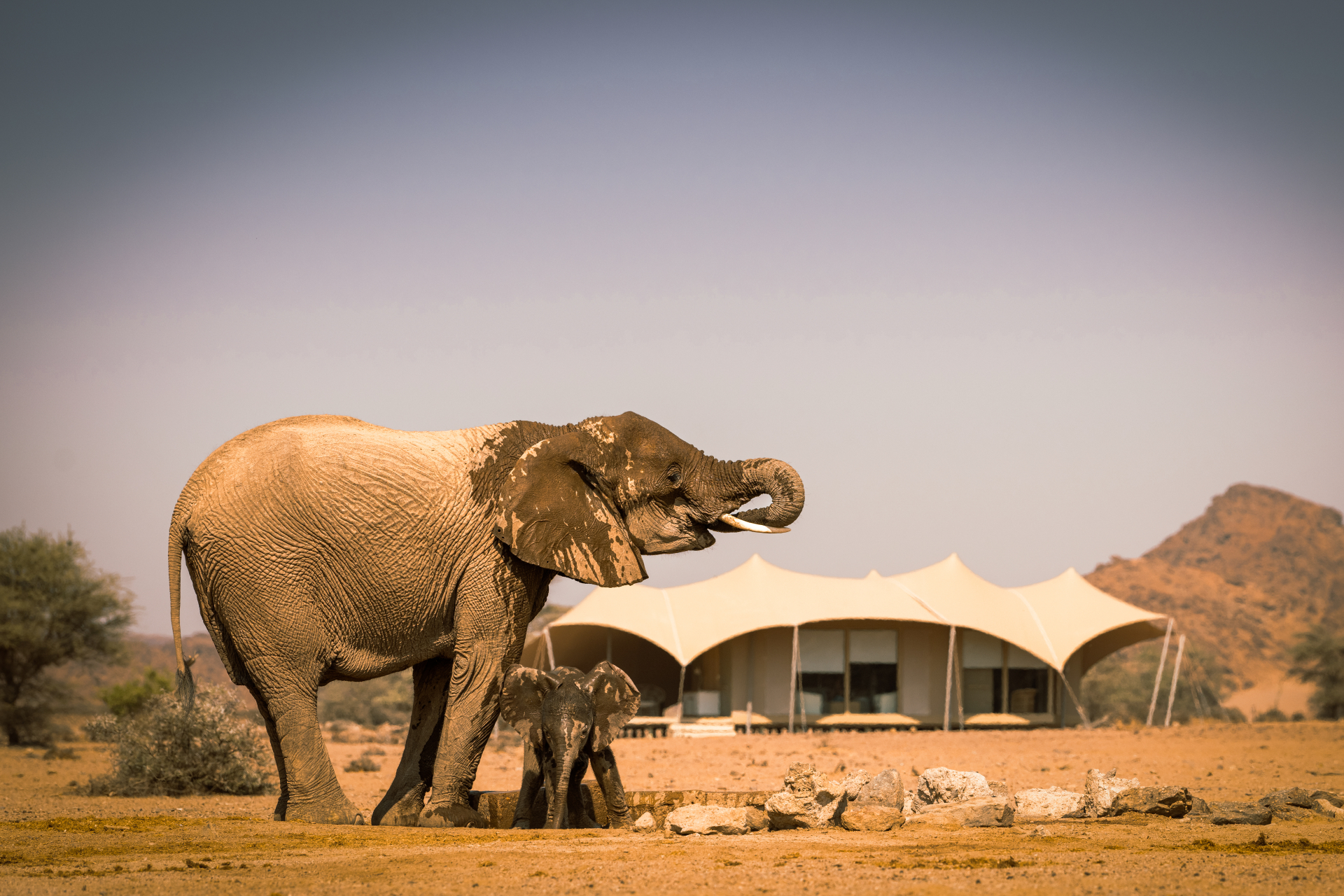
Kwessie Dunes is found on a 15 000ha (37 000 acre) private concession within NamibRand Nature Reserve. The luxury lodge offers accommodation in thatched, canvas rooms, each with a separate, completely open “stargazer” room at the back for the ultimate celestial experience.
You will enjoy morning and afternoon scenic drives, guided nature walks, sky bed experiences with stargazing, quad biking and a day trip to the famed Sossusvlei.
Optional experiences include hot air ballooning, horse riding, e-bike excursions and scenic helicopter flights.
Skeleton Coast National Park
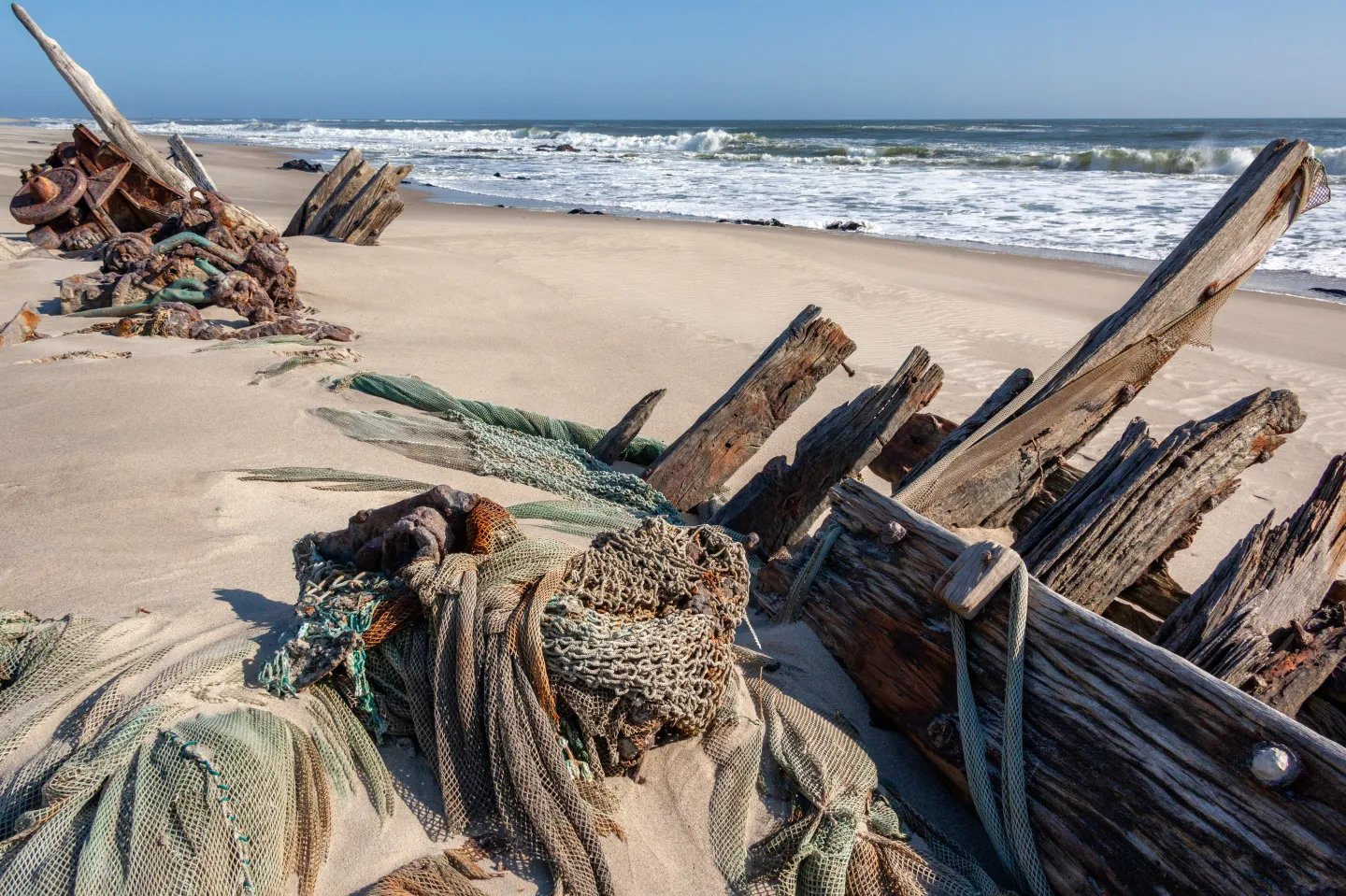
The Skeleton Coast, the northern part of the Atlantic coast of Namibia, stretches from the Kunene River, immediately south of Angola, to the Swakop River. It is named for the many ships that sank here over the past few centuries, and for the bleached whale and seal bones which covered the shore when the whaling industry was still active.
The rusted remains of over a thousand ghostly vessels of various sizes litter the coast, often surrounded by swirling mists, making for moody and dramatic visuals. Few attractions are as evocative and atmospheric as these haunting and mostly inaccessible white shores.
The 20 000km2 (7 700sq mi) park is one of the most inhospitable and least-visited places on Earth. The indigenous San people of the Namibian interior called the region "The Land God Made in Anger", while Portuguese sailors referred to it as "The Gates of Hell".
The cold Benguela current gives rise to dense ocean fogs for much of the year, creating a unique ecosystem that gives life to fascinating desert-adapted plants such as the strange “elephant’s foot” plant that anchors itself in rock crevices, while desert succulents like lithops look exactly like pebbles until a tiny yellow flower emerges.
The region is home to irreplaceable and vulnerable wildlife habitat for species of the highest conservation importance, adapted to surviving in the harsh environment, including black rhino, desert elephant, black-faced impala and Hartmann’s mountain zebra. It is home to the only other viable lion population in Namibia outside of Etosha National Park. Brown hyenas have been seen patrolling the shoreline, and elephants have been filmed surfing down dunes.
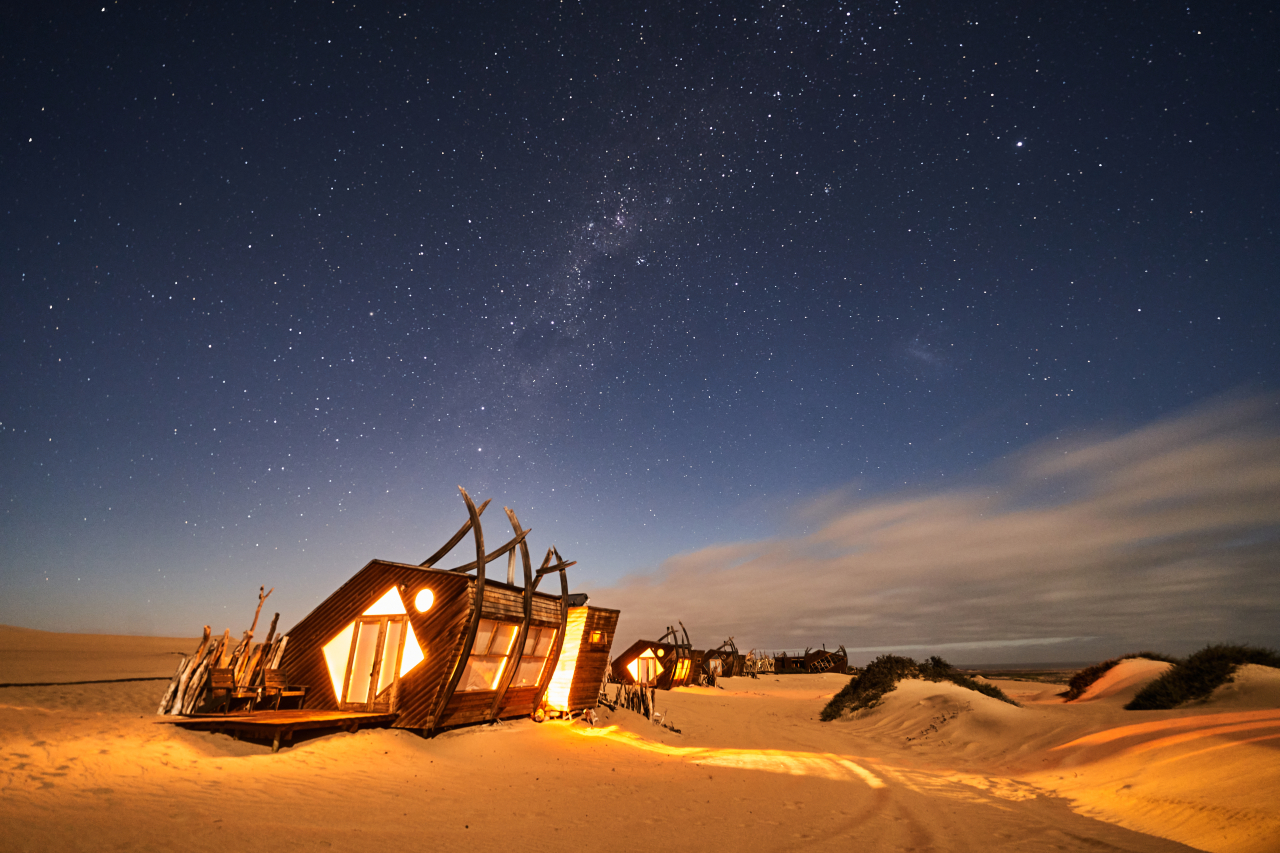
Shipwreck Lodge
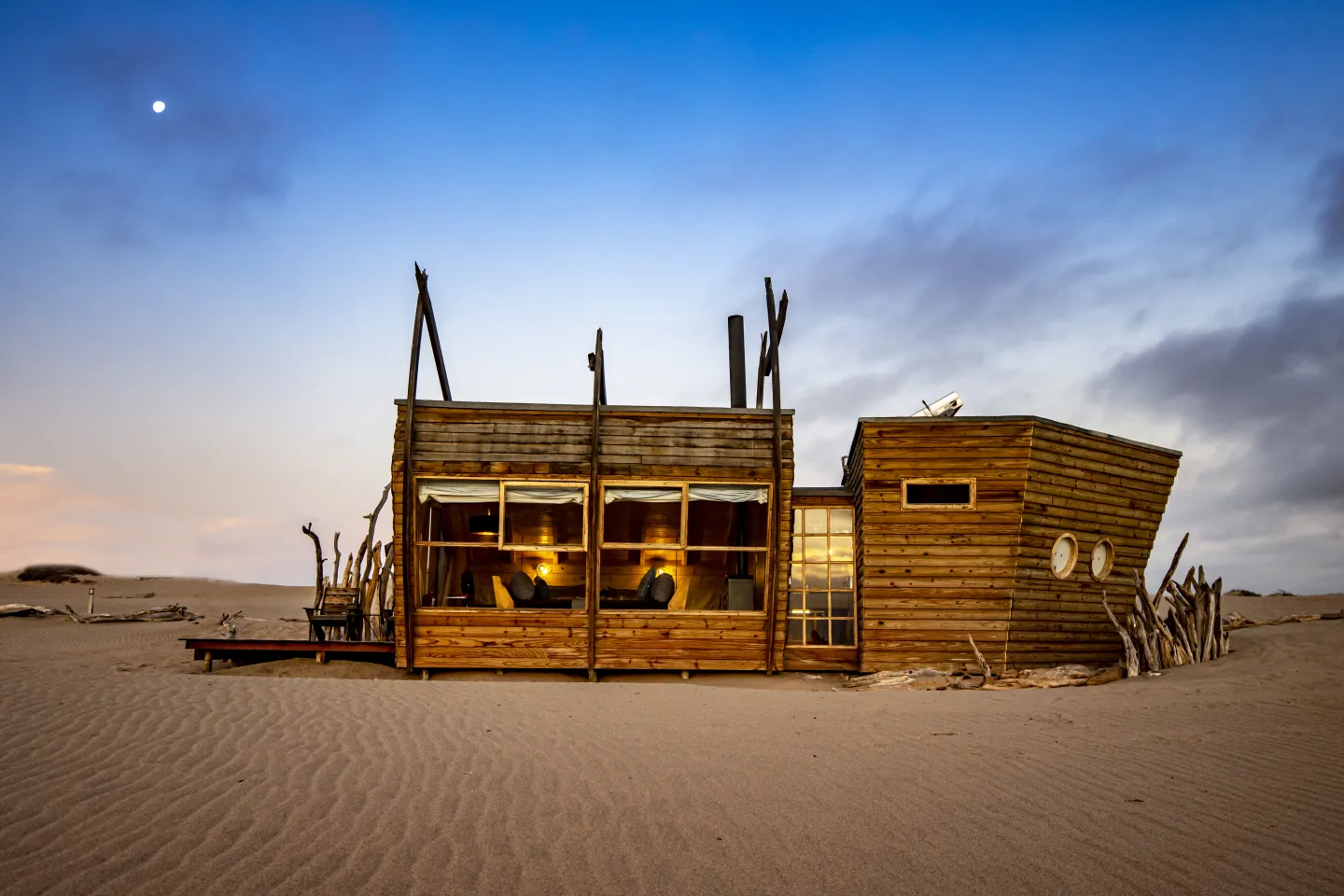
Designed to resemble the shipwrecks that line this hauntingly beautiful coastline, the unique and dramatic Shipwreck Lodge is the only lodge located within the Skeleton Coast National Park, in a restricted area between the Hoarusib and Hoanib Rivers. A place shrouded in mystery and swirling clouds of mist, the contemporary and luxury lodge perfectly mirrors the environment, with spectacular sweeping views across the ocean where marine life prospers, and Cape fur seals congregate on the craggy shoreline.
Revel in this exquisite terrain – magnificently raw and rugged – and immerse yourself in the profound silence while enjoying a sundowner from atop a formidable dune.
An array of experiences is available to choose from during your stay, from nature drives, nature walks and sundowner drives on the roaring dunes, to sandboarding and quad biking. A day excursion to the Möwe Bay seal colony, including stops at the Suiderkus and Karimona shipwrecks, as well as the Westies diamond mine, and the remains of the Ventura bomber aircraft, promises to be fascinating.
Half-day 4x4 excursions to the Hoarusib River, including the geologically fascinating Clay Castles and wildlife spotting in the wet season, are highlights as well.
Hoanib Valley
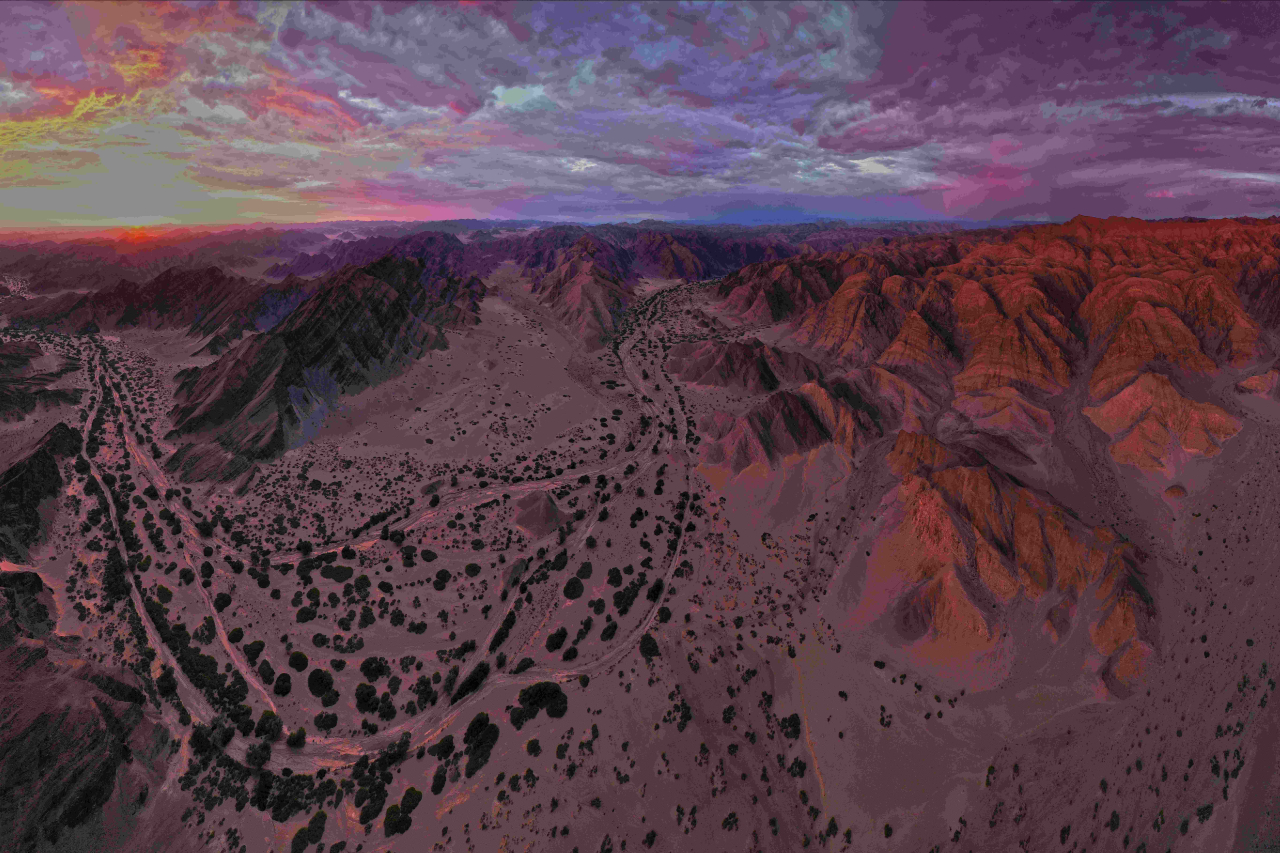
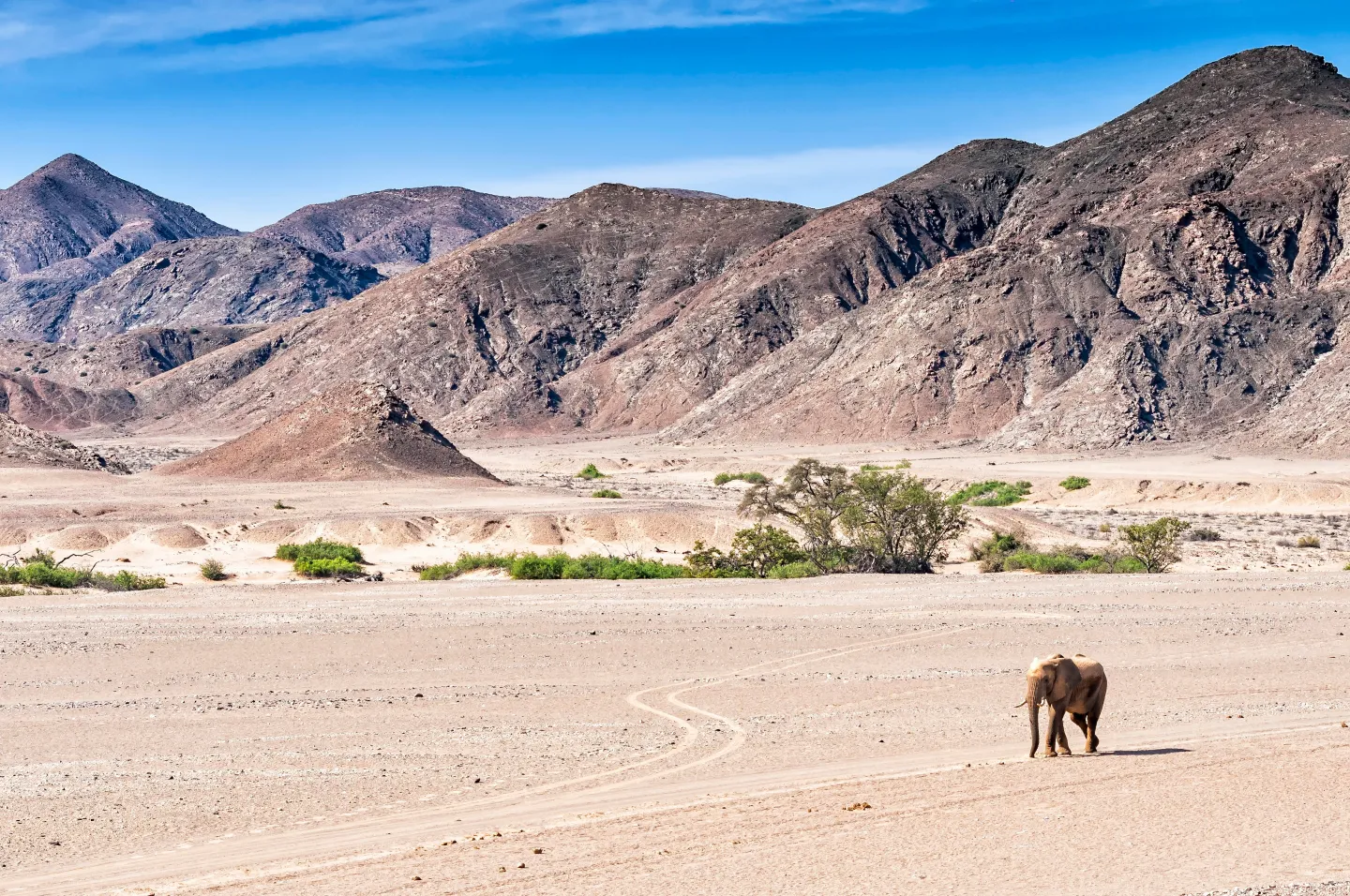
The Hoanib Valley is found in the remote and seemingly barren Kaokoveld region, in north-western Namibia. This wild and arid landscape is untouched and hauntingly beautiful. It is a dramatic mix of towering rocky mountains, vast dunes, and ancient, dry riverbeds (such as the sporadically flowing Hoanib River) that are crucial for wildlife. The area is renowned for its desert-adapted wildlife species, including elephants, giraffes, oryx and springbok, and sometimes even desert lions and rhinos.
Giraffes across Africa are under threat and the Giraffe Conservation Foundation (GCF) is a research project to further the understanding of the Angolan subspecies, and create awareness of the plight of this stately and beautiful creature. The GCF is the only organisation in the world that focuses on the conservation and management of giraffes in the wild throughout Africa.
Herero and Himba settlements dot the area, offering guests a cultural experience and insights into indigenous nomadic life in this harsh environment.
Hoanib Valley Camp
Hoanib Valley Camp is a secluded desert escape tucked into a hidden valley in the Sesfontein Community Conservancy Area. It sits on the bank of the Obias River and overlooks the Hoanib River Valley, a linear oasis running through one of the most beautiful deserts in Africa.
The location offers a seemingly endless vista of plains and dunes backed by mountains. The design and understated, luxury furnishings are inspired by the rugged environment – the rich ochre of the dunes, the geometric patterns of the Himba people, and the giraffe that inspired the project. The tented camp is raised on spacious wooden decks, and each tent has a private verandah.
Daily experiences include morning and afternoon desert game drives, nature walks, learning about the giraffe research in the area, spending a morning with the Herero and Himba communities, and tracking the desert-adapted rhino of the area on foot.
Etosha Heights Private Reserve
Etosha Heights is a 600km2 (232sq mi) private reserve that shares a 65km (40mi) unfenced border with Namibia’s celebrated Etosha National Park to the north, offering the renowned wildlife experience without the crowds. The reserve has transitioned from an agricultural and hunting area to what is now a conservation success story and an extension of Etosha National Park.
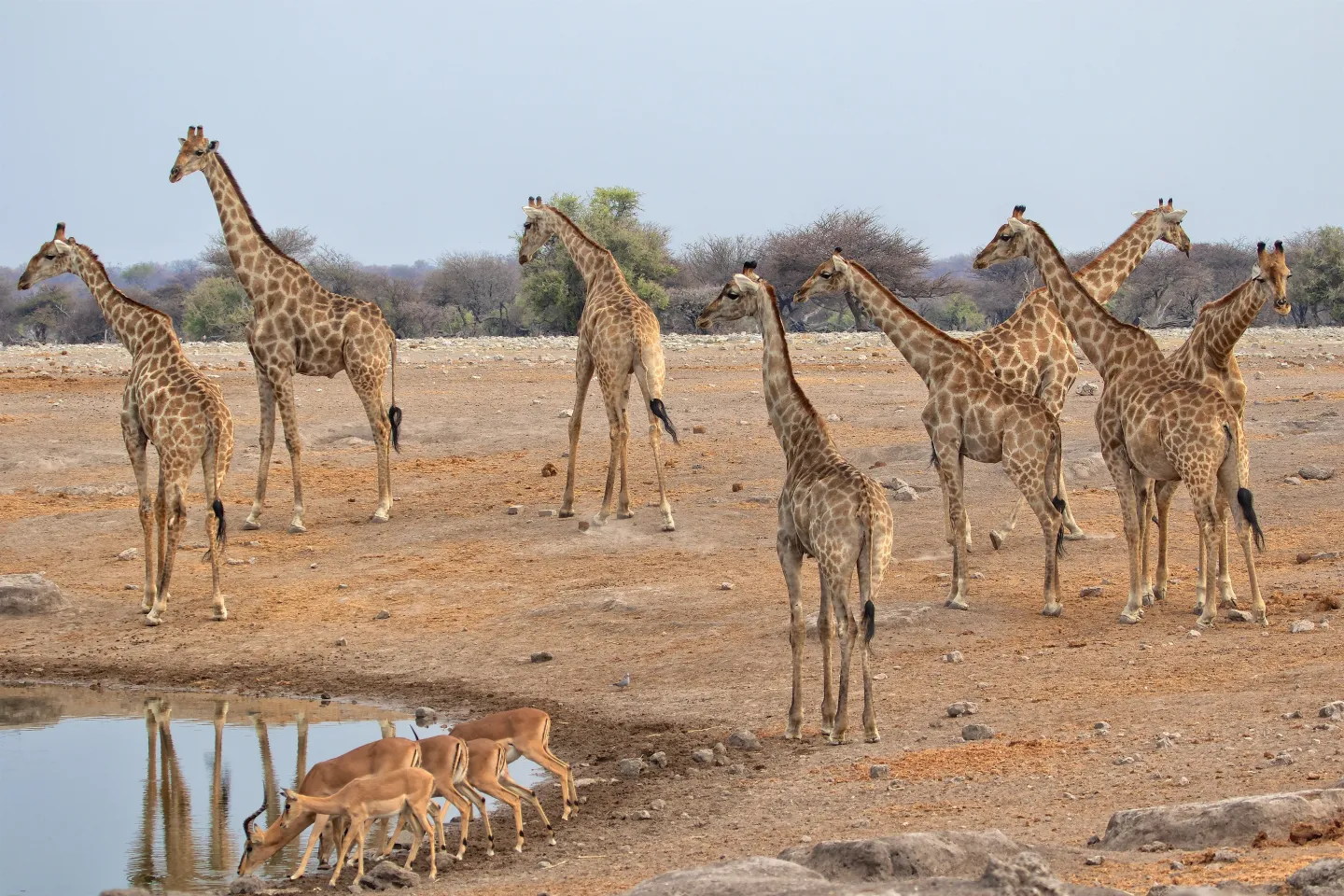
Vast open plains that stretch to the horizon are dotted with mopane woodland, thickets and riverine forests, surrounded by dolomite hills. With 120 mammal species and over 320 recorded bird species, it is a photographer’s dream come true.
Wildlife, including the rare black-faced impala, is abundant in the diverse habitat, and lions and elephants are the stars of the show. The area is also renowned for rhino sightings.
Safarihoek
Sitting on a hill, Safarihoek is raised high above the savannah on wooden platforms, with panoramic views over a small waterhole and the never-ending plains beyond. It is a serene and stylish lodge with luxury thatched chalets that are spacious and light, offering guests all the creature comforts expected from upscale safari accommodation.
Enjoy morning and afternoon game drives on the reserve, track the elusive black and white rhino, take night drives to spot the reserve’s nocturnal creatures, visit an anti-poaching station, or spend a morning in the unique, double-tiered photography hide to get closer than ever to Namibia’s giants. In-room spa treatments round off the experience. Here, you can simply sit on your private deck and watch wild Africa wander by.
Departure
It’s sometimes said that you cry twice with Namibia: when you arrive, and again when you leave. What had initially appeared to be barren and dry has revealed itself to be a land of quiet opulence, whose dunes, coastlines, valleys and plains are etched into your memory like your own masterpiece. It’s OK to shed a farewell tear; people will understand.
Speak to your Travel Architect
Create your African story, your way
Does this itinerary inspire you to create your own unforgettable African story? Speak to your Travel Architect about curating your perfect African journey.
Tell us the Africa you imagine. We’ll take you there!
Why travel with Your Africa?
It starts with you
No two journeys are the same. We design each itinerary around who you are and how you want to experience Africa.
Seamless planning
Your dedicated Travel Architect handles everything. All you need to do is guide us on what your ideal African journey looks like.
Travel, your way
You decide how you want to explore Africa. This is your Africa, your story, your way.
Desert, shipwrecks and wildlife gallery
Desert, shipwrecks and wildlife FAQs
This itinerary is excellent during the dry season, from June to October, and into December. During these months the weather is pleasant, with clear skies and minimal rain, becoming hotter later on. Wildlife in Etosha Heights will congregate around the waterholes, making for spectacular and predictable game viewing. This is also the most popular time, so advance booking is essential.
This is a fly-in safari, meaning you will travel between reserves in small safari aircraft. These flights are a highlight, offering breathtaking aerial views of the changing landscapes. Due to the small planes, luggage restrictions are strict and non-negotiable: you are limited to 15kg-20kg (33lb-44lb) per person, packed in a soft-sided duffel bag (no hard-shell suitcases).
Layers are key. The desert can be hot during the day but nights and early mornings are surprisingly cold. The Skeleton Coast is often cool and misty due to the Benguela current.
Pack:
- Lightweight, neutral-coloured clothing for game drives
- A warm fleece and a windproof jacket for cold mornings and coastal fog
- A wide-brimmed hat, sunglasses and high-SPF sunscreen
- Comfortable walking shoes
- Smart-casual wear for evenings at the luxury lodges
You will see four of the Big Five in abundance. Etosha Heights is renowned for its fantastic sightings of lion, leopard, elephant and rhino (both black and white). However, the fifth member, the Cape Buffalo, is not found in these arid regions of Namibia. Instead, this itinerary offers unique sightings you won’t get elsewhere, such as desert-adapted elephants and lions.
Most activities are not strenuous. Game drives and scenic drives involve sitting in a vehicle. However, activities like guided nature walks, dune climbing at Sossusvlei and especially rhino tracking on foot in the Hoanib Valley will require a moderate level of fitness. You should be comfortable walking over uneven, sandy terrain for a couple of hours.
Prepare for a digital detox. This is one of the most remote places on Earth. Outside of Windhoek, there is little mobile phone service. The luxury lodges you are visiting may offer limited, slow Wi-Fi in the central communal area, but it is not guaranteed in your room. Embrace the opportunity to disconnect and immerse yourself in the profound silence.
The NamibRand is an official Gold Tier International Dark Sky Reserve, one of the darkest accessible places on the planet. There is absolutely no light pollution, allowing the Milky Way to shine so brightly it can cast a shadow. Your “stargazer” room at Kwessi Dunes is designed specifically for this, allowing you to sleep under a breathtaking canopy of stars.
These interactions are arranged by the lodge with communities they have a long-standing, respectful relationship with. Your guide, who understands the local culture and language, will facilitate the visit. The key to a positive experience is respect: always ask for permission before taking photographs, engage with a genuine smile and consider supporting the community by purchasing some of their handcrafted jewellery or crafts.
The official currency is the Namibian dollar (NAD), which is pegged 1:1 to the South African rand (ZAR). The ZAR is accepted everywhere. For tipping and incidental purchases, it’s best to bring cash. US dollars are also widely accepted for tipping at high-end lodges, so a supply of smaller US bills ($10, $20) is very useful.
Its inhospitable nature is what makes it so exclusive and wild. Your safety and comfort are ensured by the luxury of Shipwreck Lodge, the only lodge inside this section of the park. You will explore this rugged environment in comfortable 4x4 vehicles with expert guides, who are masters of navigating the terrain and interpreting its unique ecosystem. It’s a way to experience one of the world’s harshest environments in complete safety and style.