Wildlife and rivers
Wildlife and rivers
9-day/8-night Botswana safari
Explore the exceptional Okavango Delta
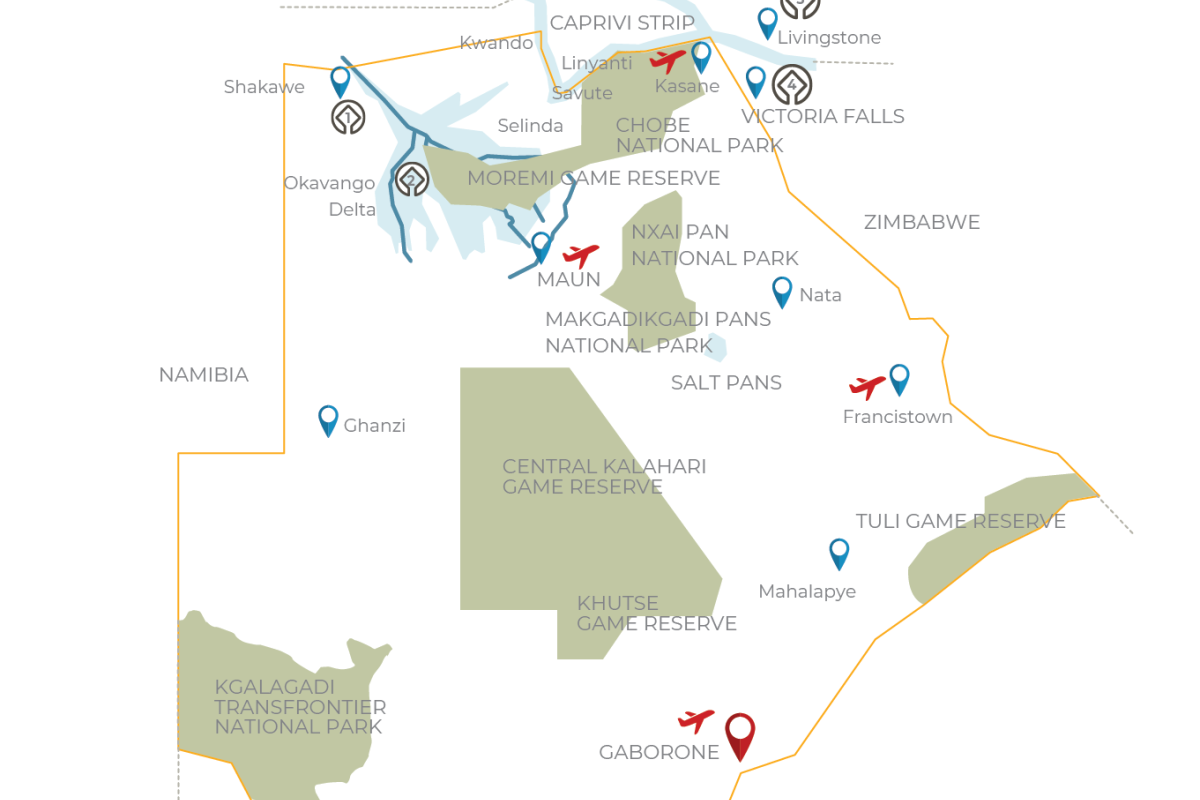
The world’s largest inland delta, the famed Okavango Delta spans a vast 20 000km2 (7 722sq mi). It is fed by the Okavango River, which never reaches the sea; instead, it spills over the Kalahari sands and disappears into the Okavango Delta. The result is a lush landscape that teems year-round with animals and bird species, many endemic.
While its spectacular natural charms are what rightfully draws people to the Okavango Delta, including the second-largest zebra migration in Africa and more than 500 bird species, there’s much more to this UNESCO World Heritage Site.
The Tsodilo Hills, another World Heritage Site recognised for its cultural significance, is a mystical and spiritual place. Known as the “Louvre of the Desert”, these hills are sacred to the Bushman people of northern Botswana and are adorned with over 4 500 rock art paintings dating back as far as 100 000 years.
 At a Glance
 Highlights
 Luxurious bush accommodation
Supreme wildlife viewing (including the Big Five)
Zebra migration
More than 500 bird species
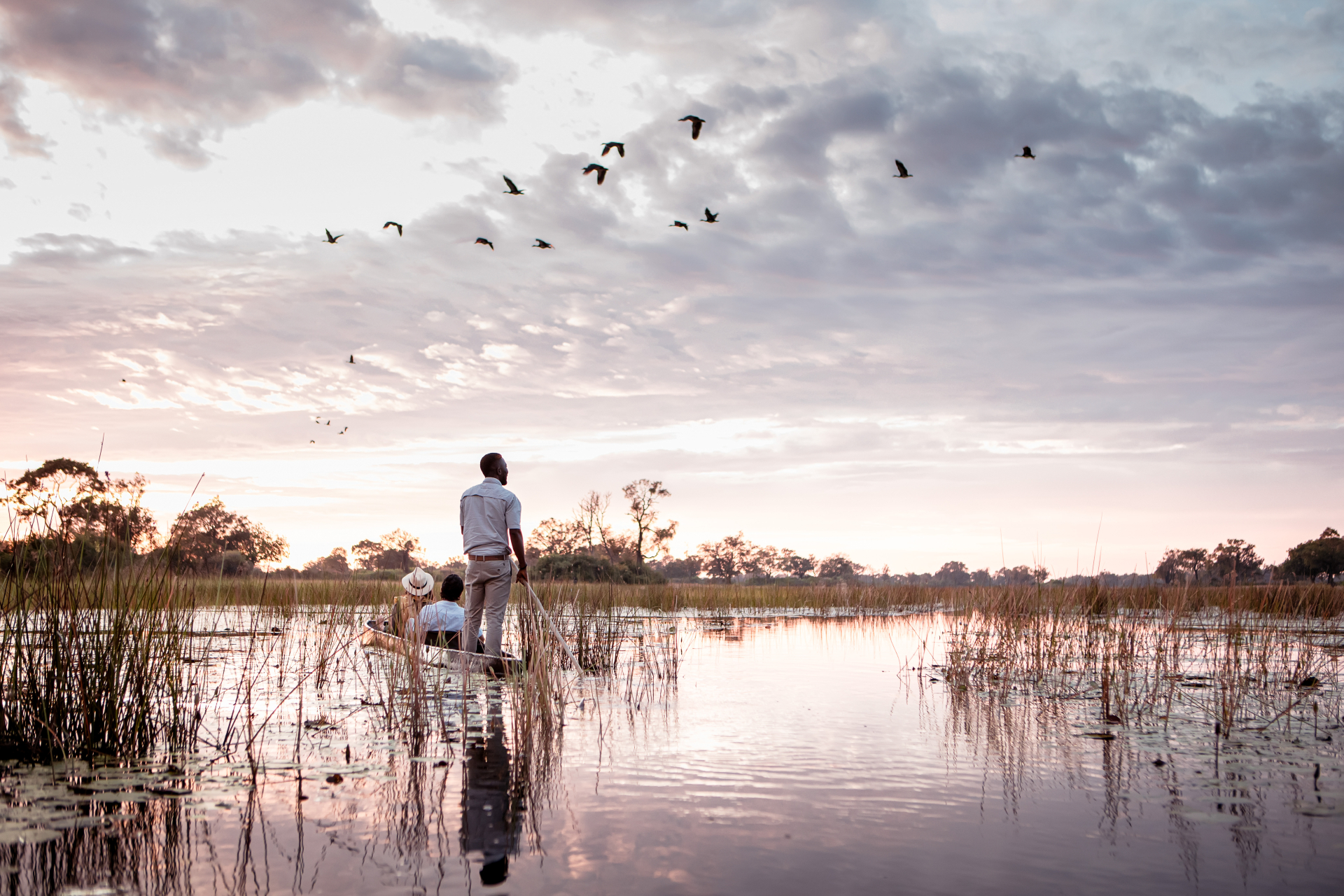
Mokoro boating safari
Exciting angling
Cultural immersion
Luxurious bush accommodation
Supreme wildlife viewing (including the Big Five)
Zebra migration
More than 500 bird species
Mokoro boating safari
Exciting angling
Cultural immersion Location
9-day/8-night Botswana safari
Meet Your Travel Architect
Our Botswana specialists have explored every corner of the Delta. Let us craft a journey uniquely tailored to you.
Book a time to chat

Moremi Game Reserve
The beating heart of the Okavango Delta, Moremi Game Reserve is a wilderness masterpiece. A mosaic of mopane forests, papyrus‑lined lagoons, shimmering floodplains and acacia woodlands, it is one of Africa’s most celebrated wildlife sanctuaries. Proclaimed in 1963 by the visionary BaTawana people, it’s the oldest protected area in the delta and one of the few African reserves created by local communities to safeguard their land and wildlife.
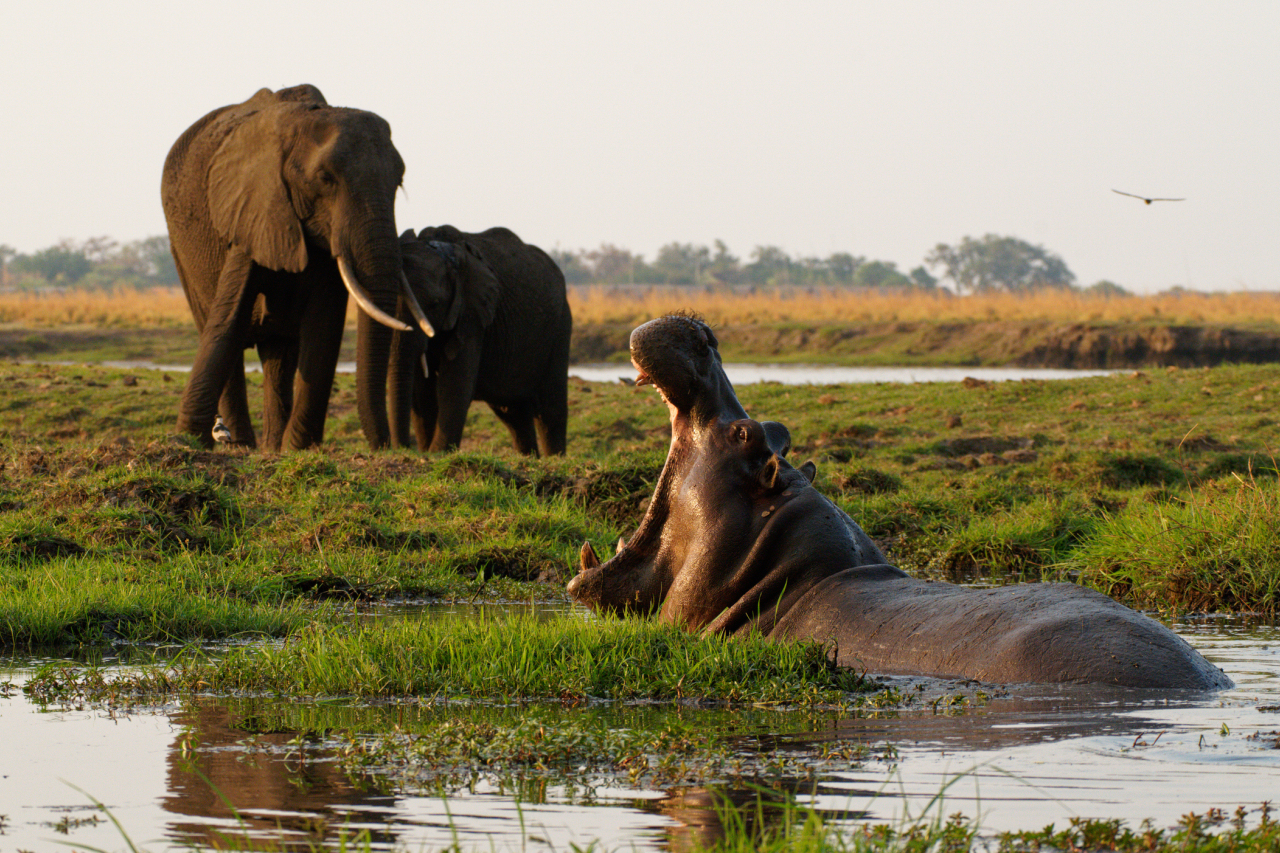
Here, Big Five sightings are just the beginning: Moremi is one of Africa’s most reliable havens for endangered African wild dogs, and predators roam across this ecosystem where land and water constantly reshape each other. Birders will be in heaven: over 500 species thrive here, from the iconic African fish eagle to vibrant seasonal migrants.
The scenery is wilderness poetry: palm‑dotted islands, ancient leadwood trees, lagoons rippling with life, and vast, wildlife‑rich floodplains. Moremi borders Khwai and Chobe, creating one of Africa’s greatest, uninterrupted wildlife corridors, an open stage for elephants, lions, leopards, buffalo, rhino and the full cast of delta creatures.
This is Moremi: wild and soulful. Unforgettable. The kind of place that shifts something inside you the moment your safari vehicle rolls across its ochre sand. If Africa has a pulse, you’ll feel it here.
Camp Xakanaxa
Xakanaxa, offering the essence of an authentic and classic tented camp of a bygone era, has a rich history in the tradition of a Botswana safari experience. It is set high on elevated wooden platforms and decks to maximise the views over the surrounding lagoons and islands.
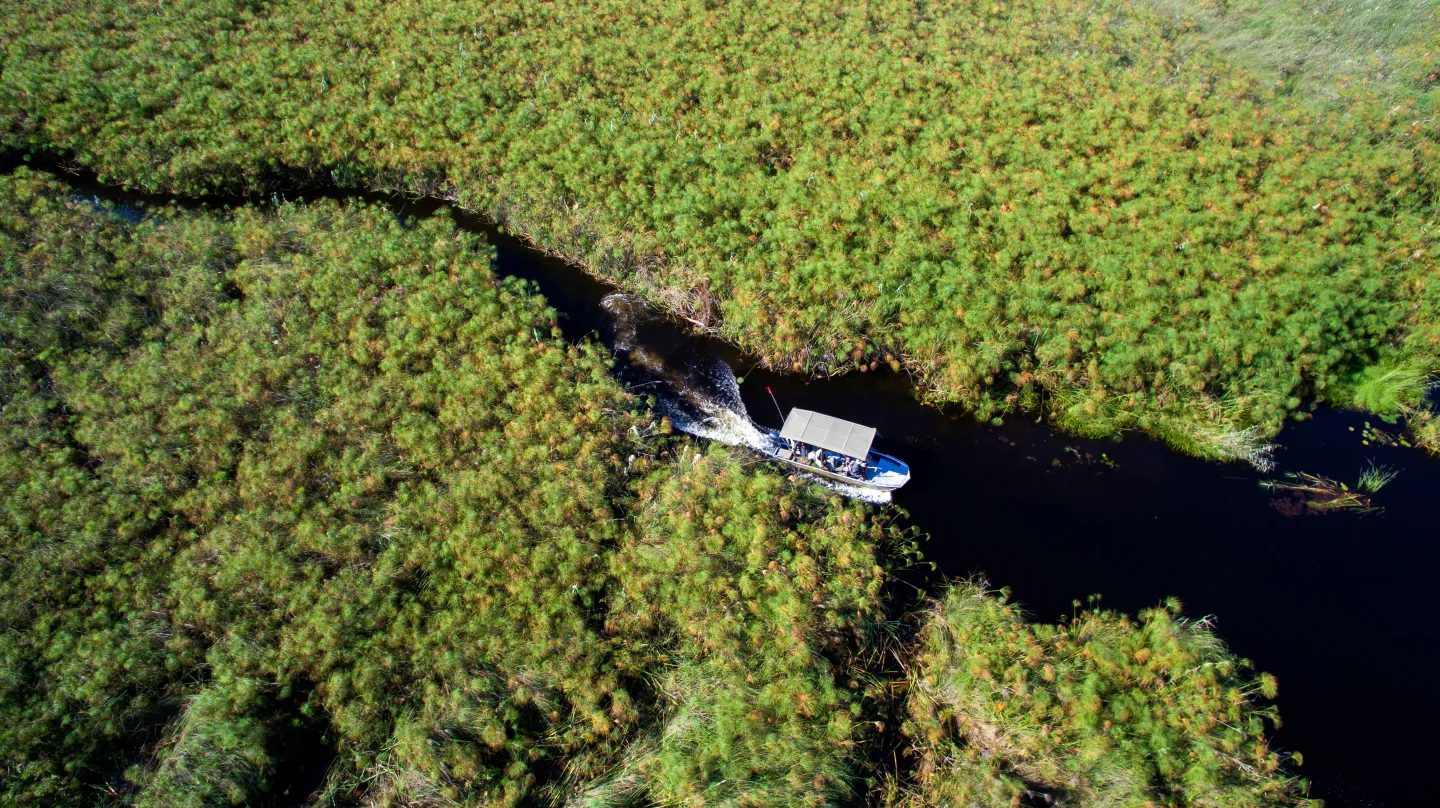
Positioned in the shade of towering trees in the heart of the Moremi Game Reserve, the camp stretches along the banks of the Khwai River and overlooks the Xakanaxa Lagoon. It is one of the very few safari camps that offer guests an authentic, year-round Okavango Delta land and water safari experience by aluminium-hulled, motorised boat. Accommodation is in spacious, all-canvas, classic Meru-style luxury safari tents, each with a private viewing deck with comfortable loungers.
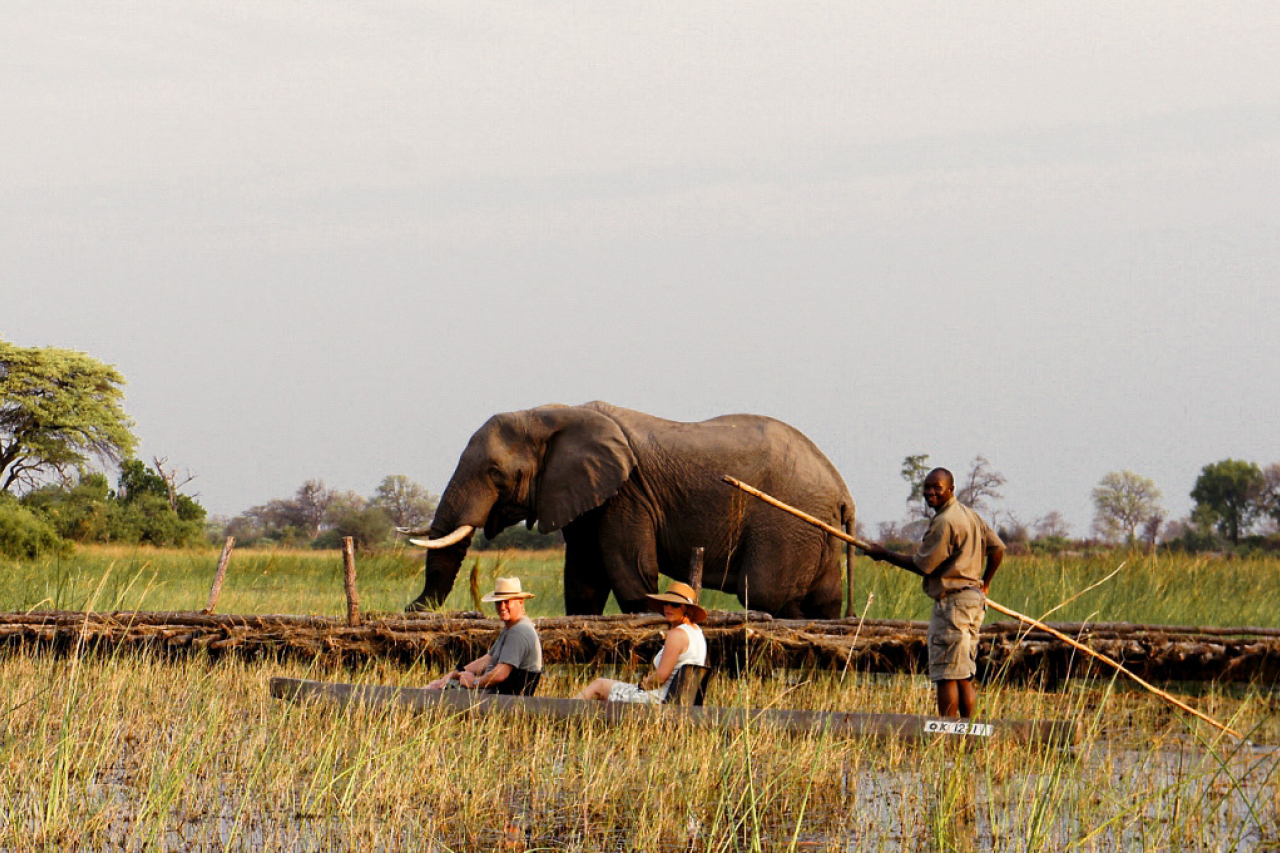
Okavango Delta
The Okavango River, the fourth-largest river in Southern Africa, with different names as it flows through three countries, finds its source in the highlands of Angola. It flows south for 1 600km (995mi) for months, before it spills over the Kalahari sands and disappears into the Okavango Delta. It is one of the few inland deltas globally.
The Okavango Panhandle in the north, a 70km (45mi) stretch of the Okavango River, is where the river enters Botswana. The landscape is a stunning contrast of vibrant wetland and arid Kalahari desert, featuring deep, steady waterways fringed by dense papyrus and reeds interspersed with lush islands, riverine forests and open lagoons. Here, the experience is focused on the prolific birdlife, fishing, aquatic wildlife (including the elusive sitatunga) , fishing and culture.
The Tsodilo Hills comprise a mystical and spiritual place that rises out of the desert landscape, forming the highest point in Botswana. The hills are sacred to the Khoisan people of northern Botswana and are adorned with over 4 500 rock art paintings located around 400 different sites, dating back as far as 100 000 years. World-famous naturalist Sir David Attenborough visited the hills in 2000 to document and photograph newly discovered sites in his efforts to preserve African rock art.
Nxamaseri Island Lodge
Nxamaseri is a singular African experience on a private island, hidden beneath a forest canopy, in the permanent waterways of the Okavango Delta. A small, exclusive lodge, it is one of the oldest in the Okavango Delta. The distinctive style of Nxamaseri Island Lodge showcases the beauty of the permanent swamp that is its home, and subtly expresses the rich vibrance of the indigenous people. Each chalet sits on its own teak deck, overlooking the river.
Here, the focus is on the river, an opportunity to experience the intimacy and peace of unspoiled Africa. Guests enjoy guided walks on nearby islands, accessed by boat or mokoro (traditional dug-out canoe). The panhandle is Botswana’s fishing mecca and provides thrilling fishing for both experienced and novice anglers, chasing tigerfish and bream.
A trip to the Tsodilo Hills affords one the privilege of being able to see and feel, however briefly, the essence of an ancient culture, fragile and increasingly threatened in the face of pressure from the outside world.
Savuti
Savuti is where Africa is as raw and cinematic as it gets. This legendary corner of Chobe National Park is a predator paradise, renowned for dramatic lion, hyena and wild dog encounters that unfold against sun‑bleached plains and the ever‑mysterious Savuti Channel.
Here, every game drive feels like you’ve slipped into nature’s front‑row seat: elephants drifting across open savannas, zebra herds on ancient migration routes, and big cats prowling through grasslands that glow gold in the afternoon light.
The Savuti Channel is the heartbeat of this region, an anomaly famously dubbed “the river that flows in both directions”. Its erratic cycles of flooding and drying, influenced by deep tectonic forces, have puzzled explorers and scientists for over a century and shaped life across the Savuti Marsh. Its history reads like a legend: flowing in the mid‑1800s, drying for nearly 80 years, returning in the late 1950s, disappearing again in 1981, then roaring back to life in 2008 and reaching the marsh in 2010.
Savuti hosts Africa’s second‑largest zebra migration, a spectacular movement of thousands of zebra travelling between the northern rivers and the lush pans and waterholes of the south-west. Triggered by rains, this migration typically occurs between November and December and again February to April; and where the zebra go, predators follow.
Activities are centred around the landscape and include game drives throughout the Savuti area, often incorporating a visit to the Savuti Marsh for a chance to see the historic presence of the Savuti Channel at the marsh, against a backdrop of teeming wildlife. Guests can also enjoy a visit to the ancient Bushmen rock paintings at Gubatsa Hills, a small hilly outcrop that forms a prominent landmark in the otherwise flat landscape.
Savute Safari Lodge
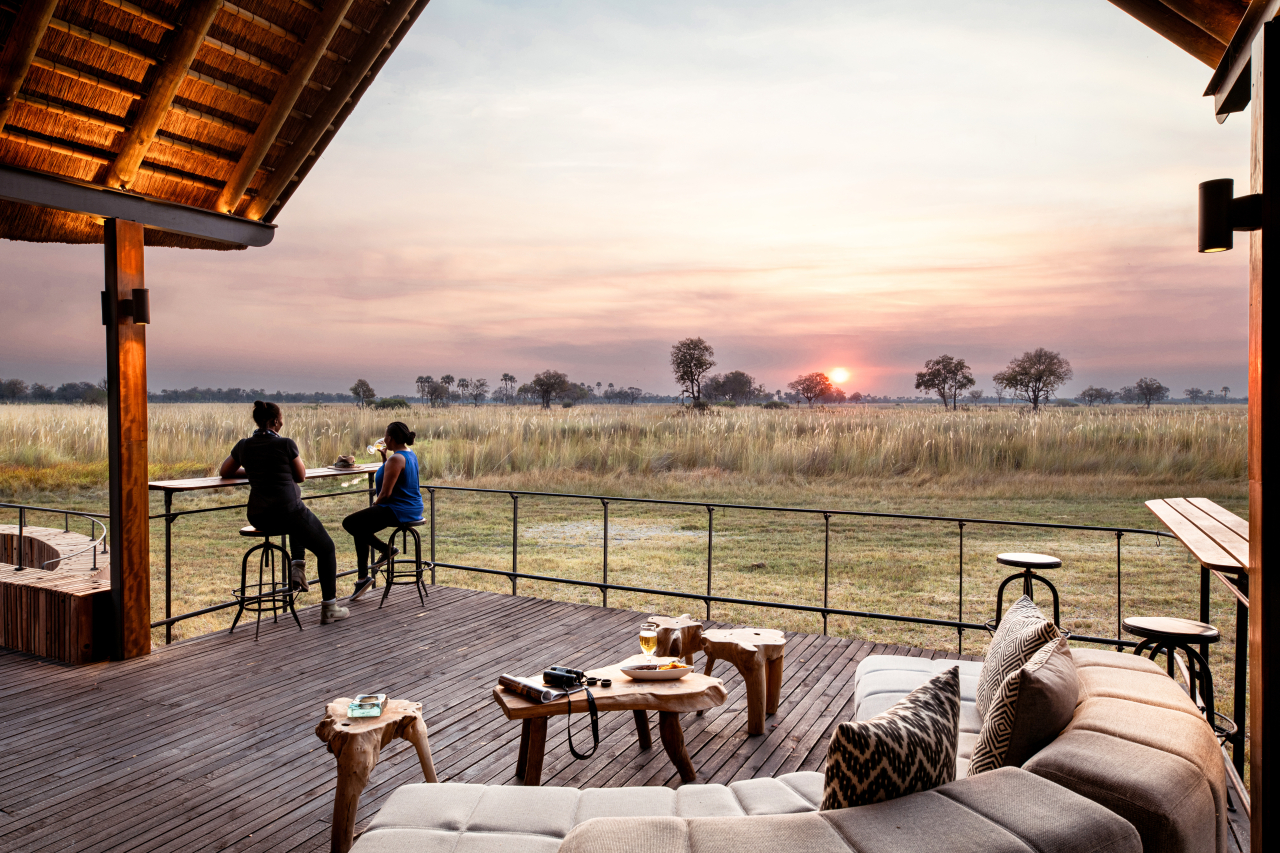
Savute Safari Lodge is designed for privacy and a deeply personalised experience. An elevated deck at the main area features a telescope for stargazing and wildlife spotting, while a nearby photographic hide brings you eye level with the vibrant life around the waterhole directly in front of the lodge.
The landscape and its wildlife, which are frequent visitors, take centre stage – this is armchair game viewing at its best. Each en suite chalet celebrates the expansive views with private decks, landscape-facing lounges and thoughtful furnishings that mirror the region. Morning and afternoon game drives will be exhilarating.
Departure
It’s your final sunrise in the Okavango Delta, the end of your unforgettable journey here. Although this adventure is done, the Okavango’s soul-deep beauty will stay with you, and its seductive whisper will entice you back to Africa.
Speak to your Travel Architect
Create your African story, your way
Does this itinerary inspire you to create your own unforgettable African story? Speak to your Travel Architect about curating your perfect African journey.
Tell us the Africa you imagine. We’ll take you there!
Why travel with Your Africa?
It starts with you
No two journeys are the same. We design each itinerary around who you are and how you want to experience Africa.
Seamless planning
Your dedicated Travel Architect handles everything. All you need to do is guide us on what your ideal African journey looks like.
Travel, your way
You decide how you want to explore Africa. This is your Africa, your story, your way.
Wildlife and rivers gallery
Wildlife and rivers FAQs
This depends on what you want to see. The dry season (May to October) is the peak time for game viewing. Water levels in the delta are at their highest, and animals congregate around the floodplains, making them easier to spot. The weather is sunny and pleasant. The green season (November to April) is a paradise for birdwatchers, sees the birth of many young animals and the landscape is lush and beautiful.
Virtually all luxury travel within the delta is by small safari aircraft (like a Cessna Caravan). This is a core part of the adventure. You will fly from the hub town of Maun directly to your camp’s private airstrip. These flights are an incredible experience, offering striking aerial views of the winding waterways and animal herds. Luggage restrictions are strict, so be prepared.
This depends on whether you are at a “wet” camp (water-based), a “dry” camp (land-based), or a “combination” camp. The main activities are:
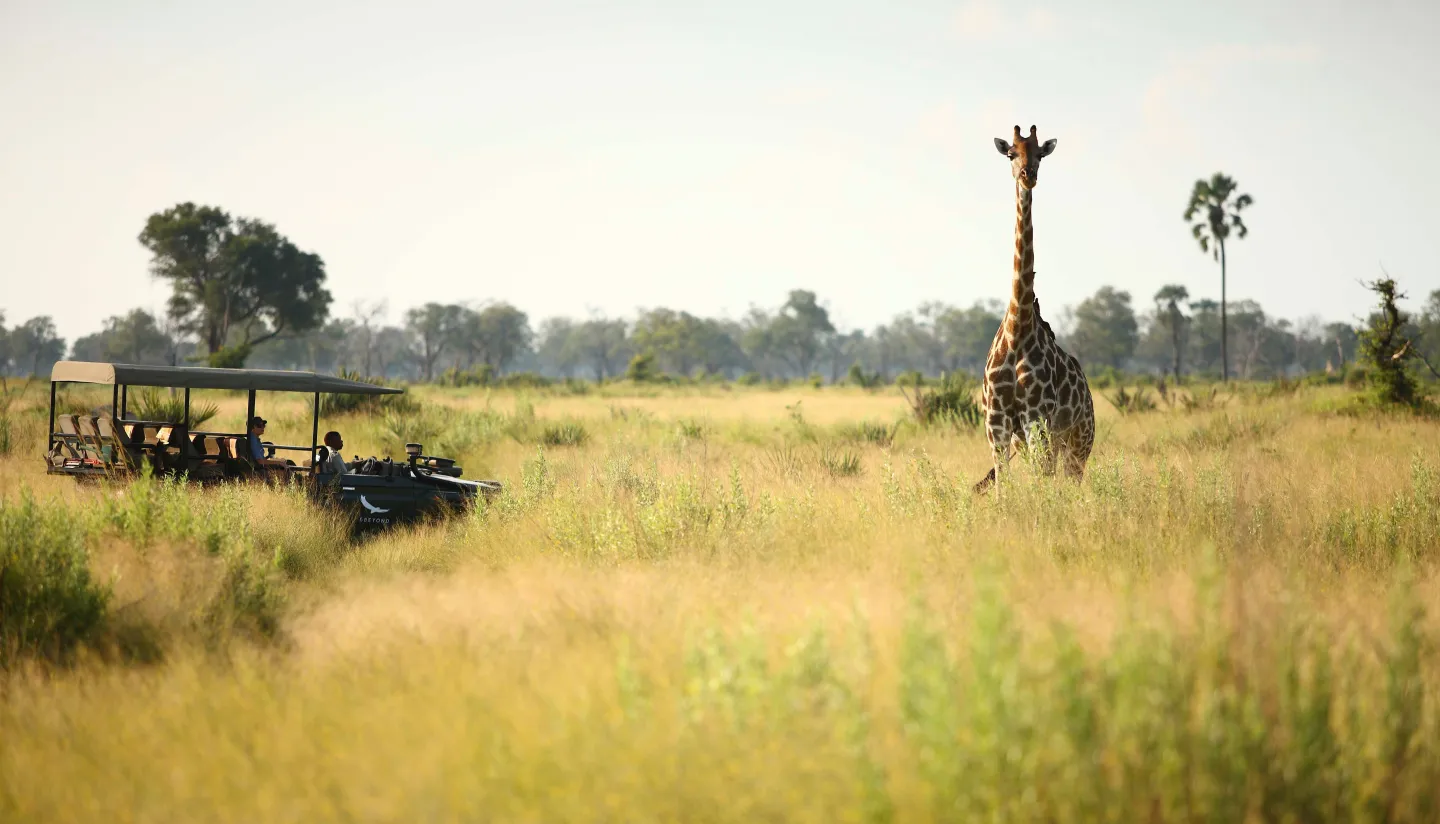
- Game drives: conducted in open-sided 4x4 vehicles, primarily at dry and combination camps
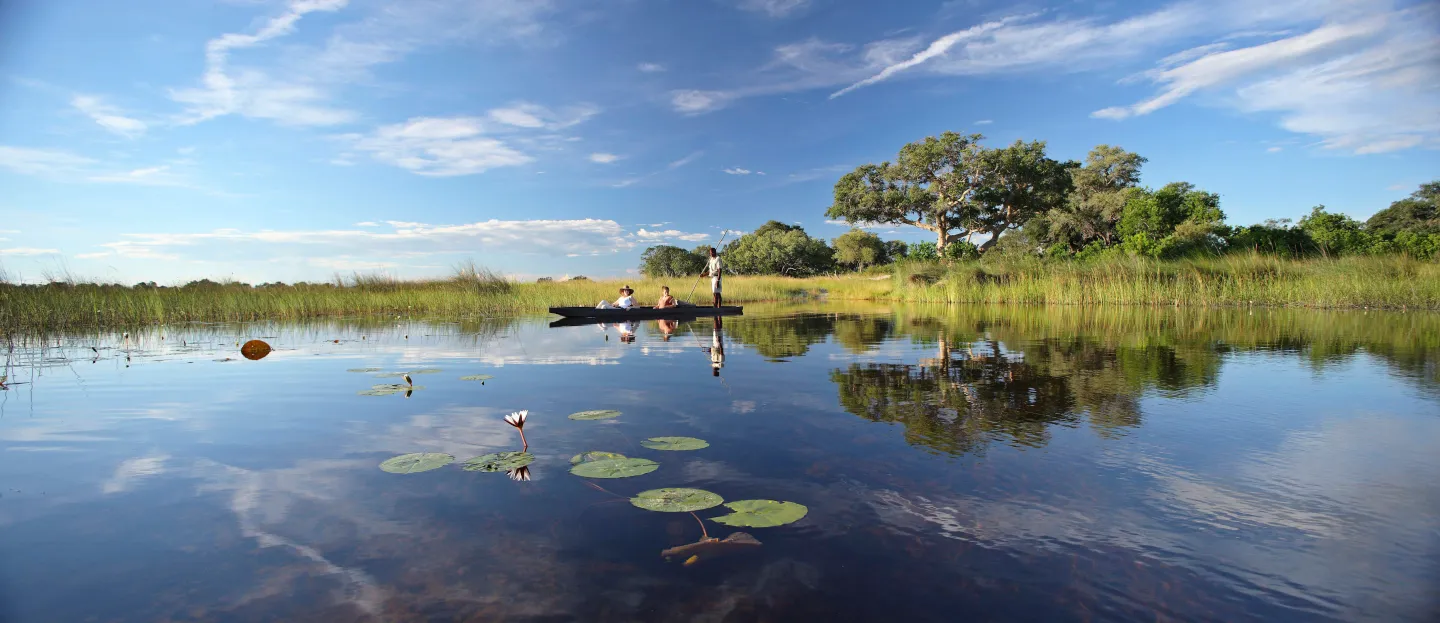
- Mokoro safaris: the quintessential delta experience, you will be poled silently through the shallow channels in a traditional dugout canoe, offering an incredibly intimate, eye-level view of the ecosystem
- Walking safaris: accompanied by an armed, expert guide, this is a thrilling way to experience the bush, focusing on smaller details, tracks and signs
The Okavango is one of Africa’s premier wildlife destinations. You have an excellent chance of seeing four of the Big Five: elephants and buffalo are abundant, leopards are frequently seen, and lions are very common. However, rhinos are extremely rare and have only been reintroduced to a few specific, heavily protected concessions. It’s better to think of the Delta as a complete, thriving ecosystem rather than a Big Five checklist.
Yes, it is very safe. The camps are run with the highest safety standards, and you will be in the constant care of some of the best-trained professional guides in the world. They are experts in animal behaviour and will keep you safe on all activities.
Health-wise, the entire Okavango Delta is a malaria area, so it is essential to consult your doctor about appropriate anti-malarial medication before you travel.
Yes, this is critical. Due to the small aircraft, you are strictly limited to 15-20kg (33-44lb) of luggage per person, packed in a soft-sided duffel bag (no hard-shell suitcases with wheels). Pack lightweight, neutral-coloured clothing (khaki, beige, green), a warm fleece for cold mornings, a hat, sun protection and good binoculars. Most luxury camps provide amenities such as insect repellent and have laundry services.
This is the delta’s unique magic. The rain that feeds the delta falls in the Angolan highlands hundreds of miles away. It then takes several months to travel downstream and fan out across the Okavango. This means the highest water levels in the Delta occur during Botswana’s driest winter months (roughly June to August), creating this incredible oasis in an otherwise arid landscape.
You should plan to be disconnected. This is a key part of the immersive wilderness experience. Most camps have no mobile phone service. Some may offer limited WiFi in a central area, but it is often slow and not suitable for streaming or large downloads. Embrace the digital detox.
The US dollar is the most widely accepted currency for tourism in Botswana. It’s recommended to bring a supply of dollars in cash, including smaller bills ($5, $10, $20) for tipping your guide and camp staff. Each camp has its own tipping guidelines, which your Travel Architect will consult with you on in planning your journey.
To truly appreciate the delta’s different facets, a minimum of four to six nights is recommended, ideally split between two camps in different locations (e.g. one water-based and one land-based camp). This allows you to experience a wider range of activities and ecosystems without feeling rushed, factoring in the travel time between camps.