Forget the Big Five – see the Small Five!
Forget the Big Five – see the Small Five!
| by Kate Turkington
If you’re interested in wildlife you’ll certainly know about Africa’s Big Five: the African elephant, the Cape buffalo, the leopard, lion and rhinoceros. And when you come on safari, you’ll almost certainly be hoping to spot several or all of the Big Five.
But have you heard of the “Small Five” (also called the “Little Five”), a fascinating collection of little creatures that bear the same names (partly) as their mega counterparts?
Not always easy to spot, nevertheless they are well worth searching for, so ask your rangers and trackers to keep their ears and eyes open and you’ll be surprised and delighted when you encounter these quirky little inhabitants of the bush: the red-billed buffalo weaver, the elephant shrew, the leopard tortoise, the antlion and the rhinoceros beetle.

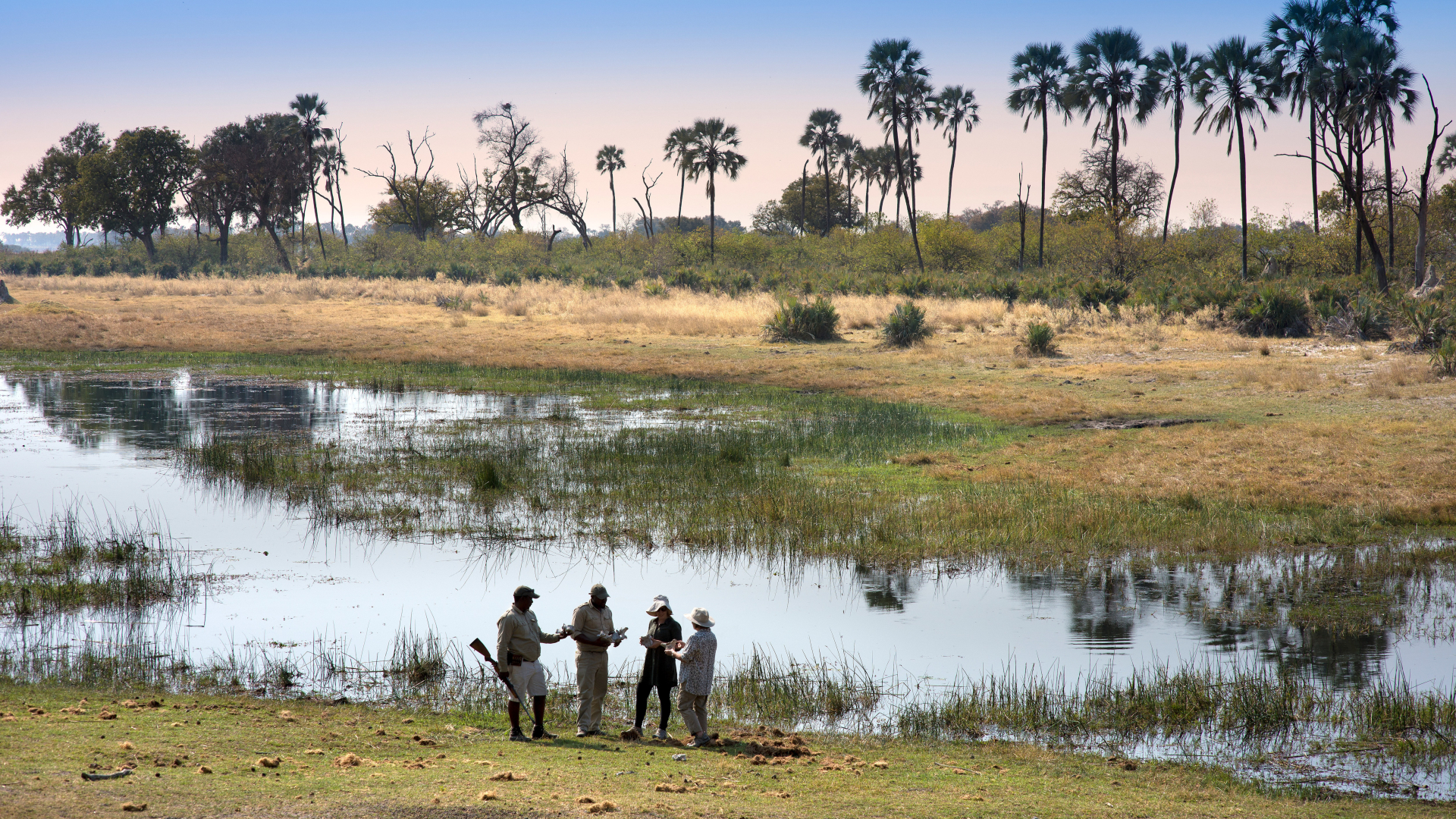
One of the best ways to spot the Small Five is to go on a bush walk. Many national parks and private game reserves offer bush walks where you’ll be accompanied by a specially qualified guide, deep into the African bush. A walk can take several hours with a small group of people typically walking in single file led by a ranger, and perhaps with a skilled tracker bringing up the rear.
You’ll need to be walking fit and dressed appropriately in comfortable clothing and sturdy walking shoes or boots. It’s important to know that a bush walk is not a strenuous route march, but an opportunity to experience the wilderness gently at first hand, at a walking pace.
You’ll be instructed before the walk on how to behave in all situations from stopping to watch hippos cavorting in a river to carefully observing a feeding elephant herd. But a walk is not only about the big stuff. This is also your best chance of spotting the Small Five.
Buffalo weaver
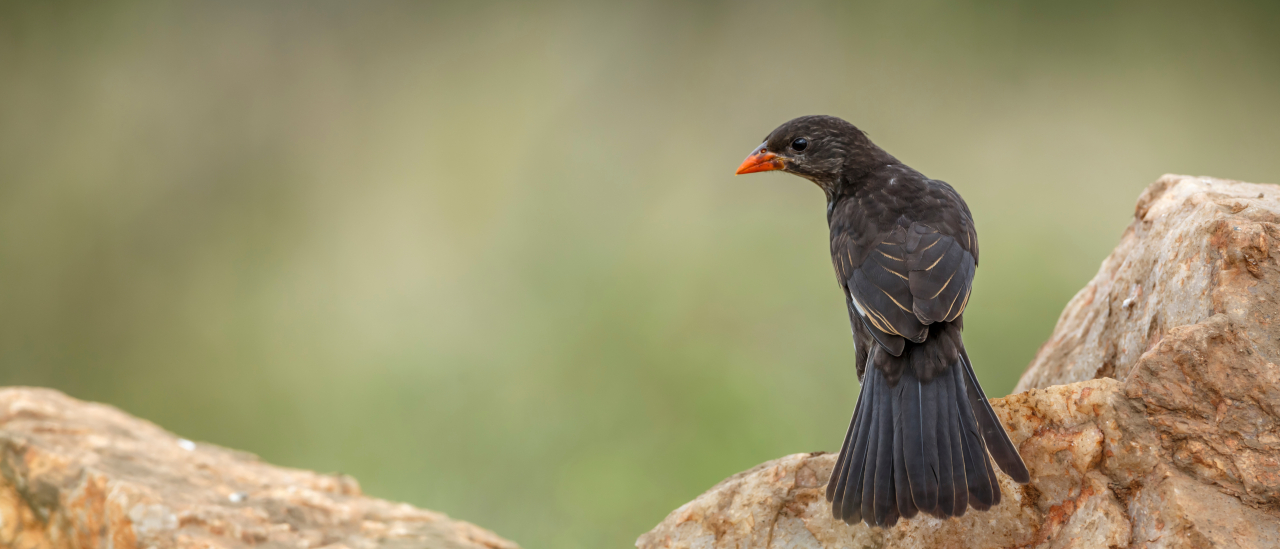
Easy to see because they chatter non-stop and build big, bulky communal nests high in thorny trees are the red-billed buffalo weavers. According to popular bushlore, these nests are often built in the west or north-west of a tree, but this can vary, according to local context. Nests can last for years and sticks and twigs get added annually.
The dominant male invites different females to make a home in different rooms or “chambers”, each of which have their own tunnels leading outside. The female then lays her eggs and incubates them alone.
Fever trees make good nesting sites because they’re tall and thorny, and sometimes you’ll see large buffalo weaver nests in dead trees in the middle of a dam, where they are safer from snakes.
An interesting snippet of bird lore is that the red-billed buffalo weavers’ copulation can last for up to two minutes, whereas with most other birds, it’s over in seconds.
Elephant shrew
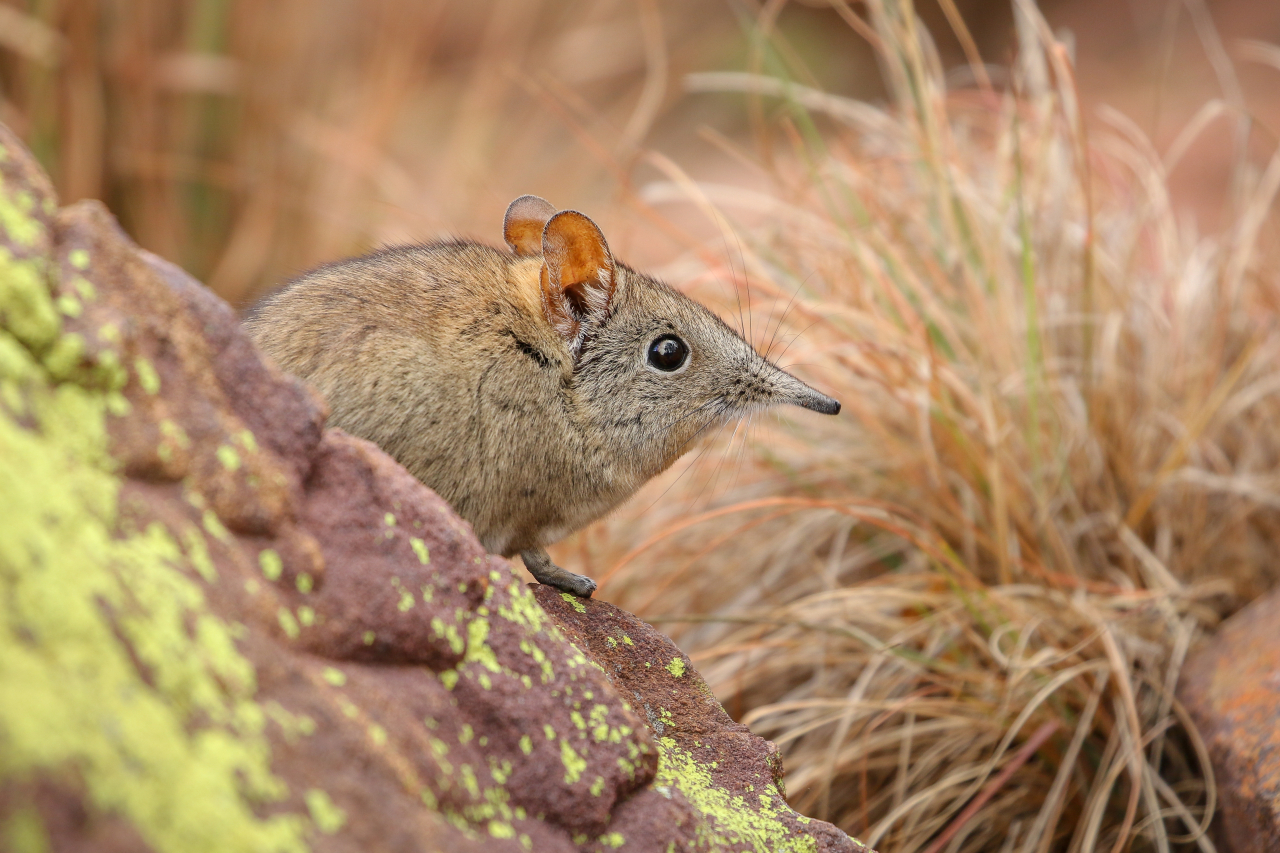
Although you can find them in a wide variety of habitats including forests, grasslands and arid landscapes, the diurnal elephant shrews (there are actually several different species within the elephant shrew family) are probably the most difficult to find not only because they’re tiny, but also lightning fast as they dash along the intricate runway systems they make through the vegetation.
In fact, these charismatic little animals are neither an elephant nor shrew, but belong to an ancient mammal grouping or “clade”, called Afrotheria, which makes this little creature an evolutionary oddity – a small zoological marvel.
The elephant shrew has a long bendy snout just like a tiny elephant trunk, big eyes and long legs and surprisingly is related to elephants, but also manatees and dugongs, hyraxes (small, rock-dwelling mammals also known as rock rabbits or dassies), aardvarks, tenrecs (mostly found in Madagascar) and golden moles.
Many elephant shrew species are monogamous and often mate for life. Think a tiny Bambi crossed with a mouse.
Leopard tortoise
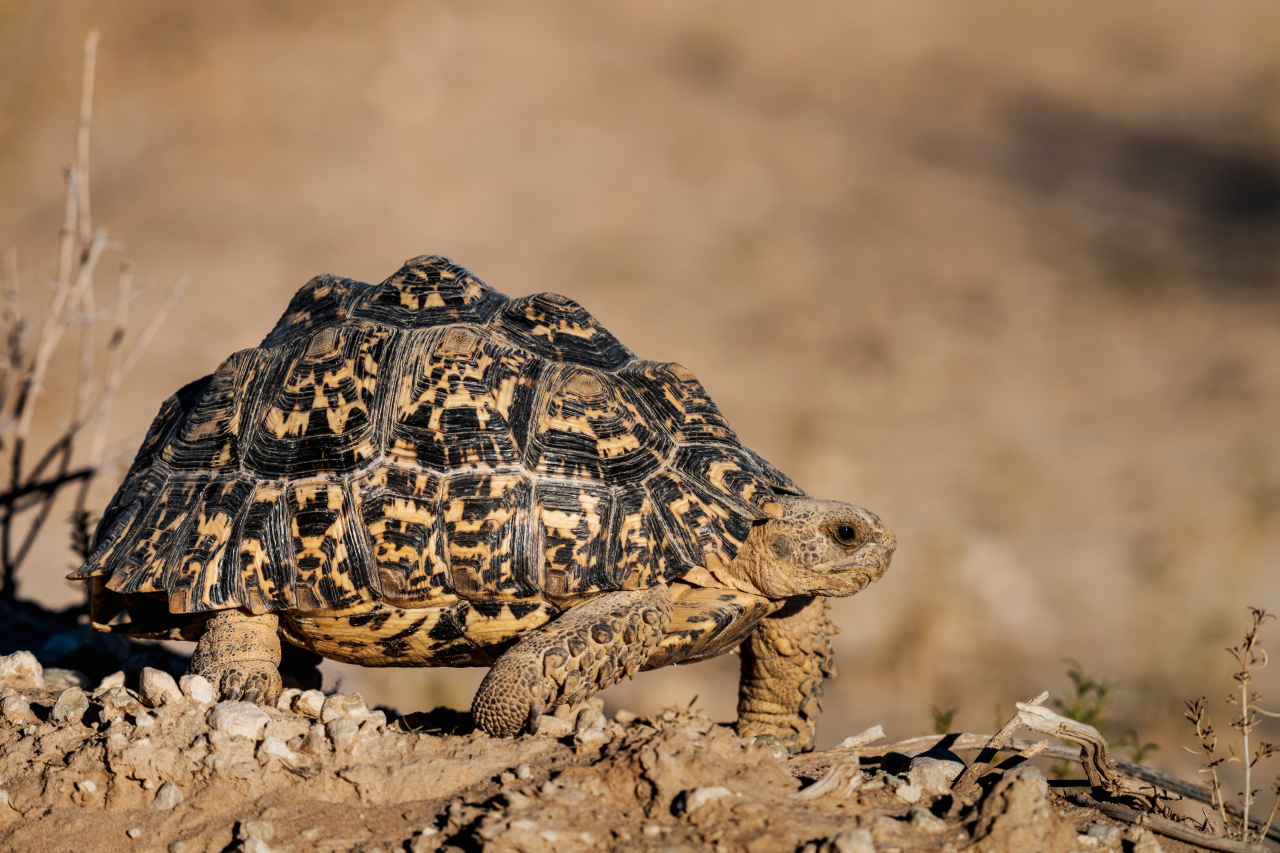
The moment you watch a leopard tortoise ambling along the road you’ll see why it has that name, because its spotted coloration is like its bigger namesake. It’s widespread across East and Southern Africa and has been recorded weighing as much as 40kg (88lb) (though this is very rare), and to live to be 75 if it survives human and animal predators.
The top half of its shell is called a carapace and the flat underpart the plastron. When threatened, it pulls its scaly head and legs into this body armour to protect itself, although the strong claws of leopards and hyenas can break its shell open.
Your ranger won’t pick one up because the frightened animal will release the water it stores in a bursa sac, which could lead to possible dehydration. Unlike a leopard, it has no teeth but a strong, beaky, upper lip that chews vegetation.
Leopard tortoises also occasionally chew bones and eat hyena scat to keep their calcium levels high and to ensure hard shells for their eggs. The sex of a baby tortoise is determined by where it’s incubated – males at 29 to 30°C (84 to 86°F), females higher at 31°C to 34°C (88°F to 93°F). (It’s the reverse in crocodiles, where males are incubated at a warmer temperature.) An interesting bush fact is that it’s one of only a few tortoise species that can swim!
Antlion
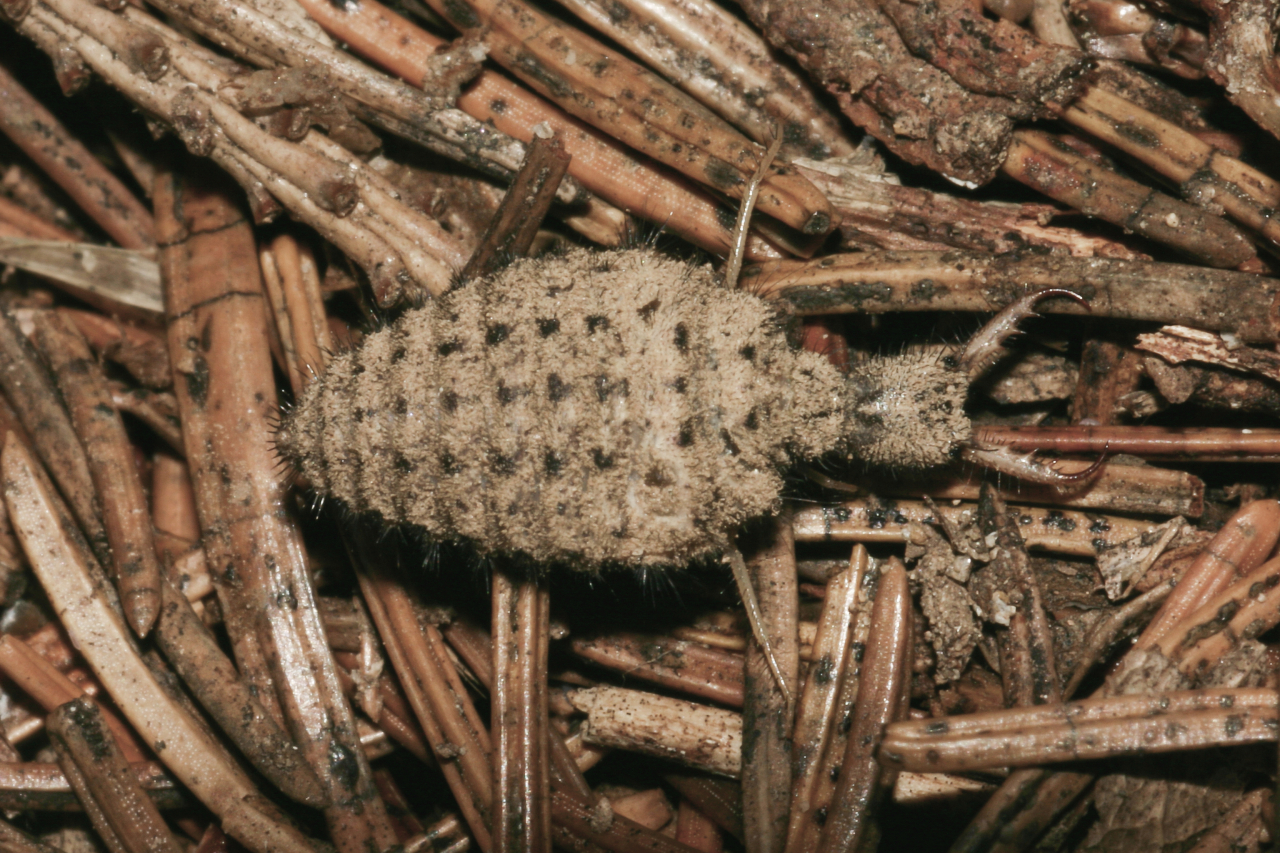
Not as big and fearsome as its namesake, nonetheless the tiny antlion is a ferocious and strong predator. Ask your ranger to point out an antlion hole when you’re on a walk or when you’ve stopped for a coffee or sundowner break on your game drive.
This ambush engineer makes a hole in soft sand and then waits patiently at the bottom for an ant (its most common prey) or some other small insect to fall in. The hole’s soft, sandy sides make it difficult to climb out and the antlion adds to the difficulty by flicking more sand over its victim. It then seizes its meal with its strong pincers and dinner is served.
But what exactly is an antlion? It belongs to the order Neuroptera, which also includes lacewings and owlflies, and has two lives, firstly in larval form (imagine a fat white grub with pincers) and then metamorphoses into a winged adult that resembles a small, delicate dragonfly, with long, gossamer wings.
It’s at its most lethal when still in larval form at the bottom of its sandy trap. An interesting snippet about an antlion is that it only poops after pupation because at larval stage it has no anus. Once it has its wings, it passes just one fecal pellet because from now on it feeds little, if at all.
Rhino beetle
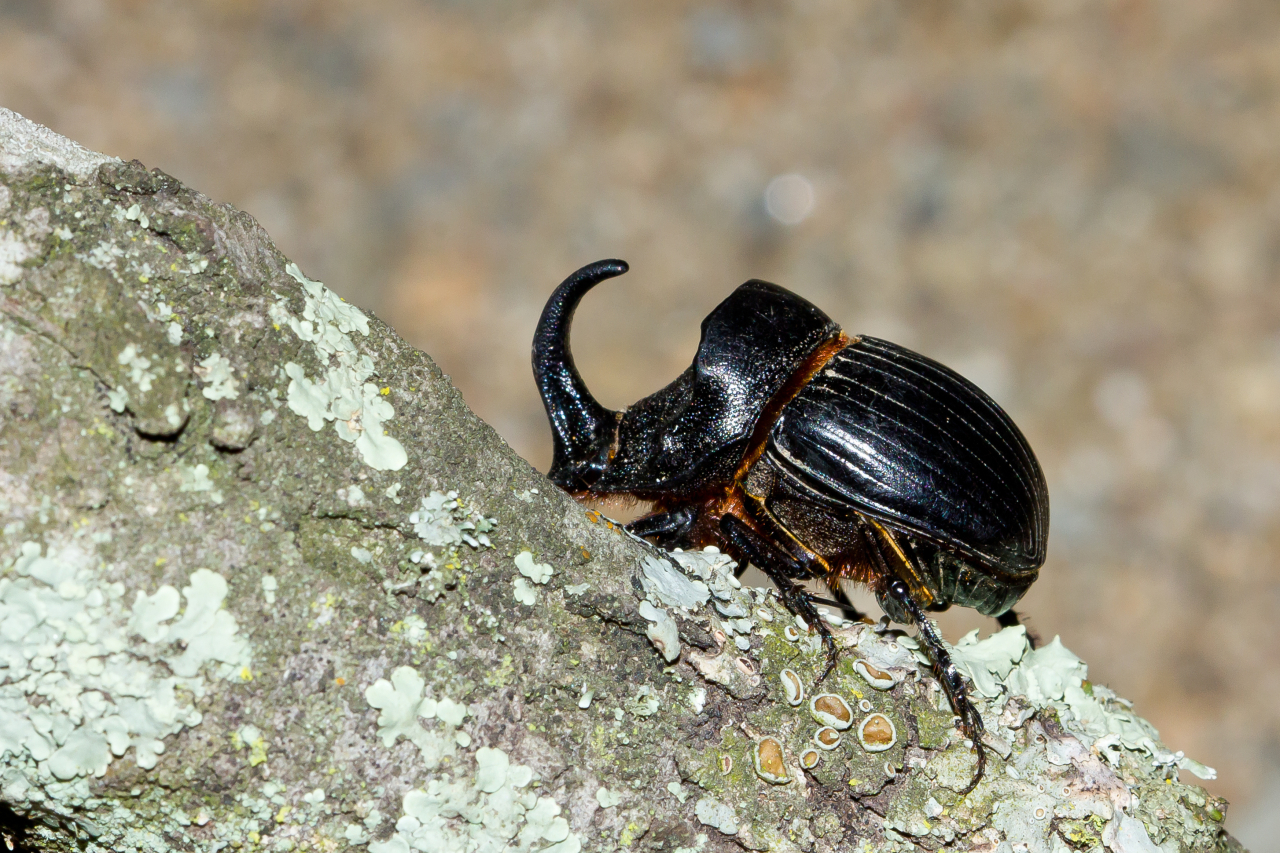
Sometimes you’ll hear an African rhinoceros beetle before you see it because its strong wings make a loud, whirring sound as it flies clumsily about at night, attracted to lights.
These iconic beetles are around 4cm to 6cm (1.5in to 2.5in) in size, glossy and dark-brown to black, and belong to the scarab family (there are several species, commonly in the genera Oryctes and Heteronychus). The male has a mini backward-curving “rhino” horn that it uses in horn-to-horn combat with other males.
It’s hefty for an insect and it uses its horn to push, shove and flip over its male rivals. The females then choose the winners and lay their eggs in dead leaves or vegetation before taking off and leaving their offspring to feed and grow on their own.
Although this miniature tank of the night looks fearsome, a rhino beetle is quite harmless and doesn’t sting or bite. If you hold one gently in the palm of your hand, you’ll be surprised how heavy it feels before it flies off in its lumbering, bumbling fashion.
You won’t always find the Small Five, but there’s another world other than the big game thriving all around you. Absorb everything, and be in the moment. A wilderness experience is not just about excitement, thrills, and adrenalin rushes. It’s about the small details too, and together the experience can not only be awesome, but also deeply restorative.
If you’re eager to explore Africa’s Small Five up close, your Travel Architect can help you plan a journey to seek out these remarkable creatures in their natural habitat.