Namaqualand’s flower season: an experience like no other
Namaqualand’s flower season: an experience like no other
| by Willem Steenkamp
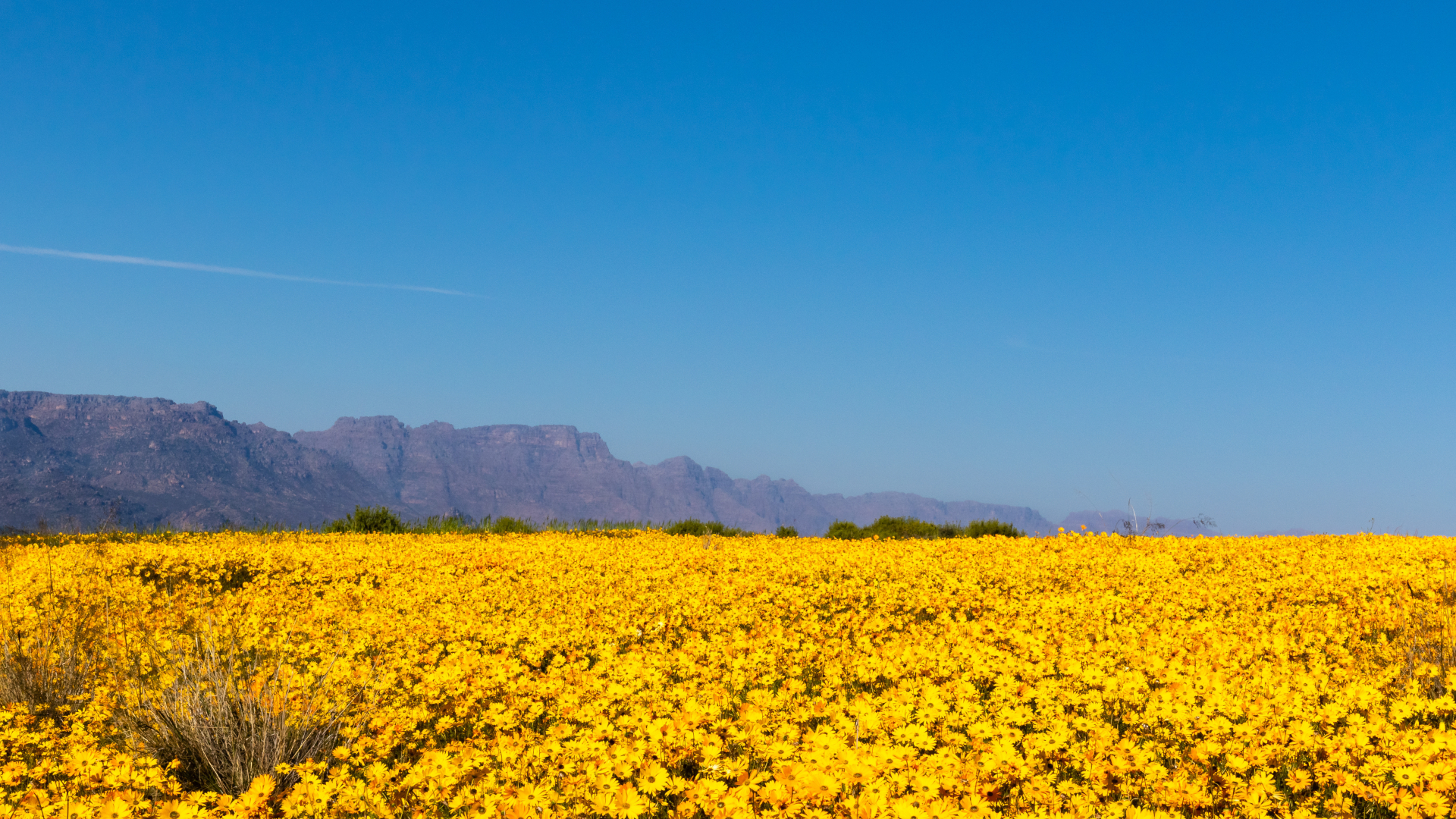
The spring wildflower season in Namaqualand transforms this vast, arid landscape into a floral paradise – but only fleetingly. Blink, and you’ll miss it.
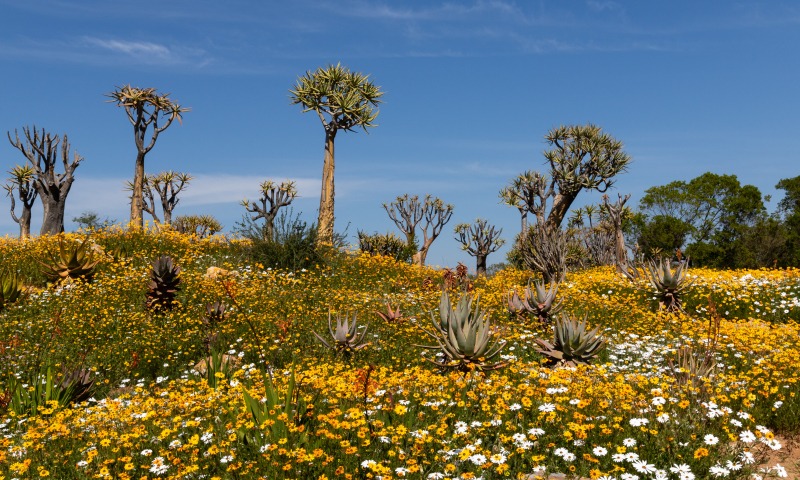
Namaqualand (its name speaks to the Nama-Khoe pastoralists who have inhabited the region for hundreds of years) is a vast area that covers a large section of South Africa’s Northern Cape province (Little Namaqualand), and extends into southern Namibia (Great Namaqualand).
Little Namaqualand, the focus of this story, falls within the larger semi-desert Succulent Karoo biome, and experiences hot summers, little rainfall and cold winters. On the surface it is a hot, dry and dusty place, prone to drought and not for the faint of heart; Namaqualanders themselves call it the Thirstland. And to some extent that is true.
In fact, along the region’s southern edge is an area called the Knersvlakte – the Gnashing Plain – a scrubby, rocky place so devoid of shade and water that a popular explanation of its name is that the first European settlers had to grit their teeth as they trekked through. (A second, more likely explanation is that it refers to the grinding noise their wagon wheels made on the quartz littering the area, but a visit to the Knersvlakte will only make the first one all the more plausible.)
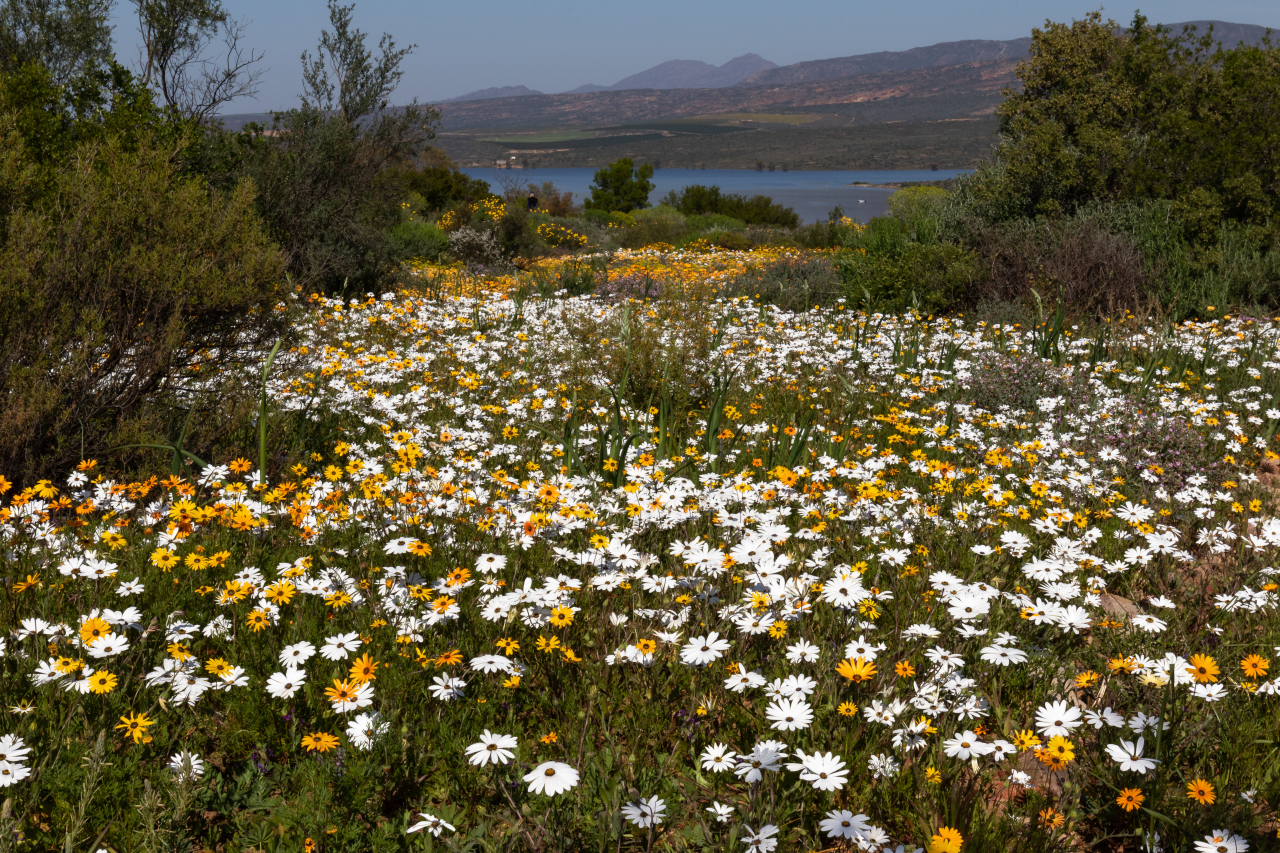
But while Namaqualand’s fauna (barring reptiles and insects) are relatively sparse, one cannot say the same about its flora. The Succulent Karoo is one of 34 plant biodiversity hotspots globally, and it boasts over 6 350 plant species. It is estimated that 16% of the 10 000 succulent species worldwide are found in this biome alone and, of them, 40% are endemic.
In Namaqualand, no fewer than 3 500 plant species (1 000 endemic) exist; many feature in the springtime spectacle, carpeting parts of the region in swathes of yellow, orange, white, pink, blue and purple. In a good year (which is never a guarantee – this is arid country, after all, and climate change also plays its part in this uncertainty), the countryside is transformed from its drab brown-and-green palette into a wonderland of riotous colour.
So how and when does this dazzling show happen?
Namaqualand is a winter rainfall region. While summers are hot and dry, winters can be bitingly cold and rainy. The amount of winter precipitation impacts the quality of the forthcoming wildflower season.
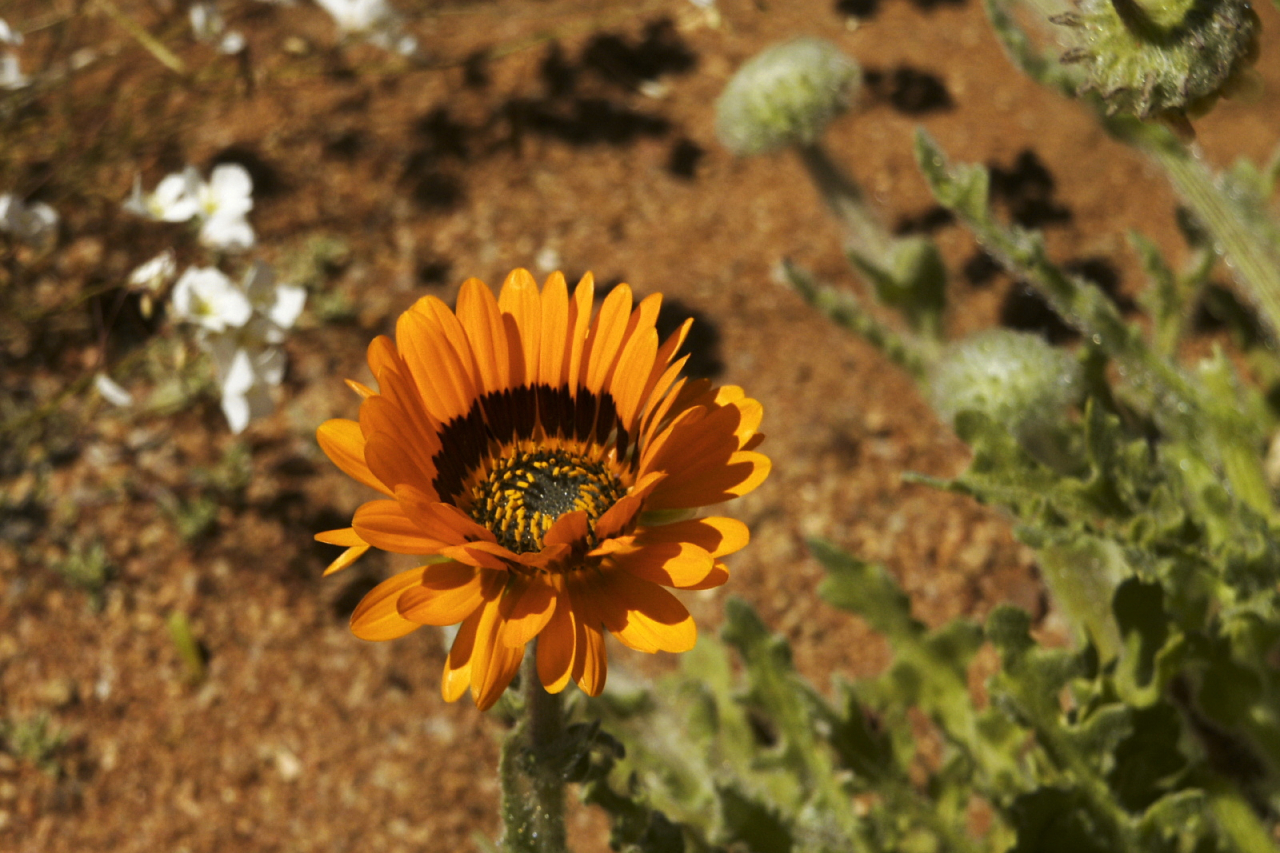
As springtime approaches and temperatures begin rising again, around mid-August, plants come back to life or seeds germinate, and seemingly overnight the flowers spring up. A common harbinger of the season is the orange Namakwa daisy.
Warmth – temperatures at least higher than 18°C (64.4°F) – and sunlight are vital for the flowers to flourish. As a matter of fact, even when the flowers have emerged, they are best viewed on warm and sunny days, because many of them close overnight and simply won’t open again until the sun comes out.
But the season is frustratingly short-lived: by the end of September, the show’s all but over. By then, Namaqualand is getting hotter by the day, the ground is drying up again, and the region’s colour scheme is reverting to its ubiquitous brown and green. The telltale sign that the wildflower season is coming to end is the flowering, at last, of purple vygies (Mesembryanthemum, often called ice plants).
For locals and visitors alike, however, that all-too-brief burst of colour and life has fed their eyes and souls alike; their most fervent wish, perhaps, is that next year’s wildflower season will be even more beautiful.
Top wildflower species to see
There are far too many species to list here, but here are several of the most popular.
- Namakwa daisy (Dimorphotheca sinuata): featuring an orange (rarely, white) flower, the Namakwa daisy is one of the most common of the Namaqualand wildflowers. When it starts appearing, other wildflower species are not far behind
- Bitter gousblom (Arctotis): this bright orange flower is also one of the early heralds of the season. It’s called “bitter” because the milk of cows that graze on it is bitter-tasting
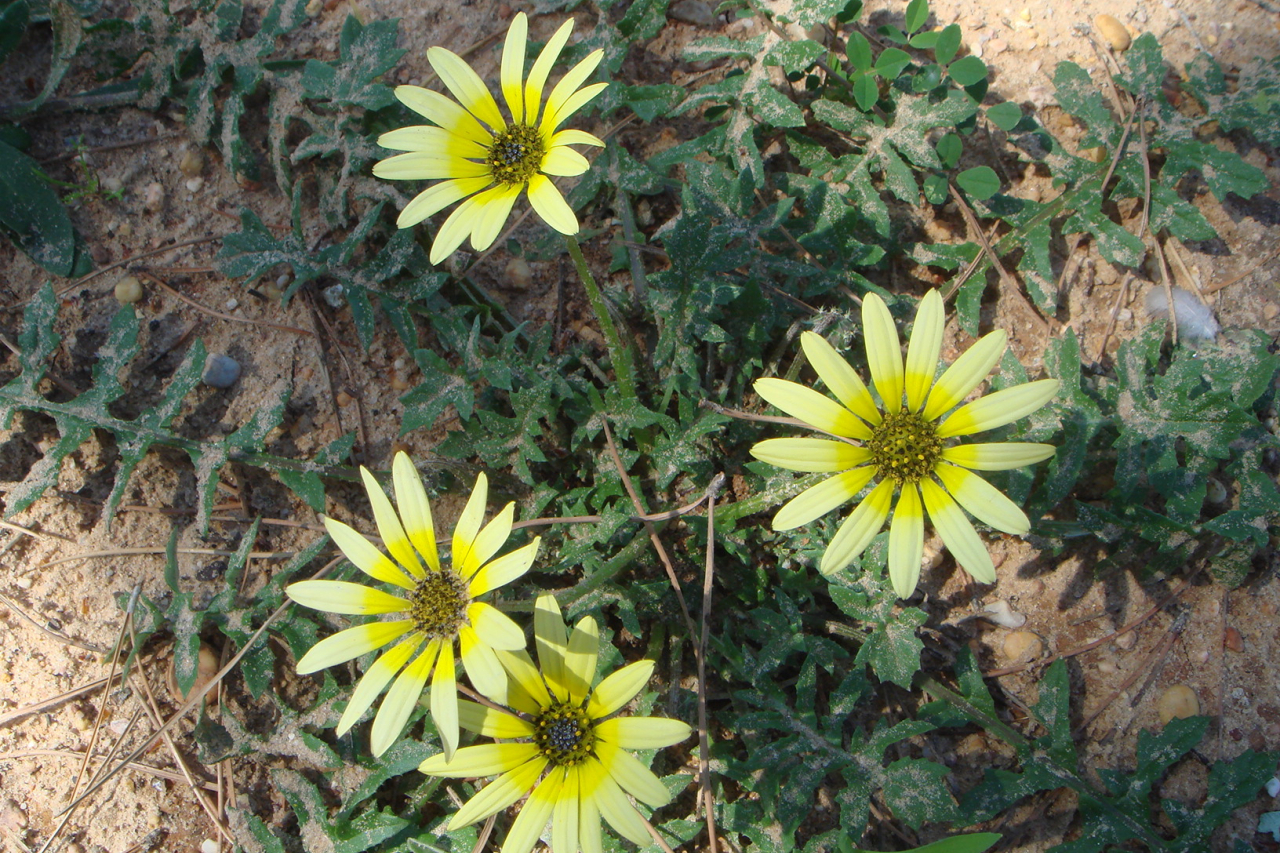
- Soet (sweet) gousblom (Arctotheca calendula): a pale yellow, daisy-like flower, it’s also common in springtime
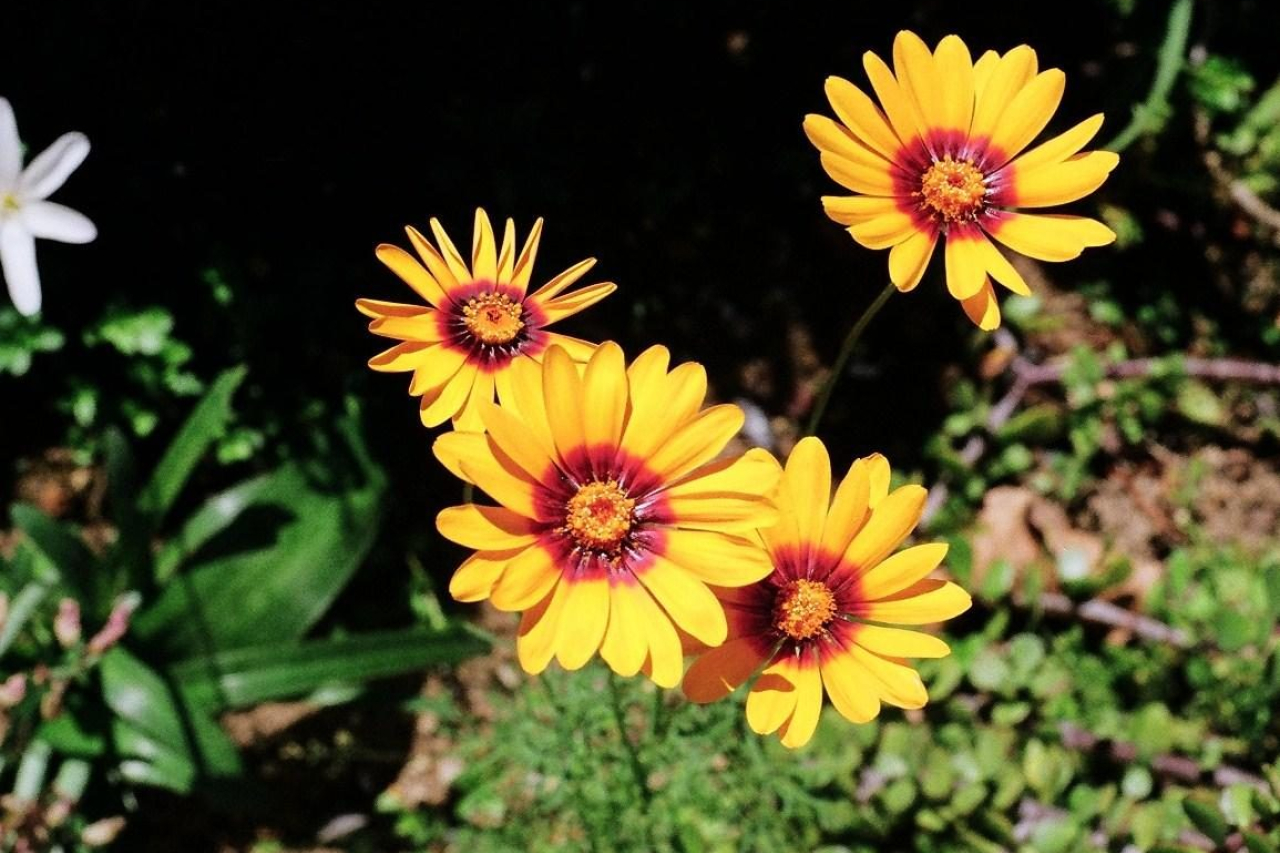
- Namaqua parachute daisy (Ursinia calenduliflora): known locally as sambreeltjies (little umbrellas), these yellow-orange daisies have a distinctive ring of dark purple spots around the centre
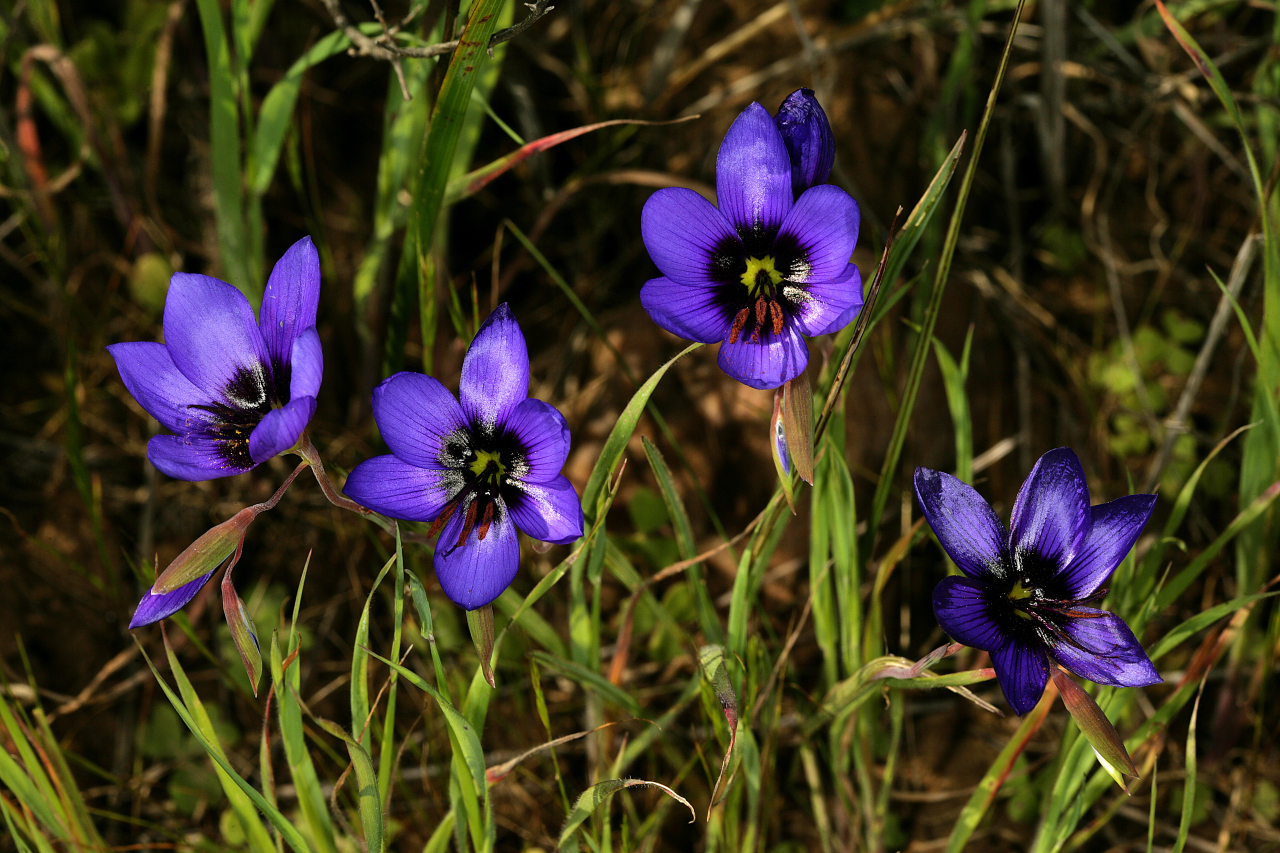
- Pride-of-Nieuwoudtville (Geissorhiza splendidissima): this plant, with its beautiful purple flowers, is endemic to the Nieuwoudtville area of the Hantam, in the south of Namaqualand
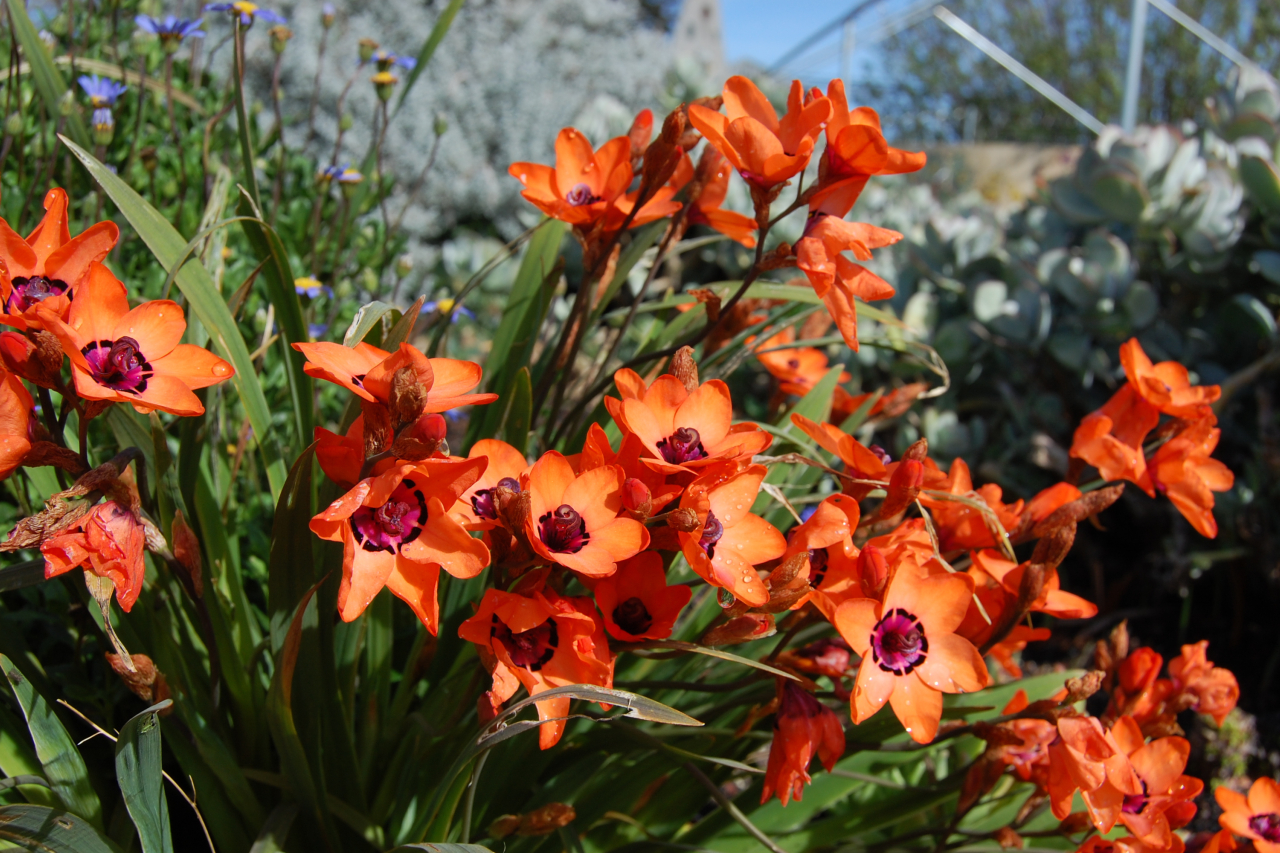
- Sweet goldblatt (Sparaxis elegans): known in Afrikaans as the spogfluweeltjie (“showy little velvet”), this has a pretty orange flower with a purple centre ringed in yellow and black
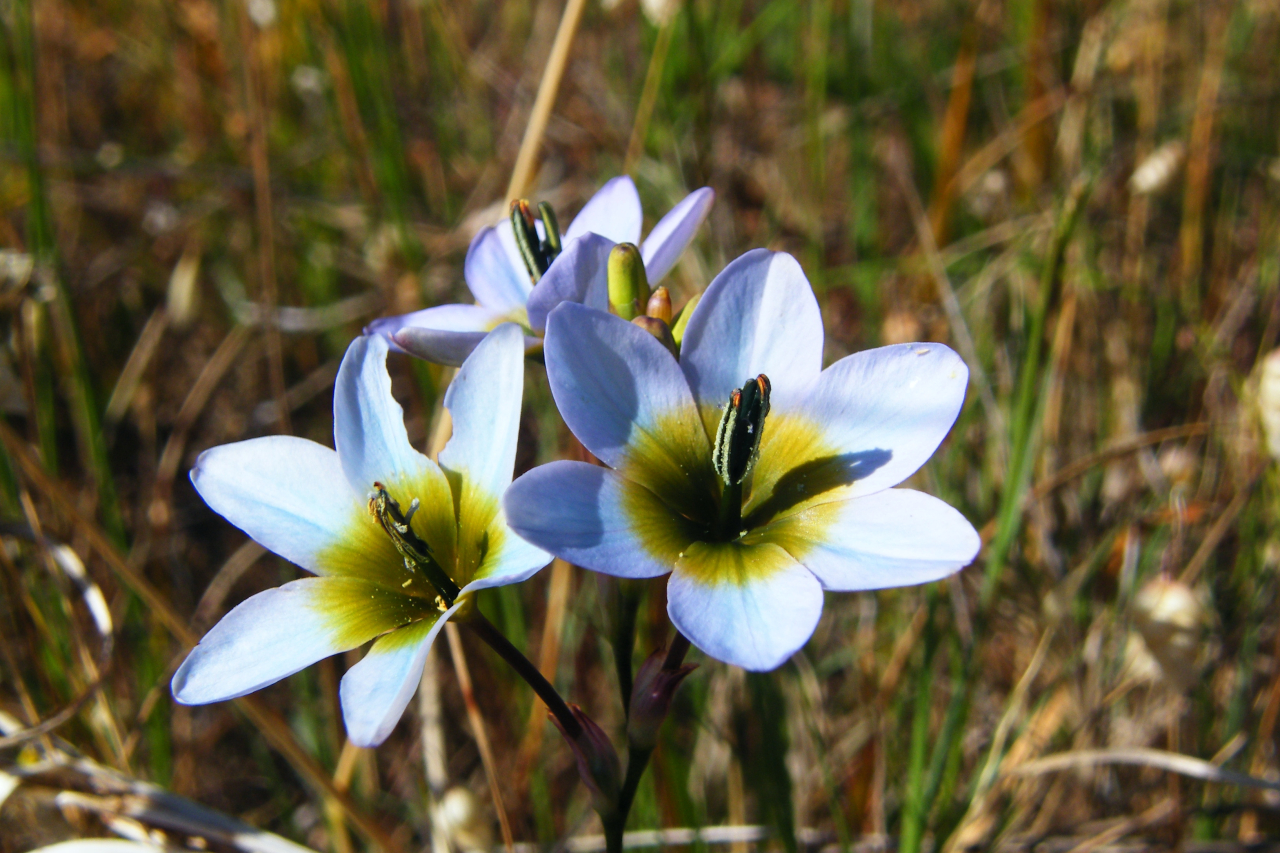
- Kalossie (Ixia): kalossies (the name is a corruption of the Afrikaans for “skullcap”) come in a range of colours, including purple, blue, white, pink, yellow and orange, often with contrasting centres. For example, Ixia ramulosa, which is found in the Kamiesberg, features shades of purple with a white throat, or mauve/white with a yellow throat
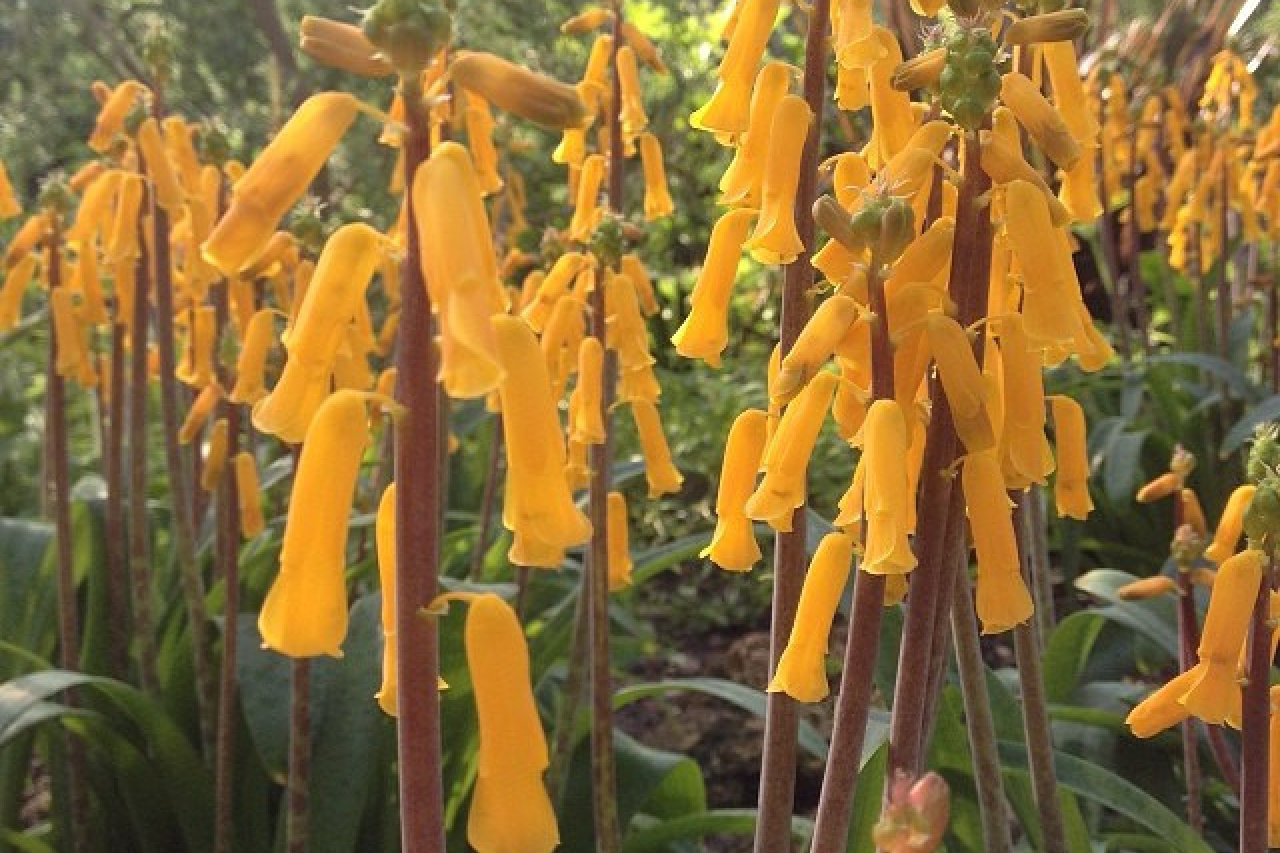
- Viooltjie (Lachenalia): the viooltjie (“little violin”) comprises several perennial species with showy sprays of flowers that range in colour from yellow-green to magenta and ivory, with contrasting tips
Best places to go
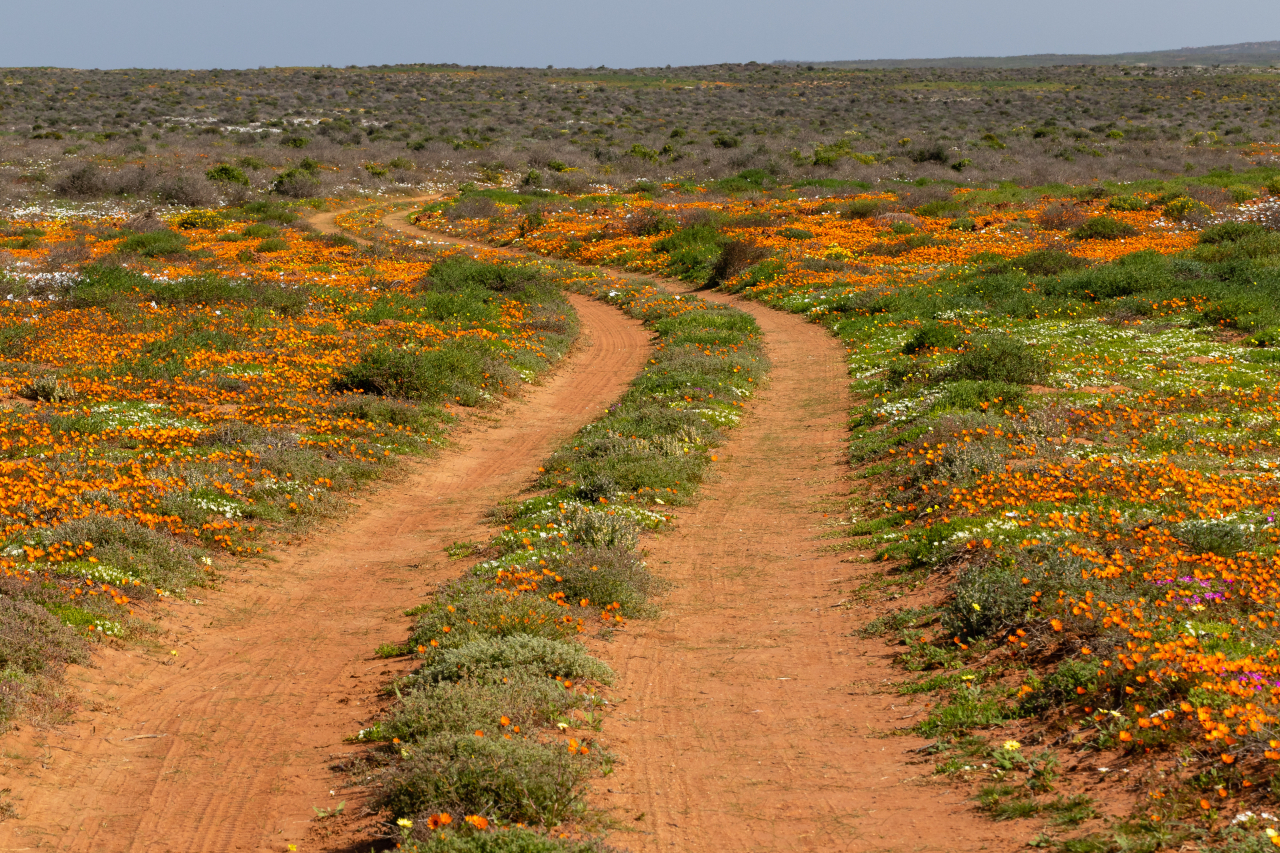
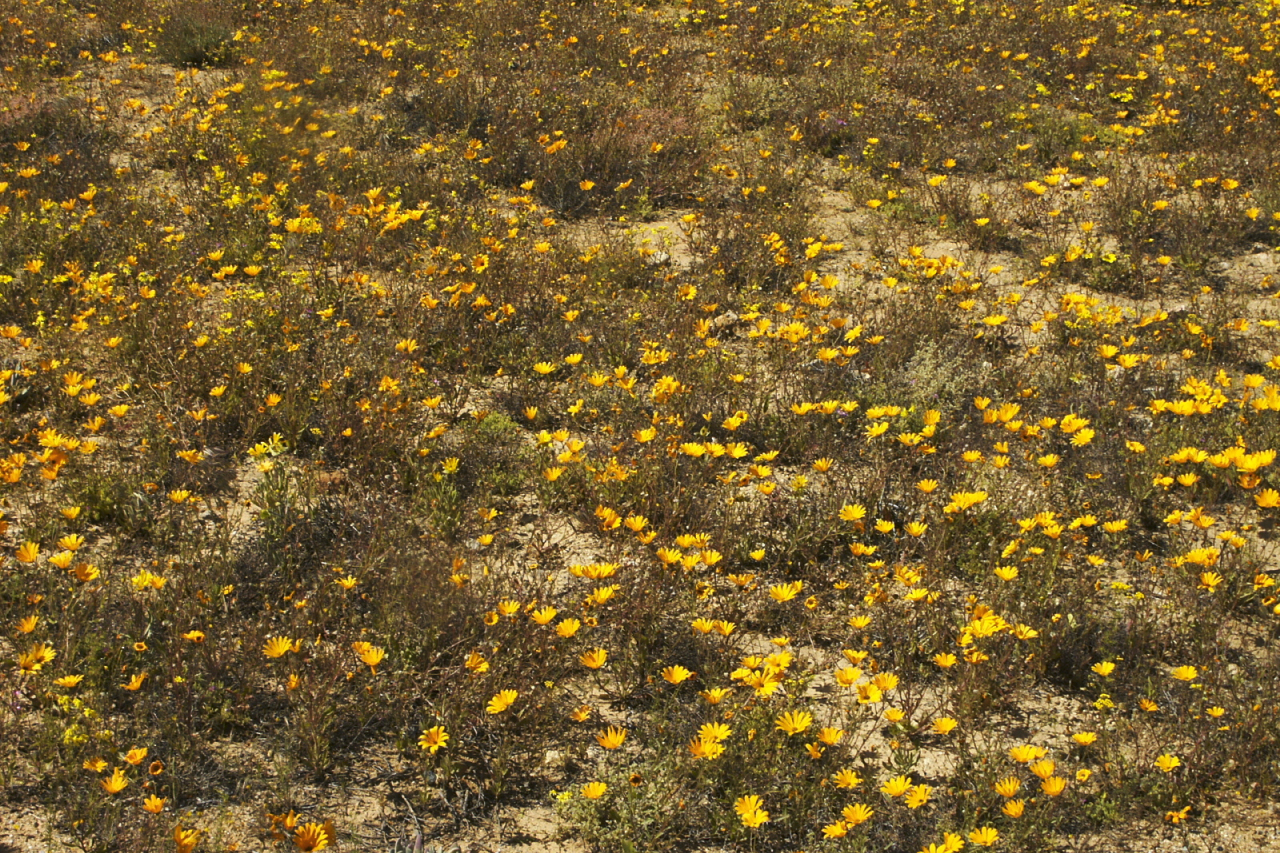
Little Namaqualand comprises more than 26 800km2 (10 350sq mi), and there are many prime flower-viewing spots.
However, they are variable from year to year, which is why there is the special Namakwa Flowerline, a hotline available daily during the flower season, except on public holidays (+27 (0)79 294 7260).
However, among your best bets would be national parks, reserves and gardens, including the Namaqua National Park, the Richtersveld National Park (the South African portion of the /Ai/Ais-Richtersveld Transfrontier Park), the Tankwa Karoo National Park, the Goegap Nature Reserve, the Oorlogskloof Nature Reserve and the Hantam National Botanical Garden.
SANParks, South Africa’s national parks administrator, also recommends various specific towns and places, including the following:
- Nababeep
- Nourivier
- 10km along the road to Baievlei (Garies turn-off to Hondeklip Bay)
- Along the N14 outside Springbok
- Springbok town centre
- Droëdap Road on the route to the Kokerboom Nursery near Springbok
- Along the road between Komaggas and Maatjieskloof, near the Naries Namakwa Retreat
- Okiep town centre
- On the road to Port Nolloth
- Handjieskraal, near Kharkams
- N7 between Garies and Kamieskroon
- Groot Hoog, on the road between Okiep and Concordia
- Road between Springbok and Bergsig
- No-Heep farm, near Kamieskroon
- Farms in the Nieuwoudtville area (with the farmers’ permission, of course!)
- Papkuilsfontein
- N7 between Springbok and Steinkopf
- Loeriesfontein
- Matjiesfontein
- Bakleikraal
- Steinkopf, in the Klipfontein area
- Concordia
- Calvinia
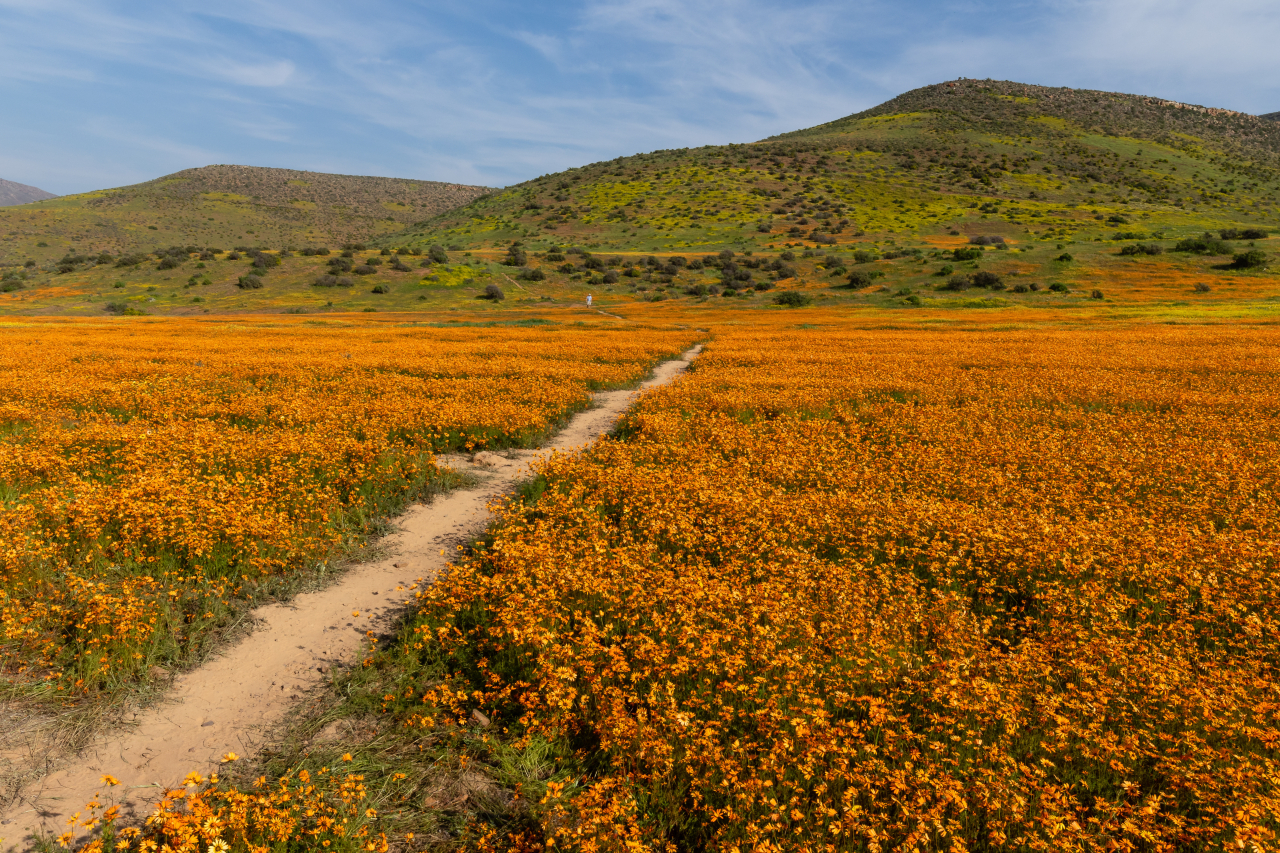
But the chances are good that simply by driving around, you will find spectacular patches of wildflowers. The most important things are to be sure to stop in safe locations, as roads are often single carriageways, and not to trespass on private land. Also, some plant species are protected and may not be picked.
In terms of where to stay when you’re in Namaqualand, there are several comfortable options in the Springbok area, which is relatively central and will make a good base of operations; however, your personal Your Africa Travel Architect will advise you in this regard. But this is inevitably an inexact science: predicting where the best flowers will be is difficult, and the popularity of the wildflower season means you have to book accommodation well in advance.
What to take along
You don’t need that much, but certain things are essential:
- A flower map: showing flower routes, maps are readily available all over Namaqualand, including tourism offices, restaurants, accommodation establishments, service stations and tourist stalls
- Long trousers for walking in the veld (they will become stained with pollen, especially yellow and orange)
- Good walking shoes or hiking boots
- Hats or caps, and sunscreen
- Plenty of water
- And don’t forget your camera!
While settlements are often small and far apart, most will at least have a service station, an ATM and mobile phone reception. But it’s best to ensure that your tank is topped up and you have sufficient provisions for your outing; don’t assume that there’ll be a takeaway or a shop open, particularly over weekends and especially on Sundays.
If the fleeting beauty of Namaqualand’s wildflowers has inspired you, your dedicated Travel Architect can help you plan a journey to experience this vibrant spectacle in person.