The Skeleton Coast: one of the last great wildernesses
The Skeleton Coast: one of the last great wildernesses
| by Willem Steenkamp
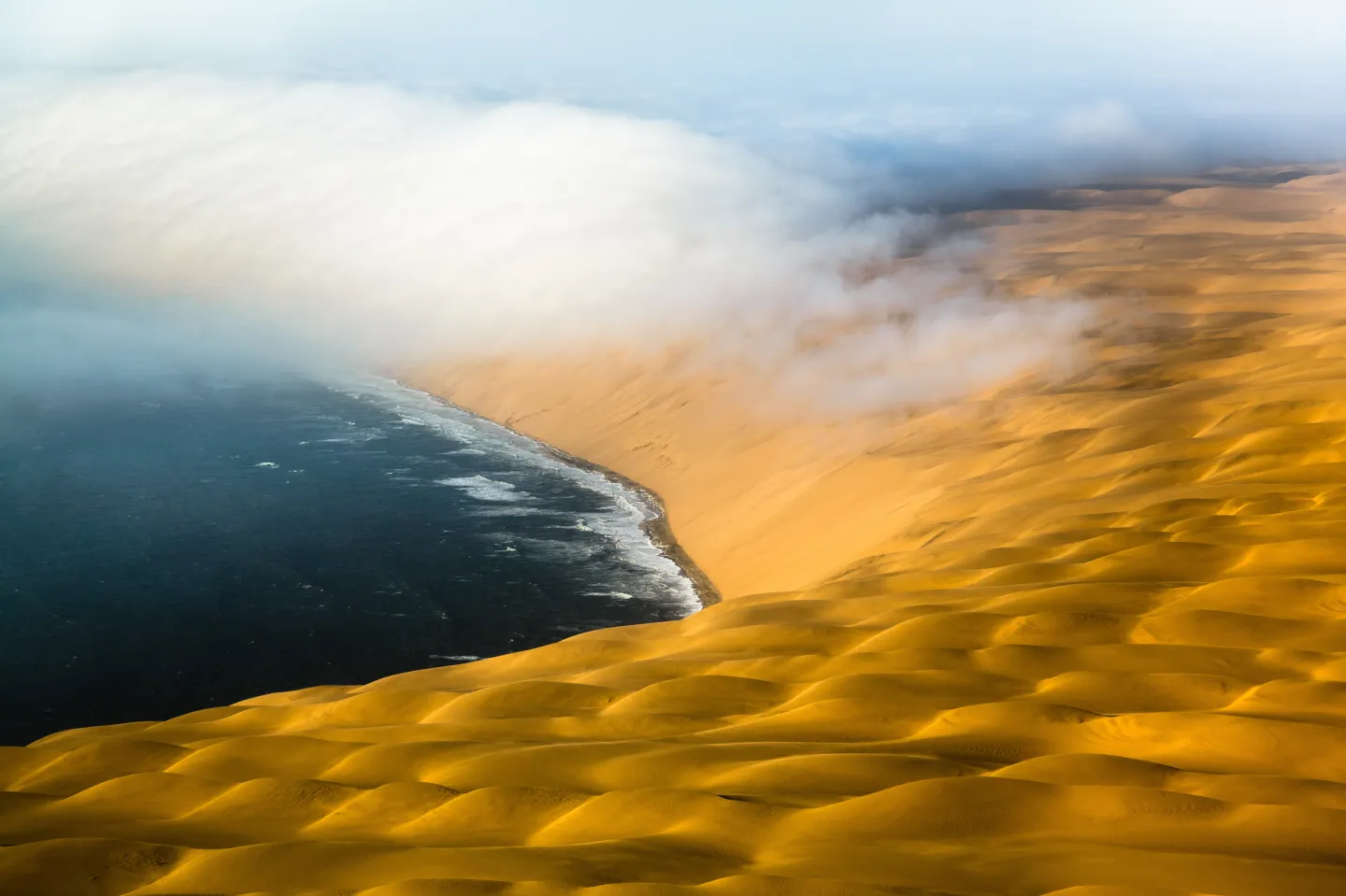
At dawn, the heavy fog rolls in from the Atlantic. It muffles the sound of the surf and blurs the boundary between sea and desert, swallowing landmarks whole. On the Skeleton Coast, footprints vanish within minutes. Wrecks shift position as the sand beneath them moves. Nothing here stays fixed for long.
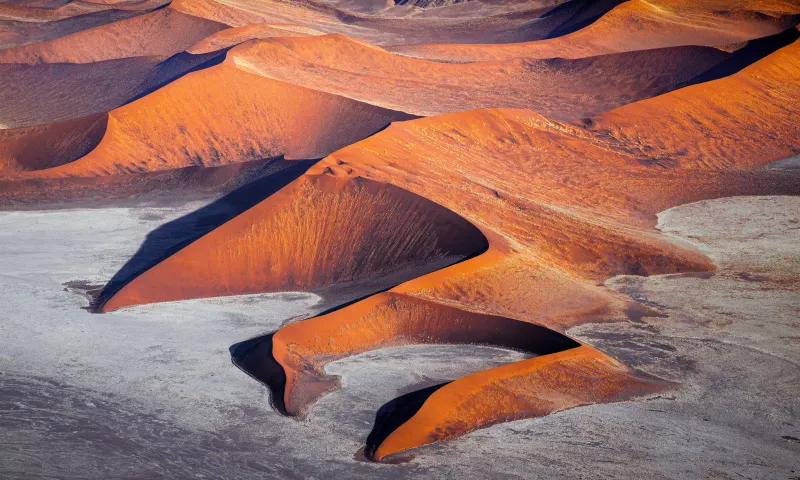
Remote and inaccessible
So remote, inaccessible and dangerous is Namibia’s spectacular Skeleton Coast that it was only given this name in 1944. To this day it remains one of the world’s great unspoilt places – but now you can explore its hidden gems in both safety and luxury.
The Skeleton Coast, comprising at least the northern quarter of Namibia’s rugged desert coastline (depending on who you speak to), took its modern name from the book by South African historian John Marsh that describes one of the most epic rescues of all time: the saving of all 106 crew and passengers of the MV Dunedin Star, which was wrecked there on 29 November 1942.
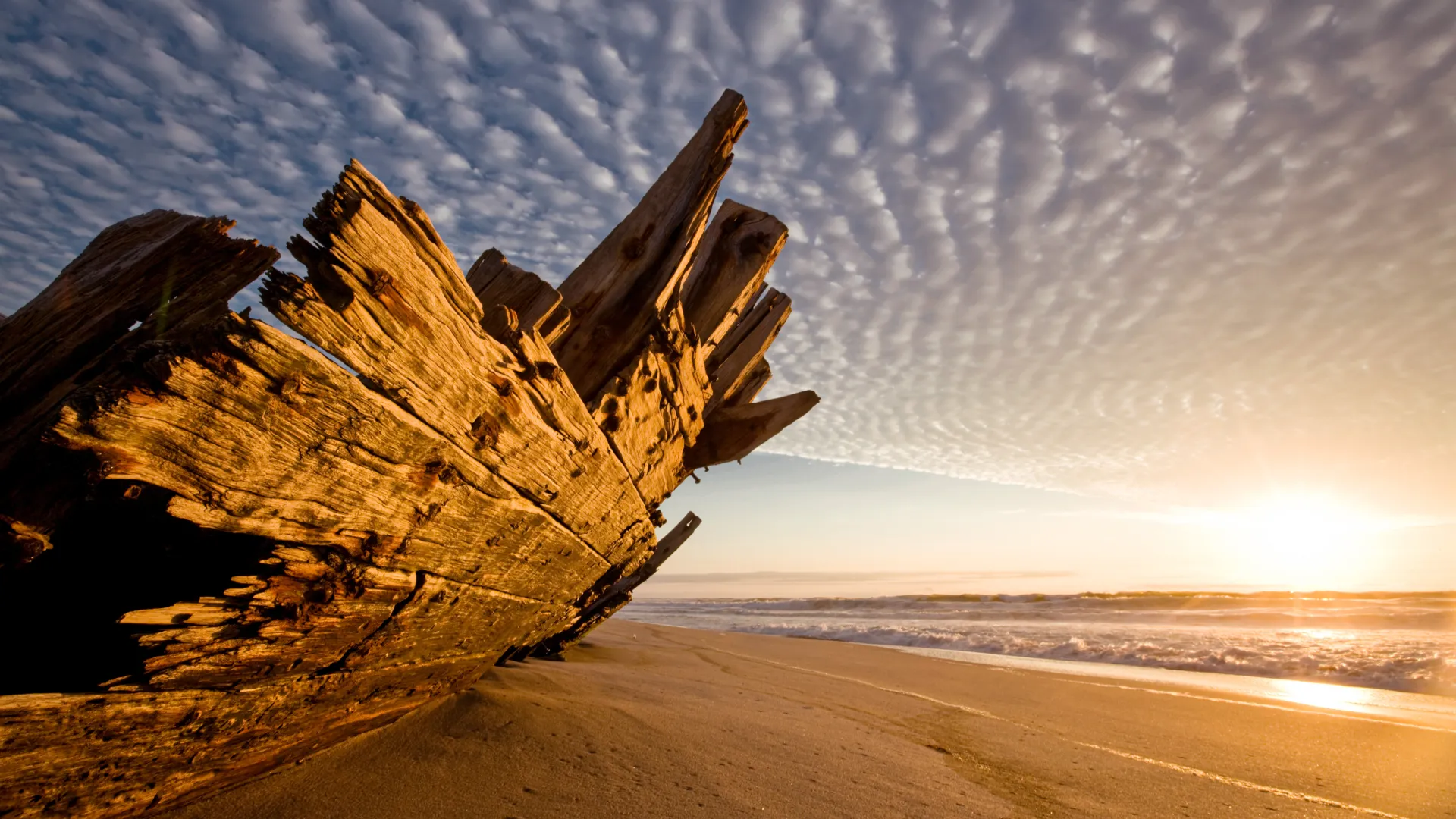
Mostly marooned (some were stuck aboard the vessel) on a windswept, sun-baked beach, with no shelter, no provisions and no protection from marauding desert lions and leopards, the survivors appeared doomed to suffer the same cruel fate of unfortunate mariners shipwrecked there over the preceding four centuries.
Fortunately for them, however, help was at hand. A massive rescue operation by land, sea and air – comprising ships from Walvis Bay and elsewhere, a South African Police overland convoy departing from Windhoek and South African Air Force (SAAF) Ventura light bombers from Cape Town – would see all 106 kept alive and eventually brought out safely.

Fun Fact
A massive rescue operation by land, sea and air – would see all 106 kept alive and eventually brought out safely.
But it took a month and it came at a cost: two crew members of the tug Sir Charles Elliot perished when their vessel ran aground at Rocky Point, while returning to Walvis Bay far to the south; and a Ventura that – after being dug out of the sand at the survivors’ camp following an ill-advised landing – went on to develop engine trouble on the flight out crashed, also near Rocky Point.
The successful rescue was nevertheless an enormous and significant feat. At the time, it was believed that only one European had ever entered the northern Skeleton Coast and emerged alive: a policeman who had gone after a diamond thief. Even indigenous people nearby, in tune with their surroundings and able to survive very harsh conditions, steered clear of the Skeleton Coast.
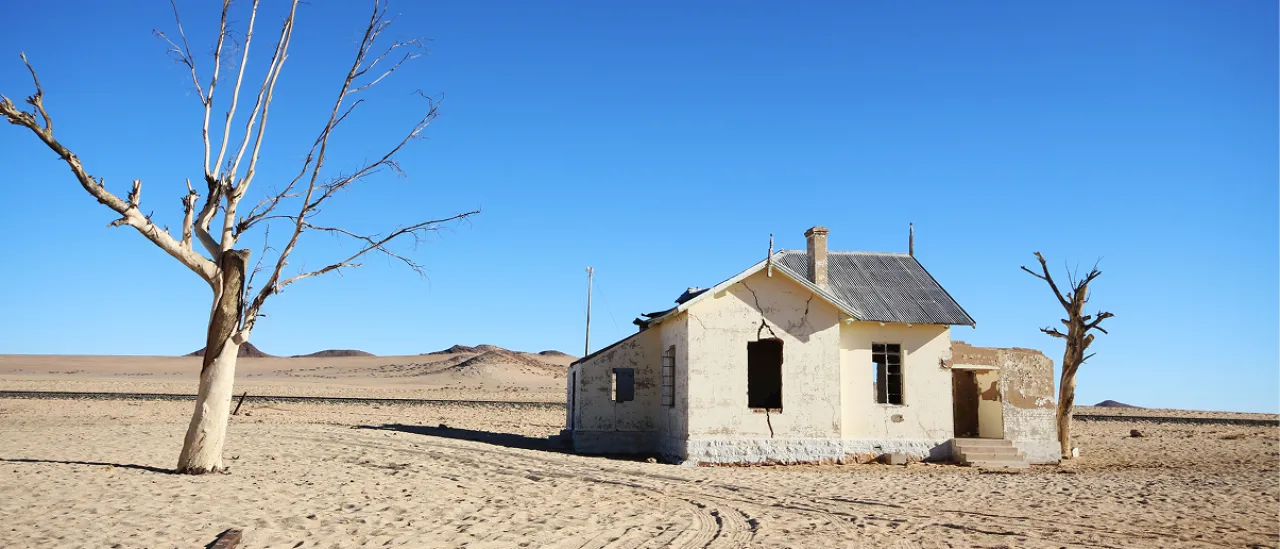
The Skeleton Coast gets its name
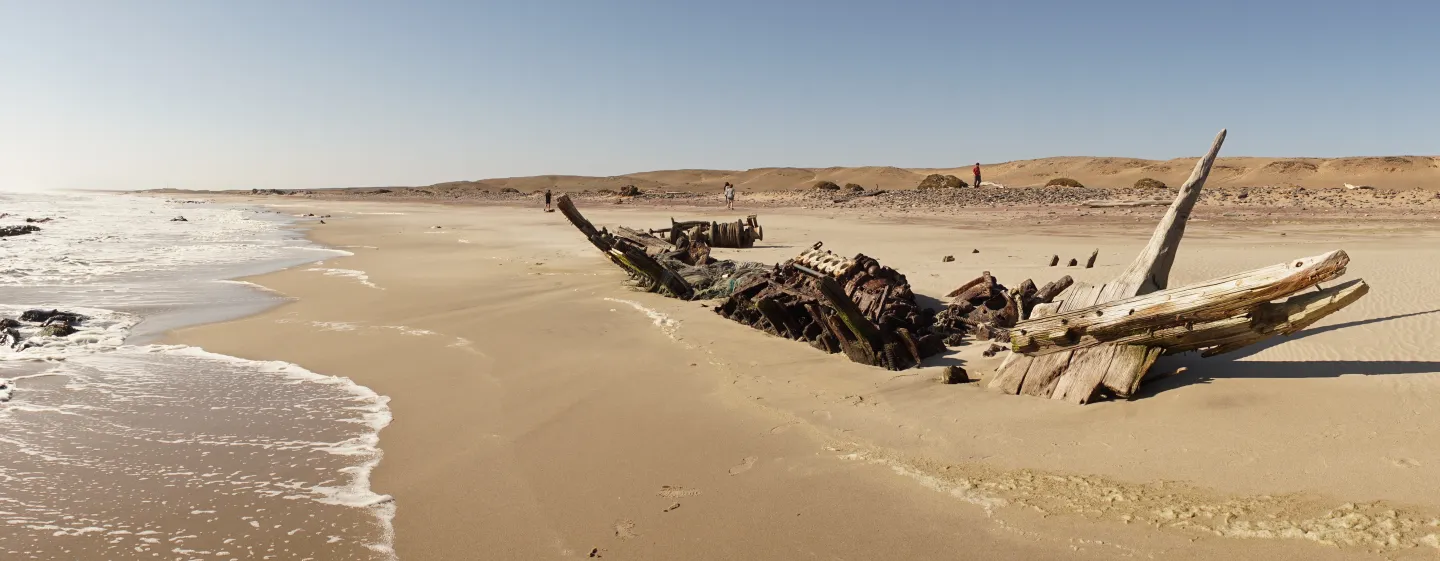
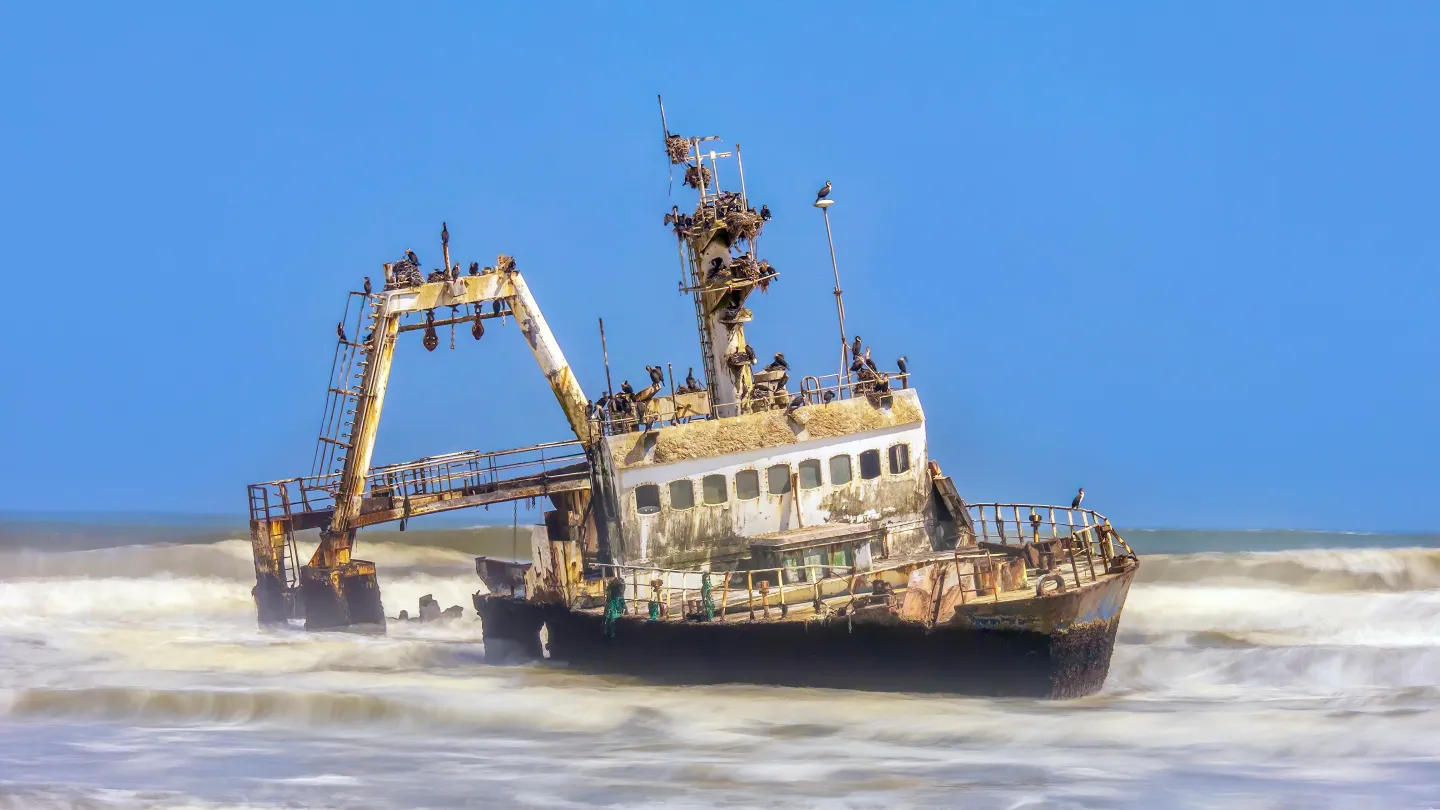
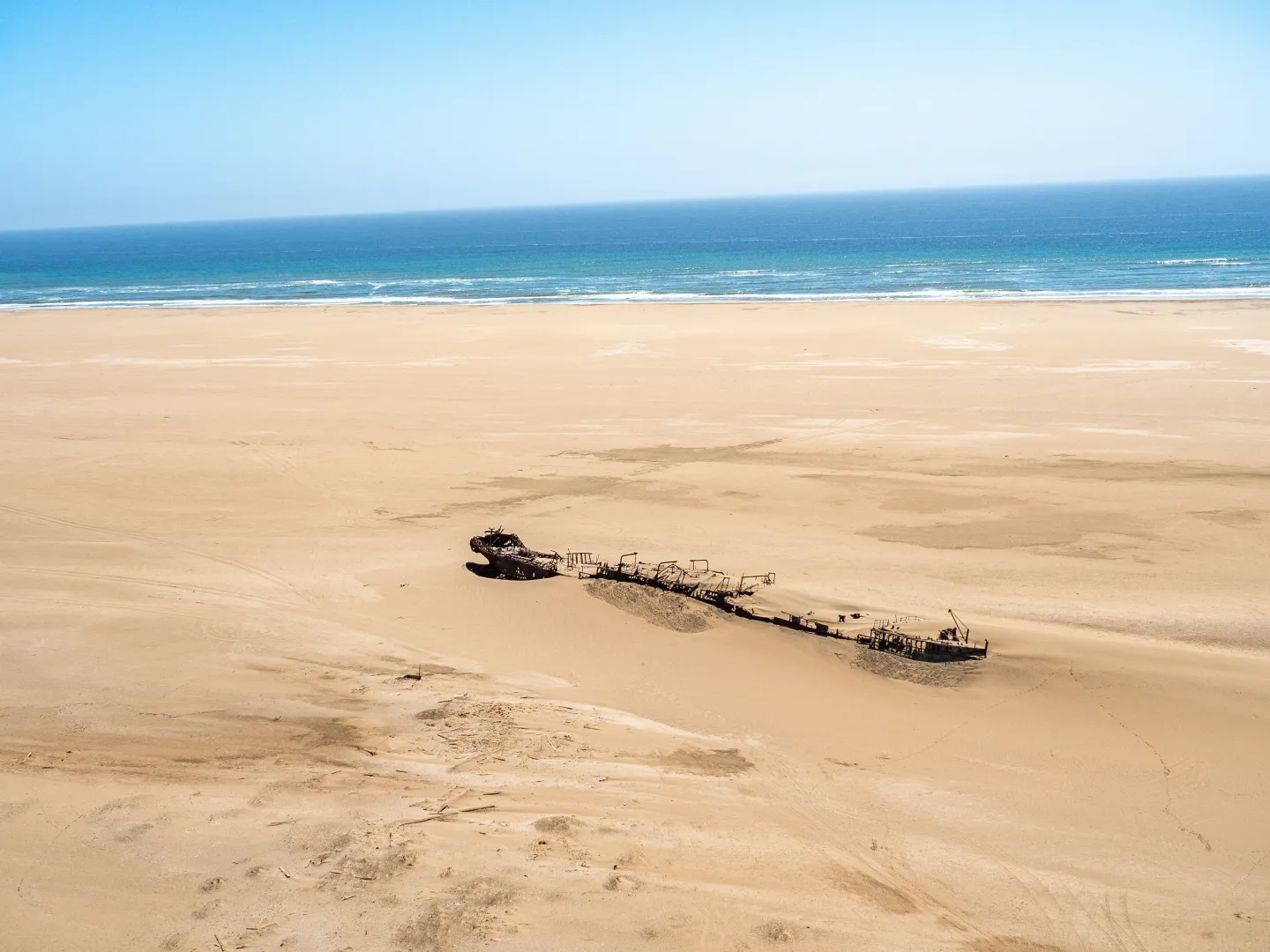
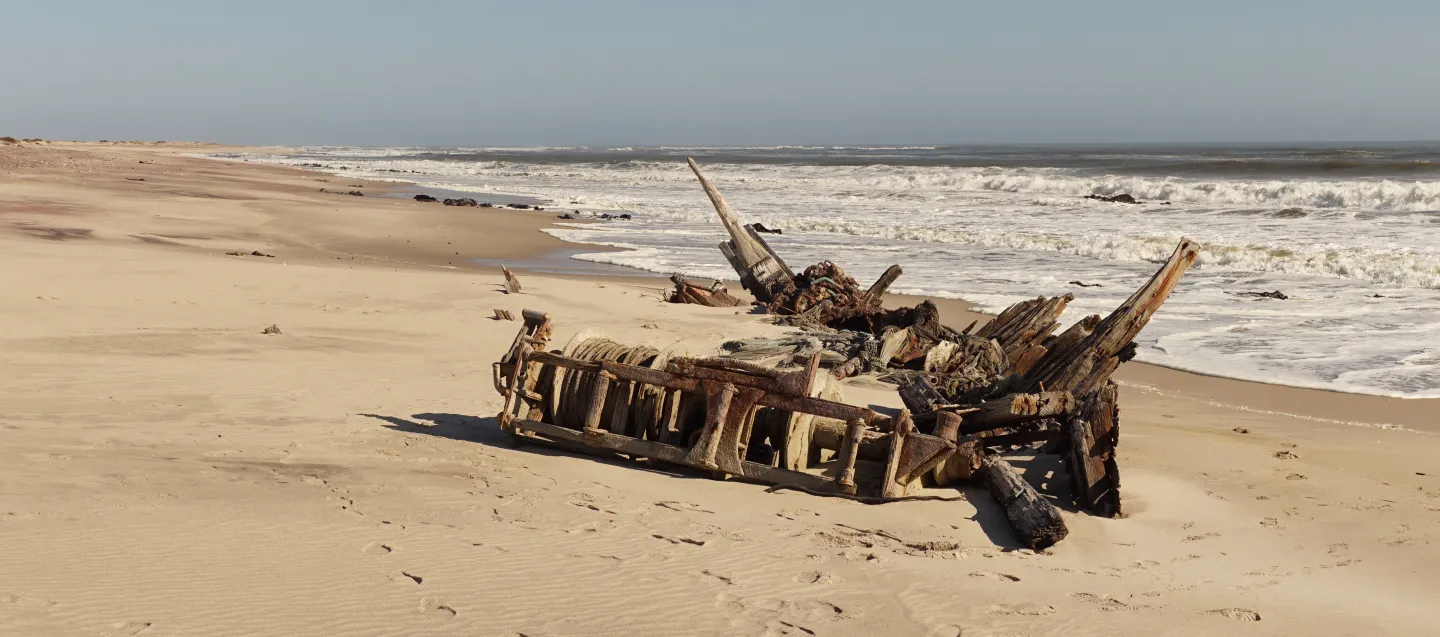
Marsh, the author, apparently inspired by both the bleached whale and seal bones littering the coastline, as well as the disintegrating remains of ships on the shore and hundreds of metres inland – part of the coastline’s treachery is its shifting sands – titled his gripping account of the Dunedin Star rescue Skeleton Coast.
And the name has stuck, and that is how it is reflected on most maps today; it is also preserved today as the Skeleton Coast National Park. But it is not the region’s first name: previously, the San people of the adjacent interior, themselves no strangers to inhospitable landscapes, called it “The Place God Made in Anger”, and fearful Portuguese sailors termed it “The Gates of Hell”.
These are apt names, for there is little to support human survival (leave alone habitation) along the Skeleton Coast, in particular the northern Namibian coastline where the national park is situated.
Precipitation is routinely less than 10mm (0.4in) per year and what moisture there is comes primarily from the thick sea fogs caused by the upwelling of the cold Benguela current that moves up the Namibian coastline.
The life-giving fog
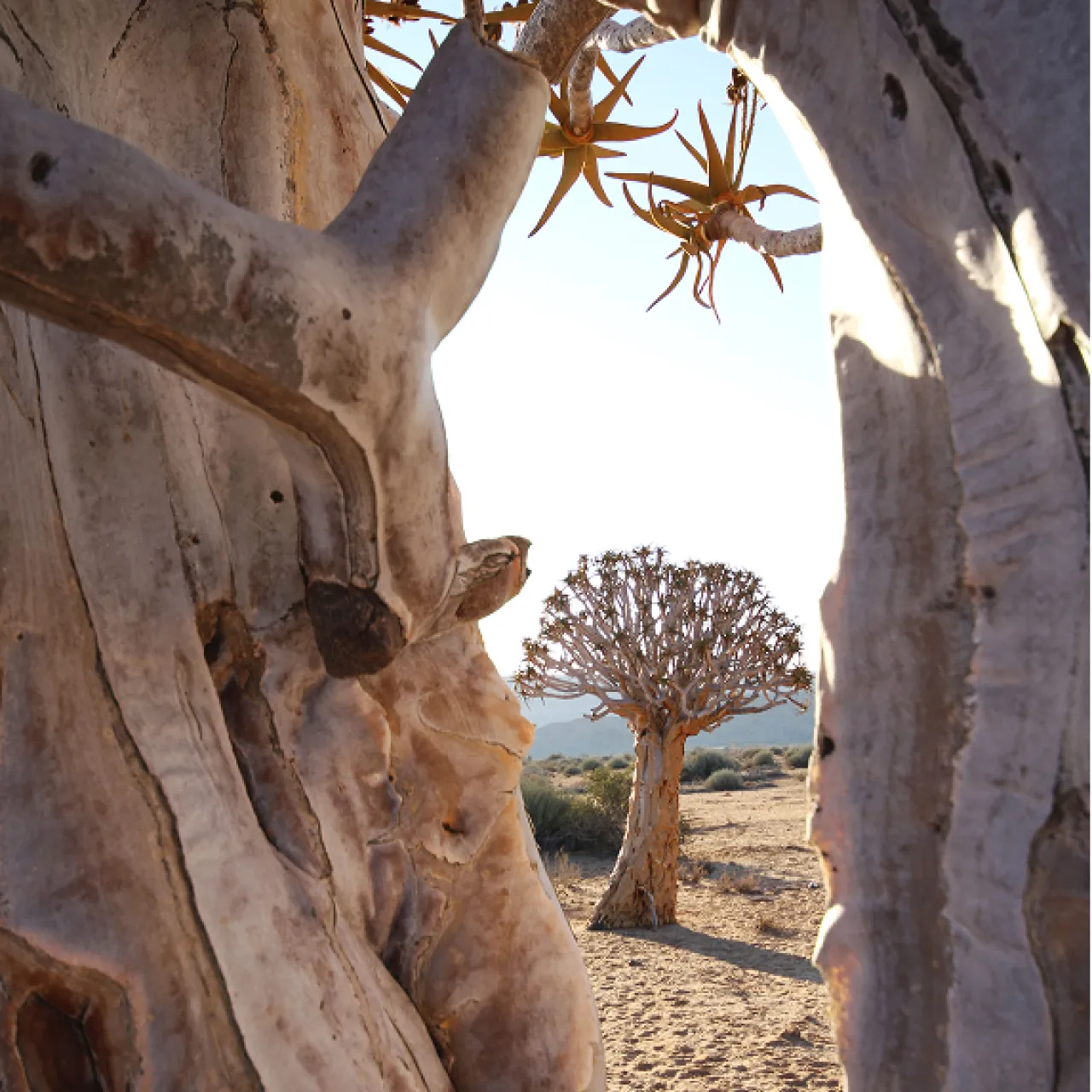
The fog sustains succulent plants, and the droplets it leaves feed invertebrates along with edible scraps blown in from the interior. These invertebrates feed amphibians and reptiles that, in turn, form the foundation of the desert food chain.
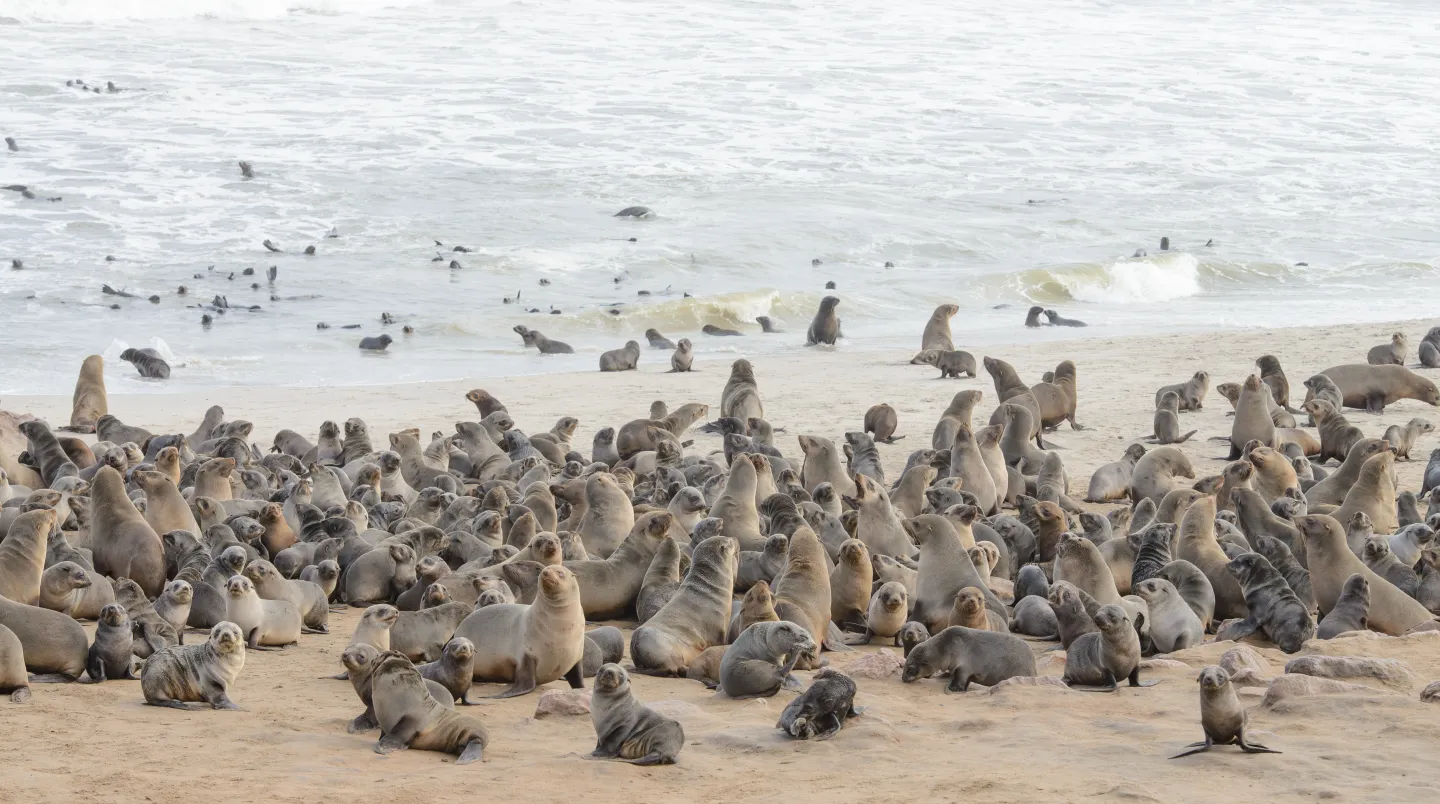
Many larger fauna, including desert-adapted elephants, lions, giraffes, hyenas, gemsbok (oryx), black rhinoceros, baboons, springbok, zebra, black-backed jackal and others, can be found both beachcombing and further inland. Marine species such as Benguela dolphins, humpback whales and orcas can be spotted from the shore, and Cape fur seals can be found in large colonies along the coast.
But for humans, especially before the Second World War, ending up on the coastline was essentially a death sentence: there was no food or water, no shelter and no viable way out. Before the advent of marine engines, it was possible to land boats in the consistently heavy surf – but impossible to get back out to sea. The only way out would be to walk out through the hot, vast Namib Desert.
The waters of the Skeleton Coast are, of course, as treacherous today as they have ever been, and not just close to shore. In fact, in 2018 the Japanese fishing vessel MVF Fukuseki Maru ran aground a full 2km (1.2mi) offshore near Durissa Bay, south of the national park’s southern entrance. Fortunately, all 24 crew members were rescued.
The survivors of the Dunedin Star shipwreck were fortunate to enjoy one advantage, however. Attempts to land boats and rafts with provisions had proven completely unsuccessful in the rough water, and it would take weeks for the police trucks to arrive. But what had saved them was the relatively new technology of aviation: without the crucial supplies dropped regularly to them by the SAAF Venturas, they would not have stood a chance.
Of course, the Skeleton Coast remains a rugged and unforgiving place today, worthy of its forbidding name, and with good reason access is officially restricted. But many may ask, is it safe to visit?
The short answer is yes. It is possible nowadays to visit and explore the entire region with the kind of comfort and ease that the Dunedin Star survivors and their determined, brave rescuers could never have imagined.
There are two operators, both accessible by air, along the Skeleton Coast, offering visitors differing but equally thrilling experiences of this unique part of the world.
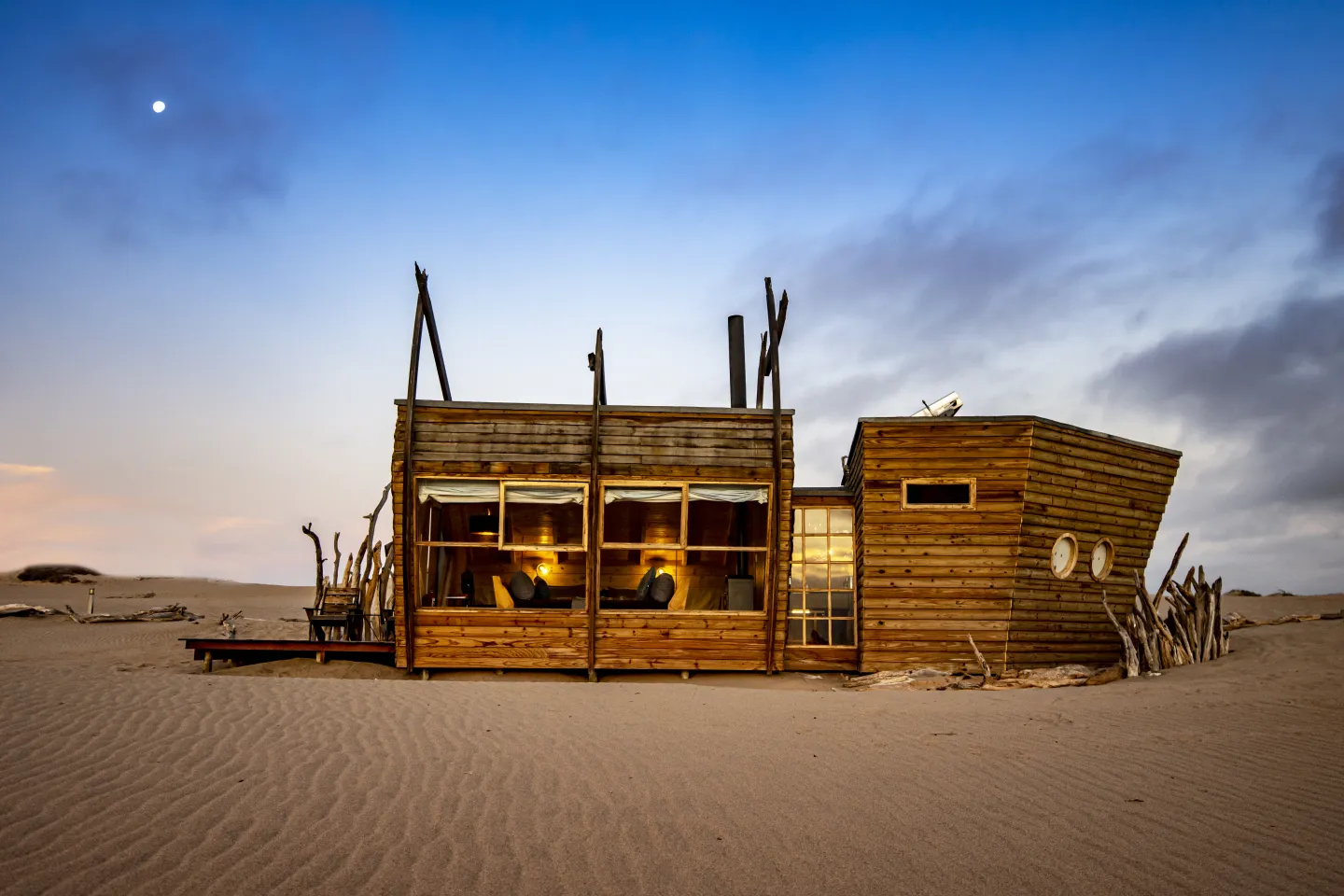
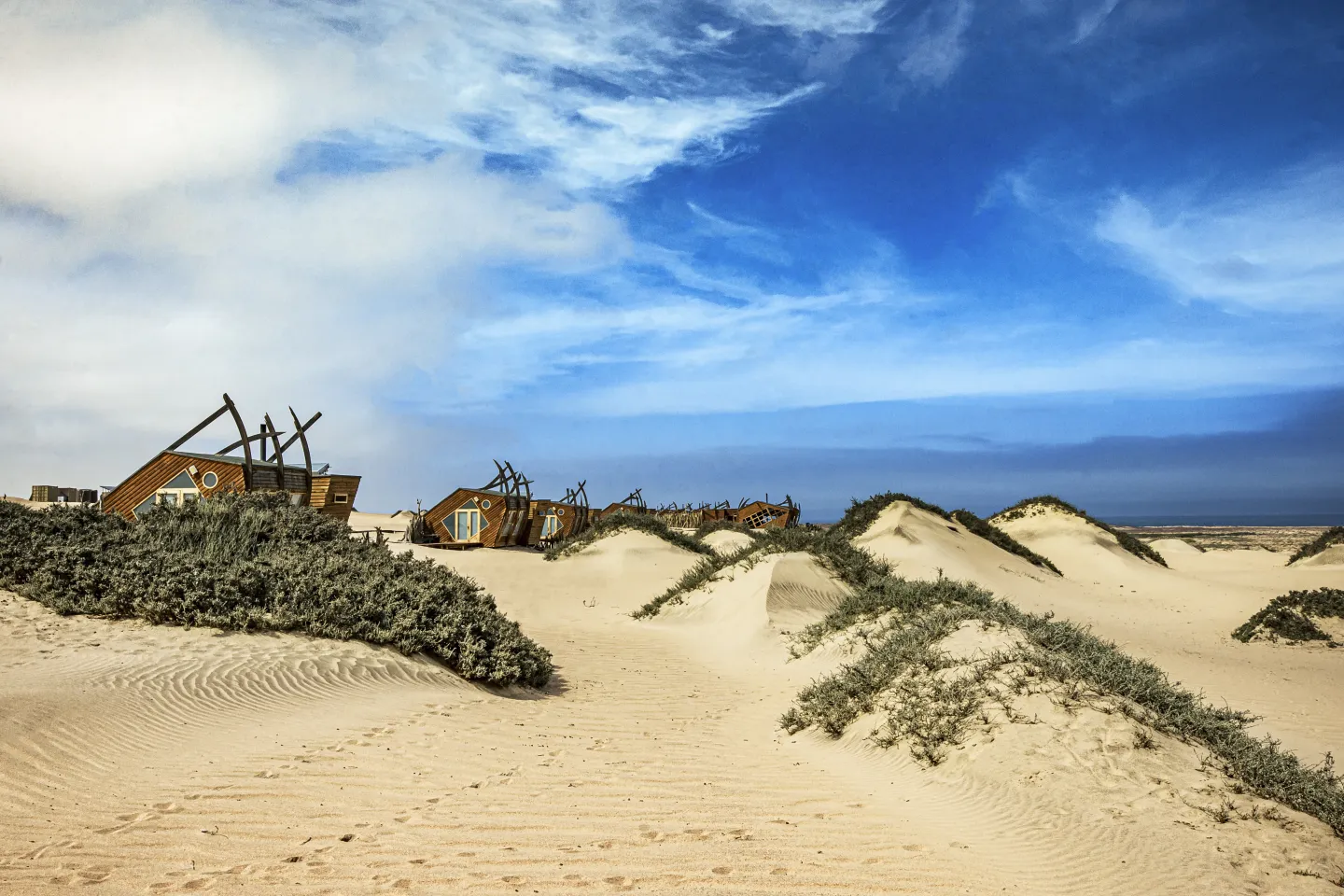
At the spectacular Shipwreck Lodge, situated within the national park at Möwe Bay, to the south of Rocky Point, guests are accommodated in cabins built to look like shipwrecks. The lodge offers shoreline tours, sunset dune drives, excursions along the Hoarusib River bed, quad biking and sandboarding.
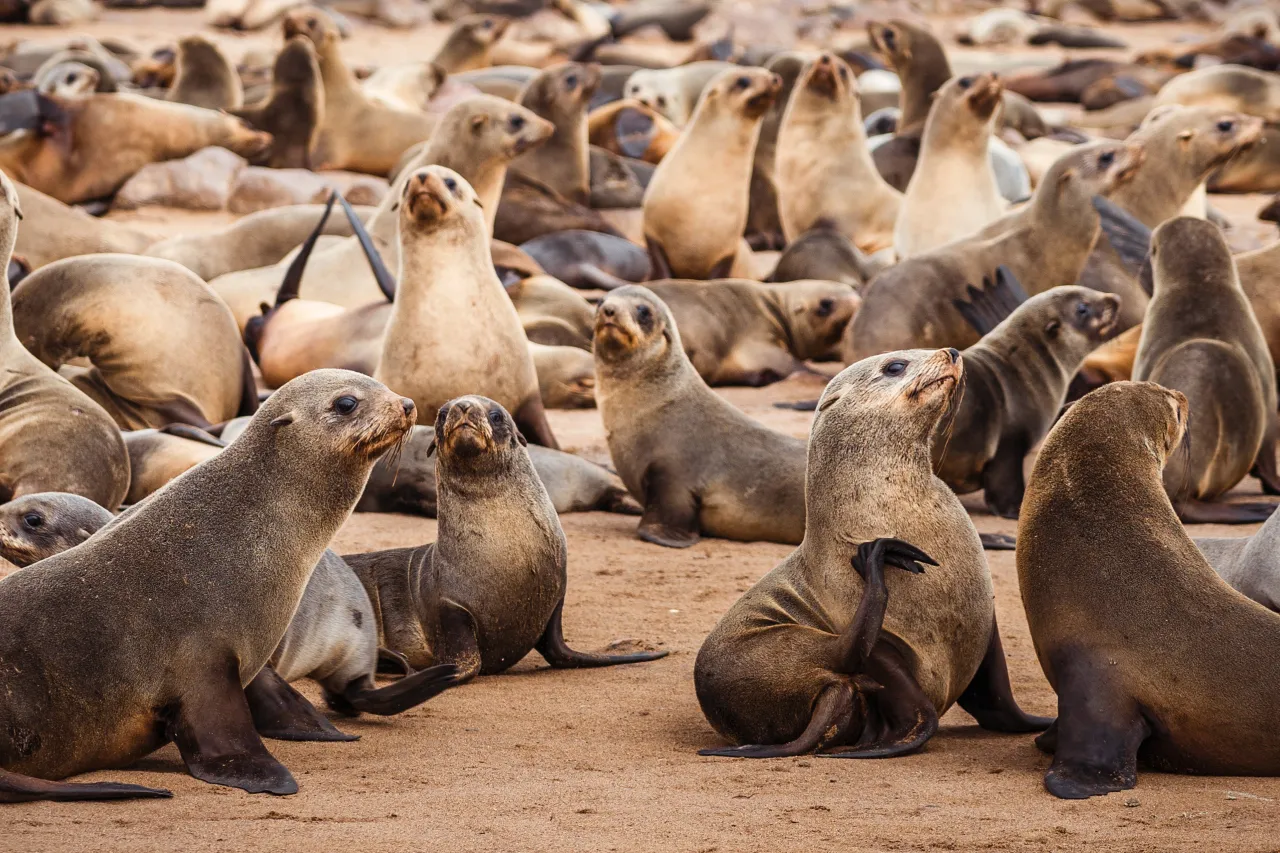
Seals and desert-adapted fauna
Its shoreline tour takes in the fur seal colony at Möwe Bay, and such wrecks as the fishing vessel Suiderkruis and wooden ship Karimona, and even remnants of the Ventura bomber aircraft.
Situated just outside the national park, to the east of Möwe Bay, is Hoanib Skeleton Coast Camp, an ultra-luxurious tented camp that was named the best in Namibia at the 2025 World Travel Awards.
It offers excursions to the coast, and also strongly focuses on abundant desert-adapted wildlife, including lions, elephants, giraffes, oryxes and hyenas. Through links with three local conservancies, it supports local communities and environmental protection.
So what does the Skeleton Coast provide the adventurous traveller?
Much more than one would think, actually. The Skeleton Coast offers desert experiences like no other: wide, open spaces and a vast sky, plentiful wildlife and fascinating history, and the kind of silence and solitude that exists almost nowhere else on Earth.
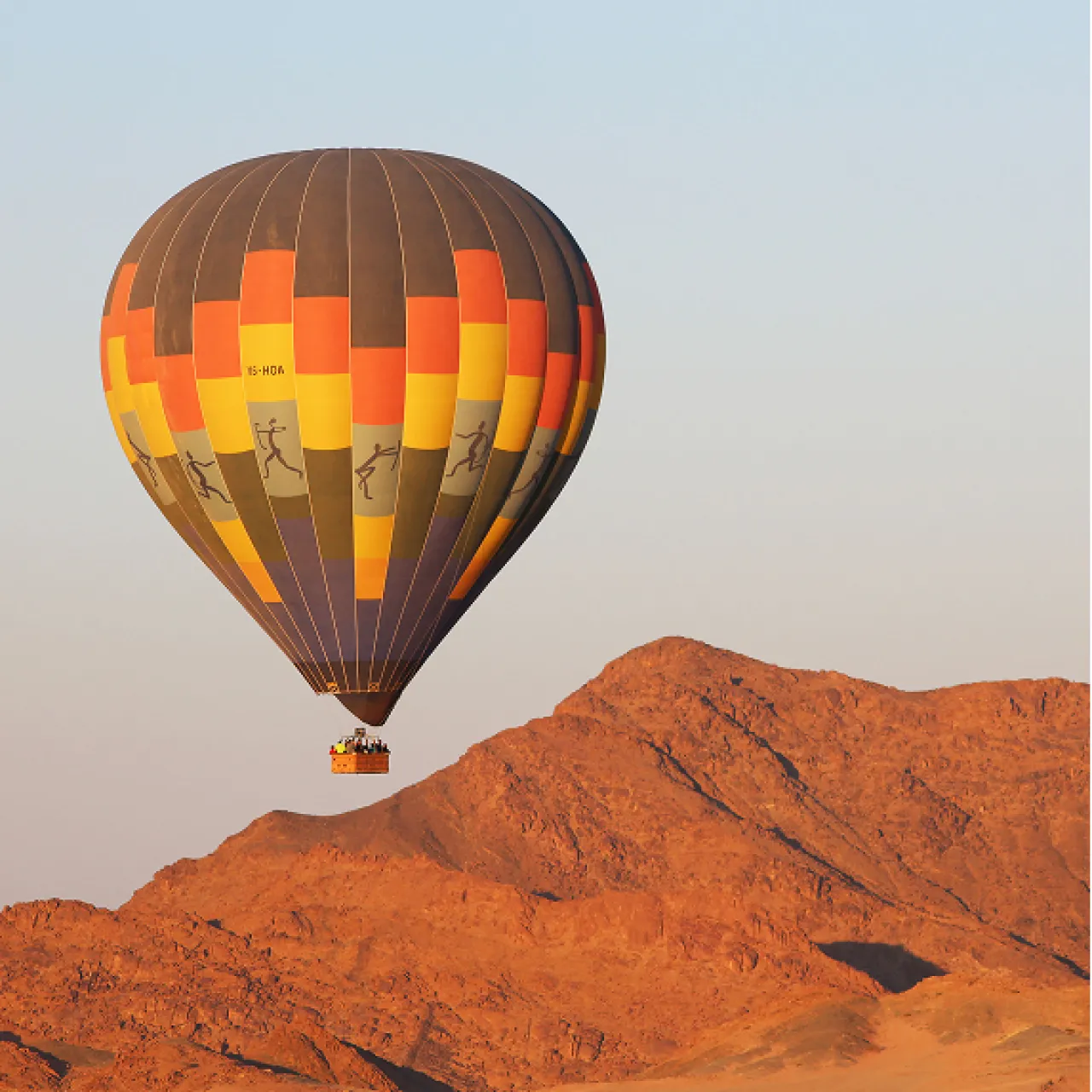
Flying low over dunes and dry riverbeds, visitors gain a sense of scale that is difficult to grasp from the ground – a vastness defined by silence and space rather than mere spectacle.
Above all, it provides visitors with a profound journey into a desolate, surreal landscape, one of the world’s last great wildernesses.
If the mystery and vast wilderness of Namibia’s Skeleton Coast have captured your imagination, our Travel Architects can help you experience it for yourself.

Related gallery