There’s only one place on Earth to see the Big Seven
There’s only one place on Earth to see the Big Seven
| by Willem Steenkamp
Africa’s Big Five species are well known: the lion, elephant, rhinoceros, buffalo and leopard – those animals big-game hunters of yore regarded as the most dangerous to pursue. Add to them two of the oceans’ most impressive species, and you have … the Big Seven.
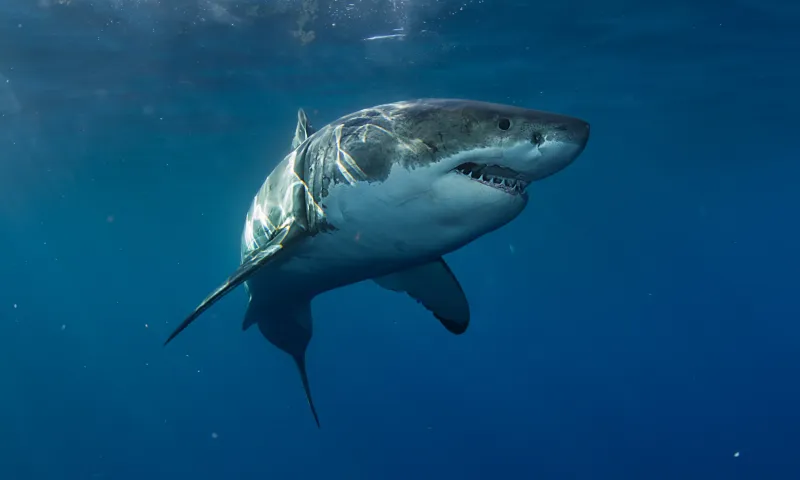
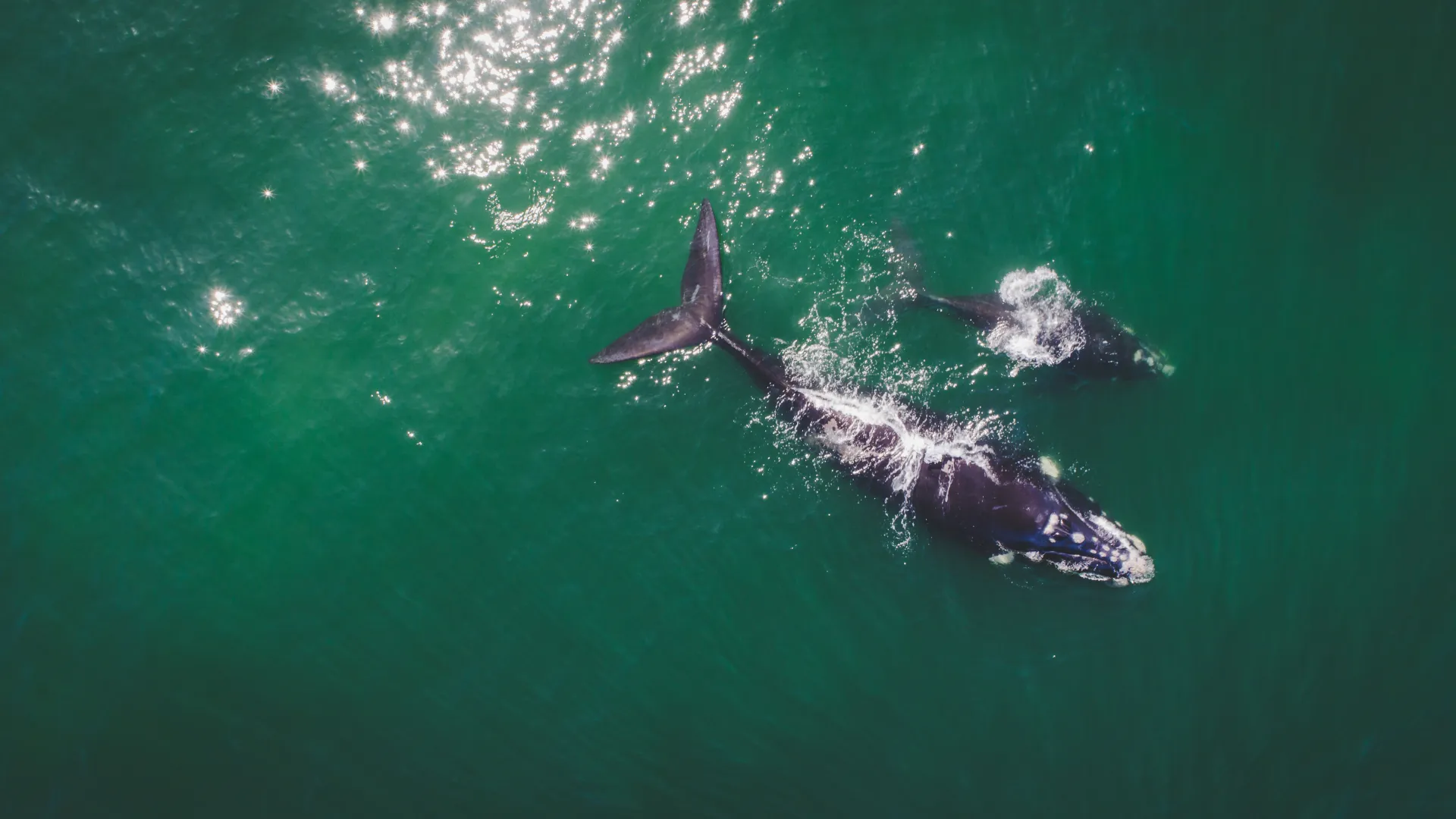
These two species are the southern right whale (in the days of whaling, right whales were named as such because they were the “right” ones to kill) and the fearsome great white shark, one of the sea’s apex predators.
Game reserves and national parks featuring the Big Five are dotted all over sub-Saharan Africa, and these magnificent animals are significant drawcards for visitors to the continent. But there is only one place in the world where one can see the Big Seven: the Addo Elephant National Park, in South Africa’s Eastern Cape province.
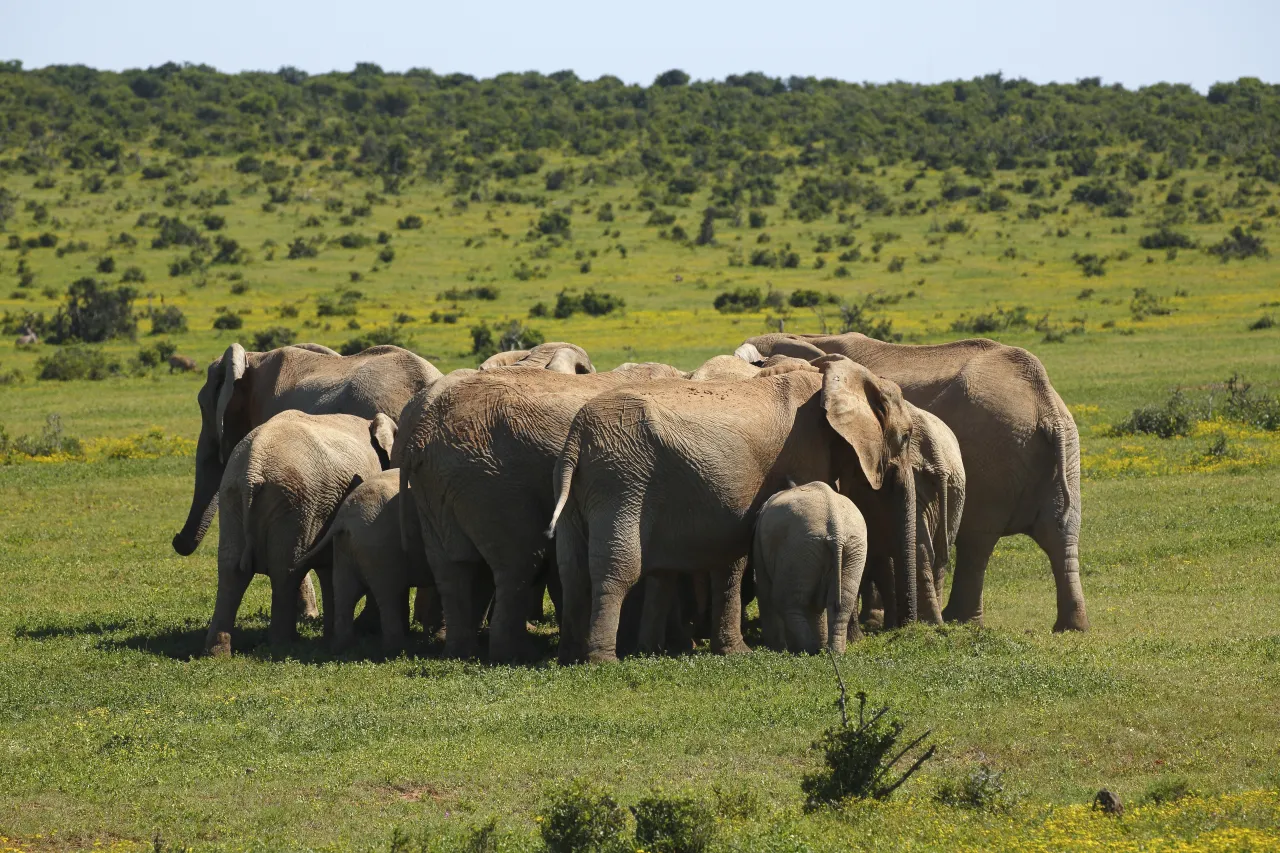
Addo’s a fairly rare thing when it comes to national parks: it’s very close to a city. Situated a half-hour’s drive from Gqeberha (formerly Port Elizabeth), it was established in 1931 with the initial aim of (as its name suggests) preserving and re-establishing the African elephant, which had been hunted out in the region as a nuisance to farmers.
Over the years the park has grown substantially, from an initial 2 000ha (4 950 acres) to 164 000ha (395 000 acres) today; the initial group of 11 elephants numbers more than 600 today, making Addo’s one of the densest elephant populations in Africa.
So much to see
But there’s so much more to see than the elephants, magnificent as they are. Over the years the park has been stocked with many other species, including the elephant’s four Big Five colleagues: the very rare black rhino, lion, buffalo and leopard. (Read more about the Big Five in our fascinating story, which you can find here.)
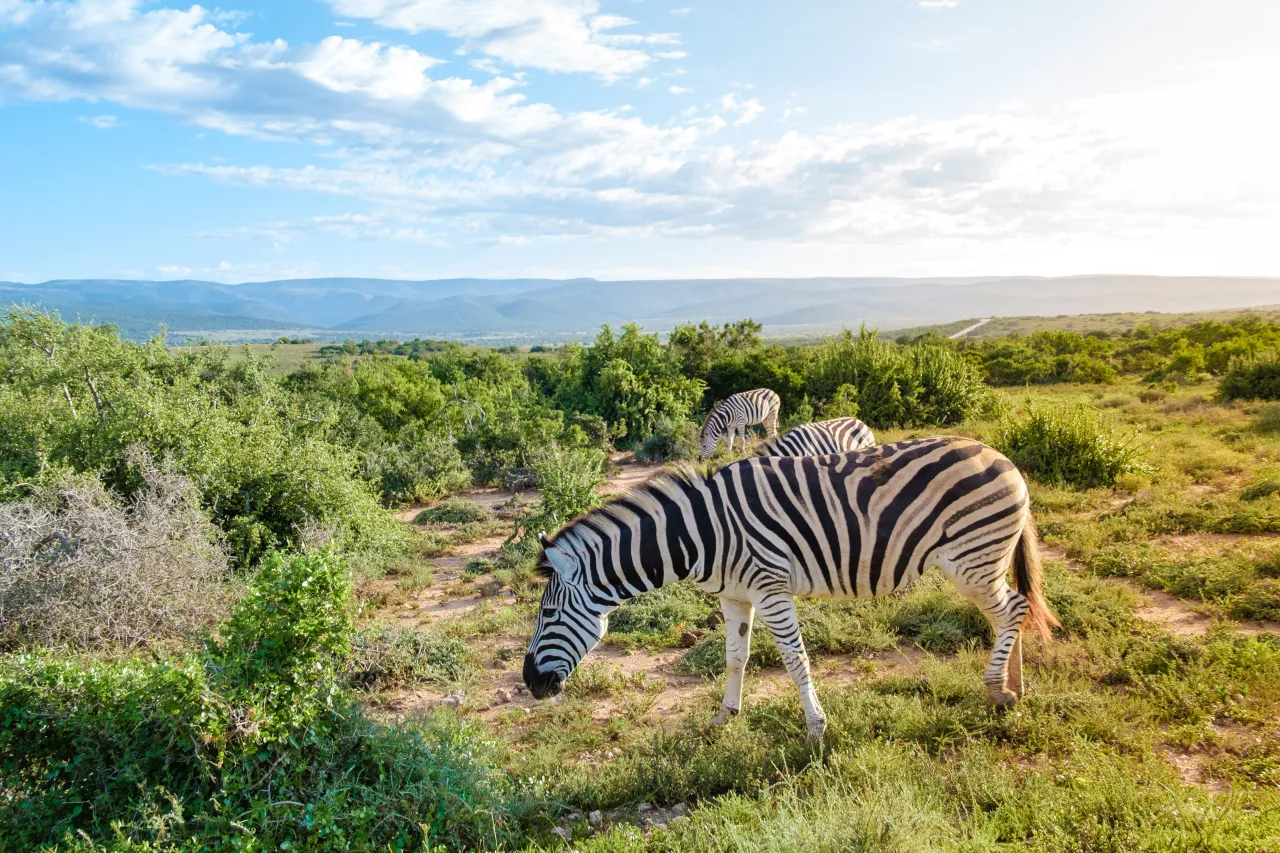
Other introduced species include the spotted hyena, eland, kudu, red hartebeest, hippopotamus, Burchell’s zebra and warthog. And for those who love entomology, the park is home to the highly endangered, endemic flightless dung beetle. It is a treat to see these industrious creatures rolling dung balls; happily for them, they prefer elephant and buffalo dung, which of course is in plentiful supply.
Addo also boasts great floral diversity, incorporating five of South Africa’s nine plant biomes: Albany thicket, fynbos, forest, Nama Karoo and Indian Ocean Coastal Belt. This means that in the park one can encounter millennium-old cycads, slopes coloured pastel by South Africa’s unique proteas (the country’s national flower), spiny Noorsveld succulents, dense, ancient thickets and grassy plains, not to mention remarkable coastal dunes and coastal grassy plains.
Marine protected area
But what truly sets the Addo Elephant National Park apart from its peers is that it’s not only a terrestrial facility. In 2004, the Bird Island Marine Protected Area (MPA) was created offshore, and the next year the park’s conservancy was extended to include the Bird Island and St Croix Island groups.
This changed again in 2019 with the creation of the Addo Elephant National Park MPA, which incorporated the Bird Island MPA, as part of South Africa’s national efforts to protect marine resources within its economic exclusion zone. This was done in conjunction with local communities, allowing for both environmental protection and economic sustainability.
This is what makes Addo so special. Every year about 2 500 southern right whales gather along the South African coastline to calf, and Addo is one of the best places to observe these huge marine mammals up close from July to December.
And, as any local will tell you, there are great white sharks year-round, with a Cape fur seal colony nearby to keep them well fed. In 1991, South Africa was the first country in the world to legally protect these apex predators, when it implemented a total ban on hunting or killing them. In this MPA, it is possible to observe great whites from boats and diving cages.
Southern right whale
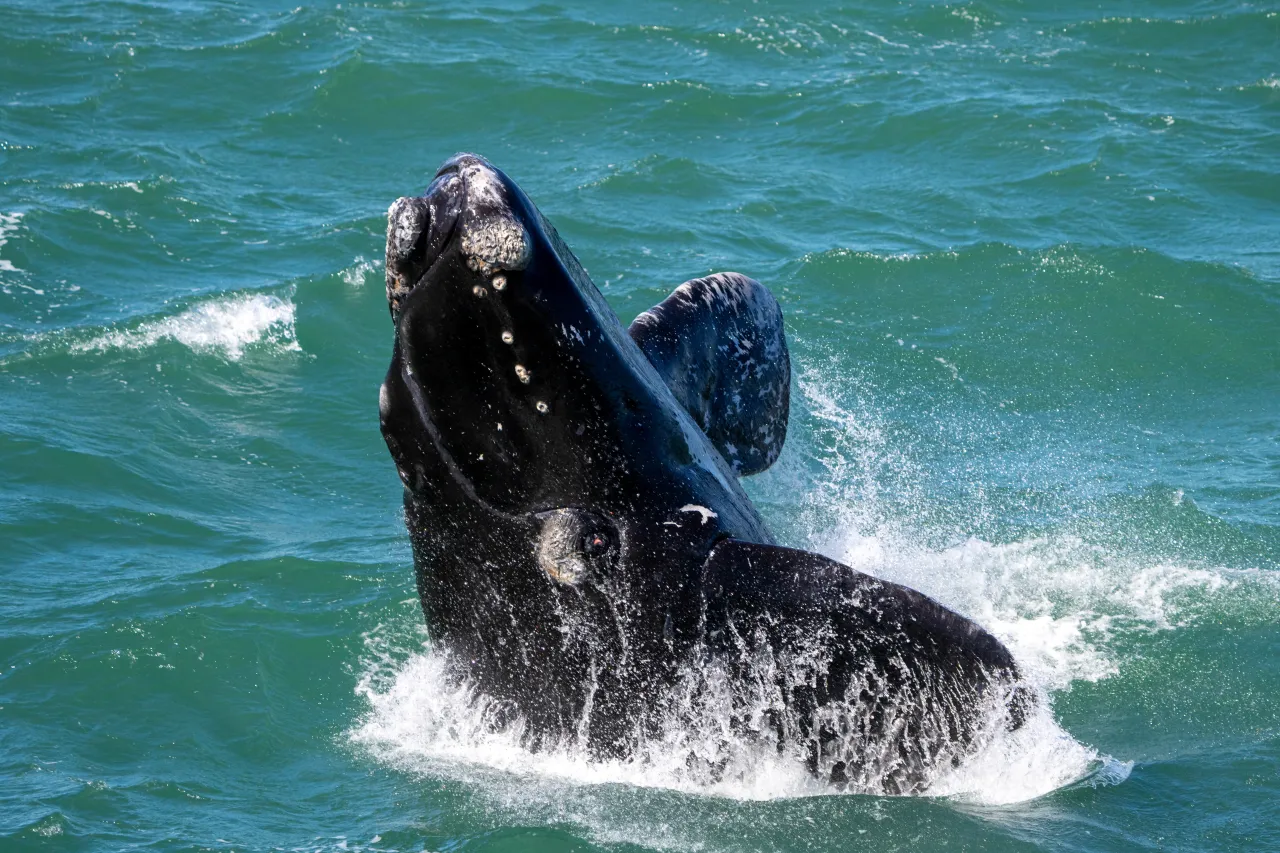
The southern right whale (Eubalaena australis) is similar in appearance to its northern hemisphere counterparts, including a broad back lacking a dorsal fin, a long arching mouth that starts above its eye, and the callosities (white lumps) on its head.
And it’s big: adult females easily reach 15m (47ft) in length, and weigh up to 47 tonnes (although much larger individuals have been recorded). Its pectoral fin grows to 1.7m (5.6ft). In its jaws are up to 270 baleen plates, with which it filters seawater for tiny zooplankton, usually krill.
Slow to reproduce – females typically return from the Southern Ocean to their calving grounds every three years – it is believed that a southern right whale reaches a median age of 73 years, but some survive to a respectable 130 years. Which is why its conservation is so important: hunted almost to extinction, it’s taken almost 90 years for its population to grow to more than 13 000 individuals today.
Curious and playful, southern right whales engage in a variety of typical behaviours such as spyhopping (peeking above the surface), breaching and lobtailing (when they smack the surface with their tails). But one thing only they do, particularly off South Africa and Argentina, is called tail sailing, when they hold their tails above the surface to catch the wind. They often hold this position for long periods.
Great white shark
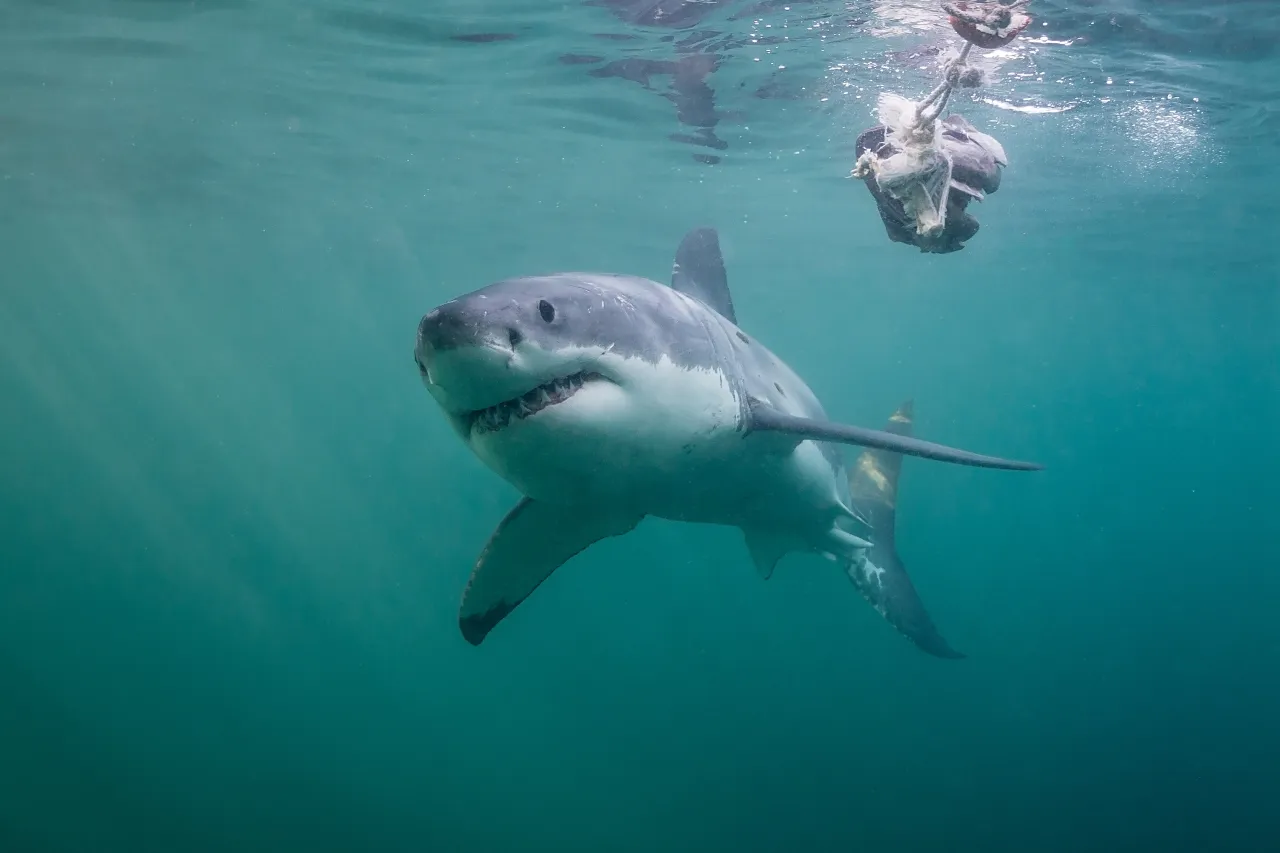
The great white shark (Carcharodon carcharias) might have “sharp-toothed shark” for its binomial name, but it’s historically had a bad rep for being a killing machine, particularly following the 1970s novel and movie Jaws. The book’s writer, Peter Benchley, has since expressed his enormous regret at unfairly besmirching the great white’s name.
That said, the great white is considered to be the world’s largest macropredatory shark and fish, growing to almost 6m (almost 20ft) in length. It feeds mainly on seals, fish (including other sharks) and cephalopods. While the causes of shark attacks on humans remain a matter of intensive study and speculation, it is not correct to say that it preys on us.
Because it’s partially warm-blooded, the great white can tolerate colder water better than other shark species. Because of this, its global distribution is huge: around South Africa, Australia, the Pacific, the Indian Ocean, the Mediterranean Sea and even the icy North Atlantic.
While it is an apex predator, it does have one known foe: the formidable orca. Orcas love great whites for their fatty, energy-rich livers, which can comprise up to a quarter of the shark’s body; they will typically kill the shark and eat only its liver. (This is why it is thought great whites have all but vanished from South Africa’s False Bay in recent years: the appearance of a pair of orcas, dubbed Port and Starboard for the way their dorsal fins flop.)
African penguin (and more)
But it’s not just the southern rights and great whites that are marine drawcards at Addo. Humpback, Bryde’s and minke whales, as well as many dolphins, can also be observed. Twitchers will also love the seabird species, including the plentiful Cape gannet (there is a large colony on Bird Island), and the endangered roseate tern and black oystercatcher.
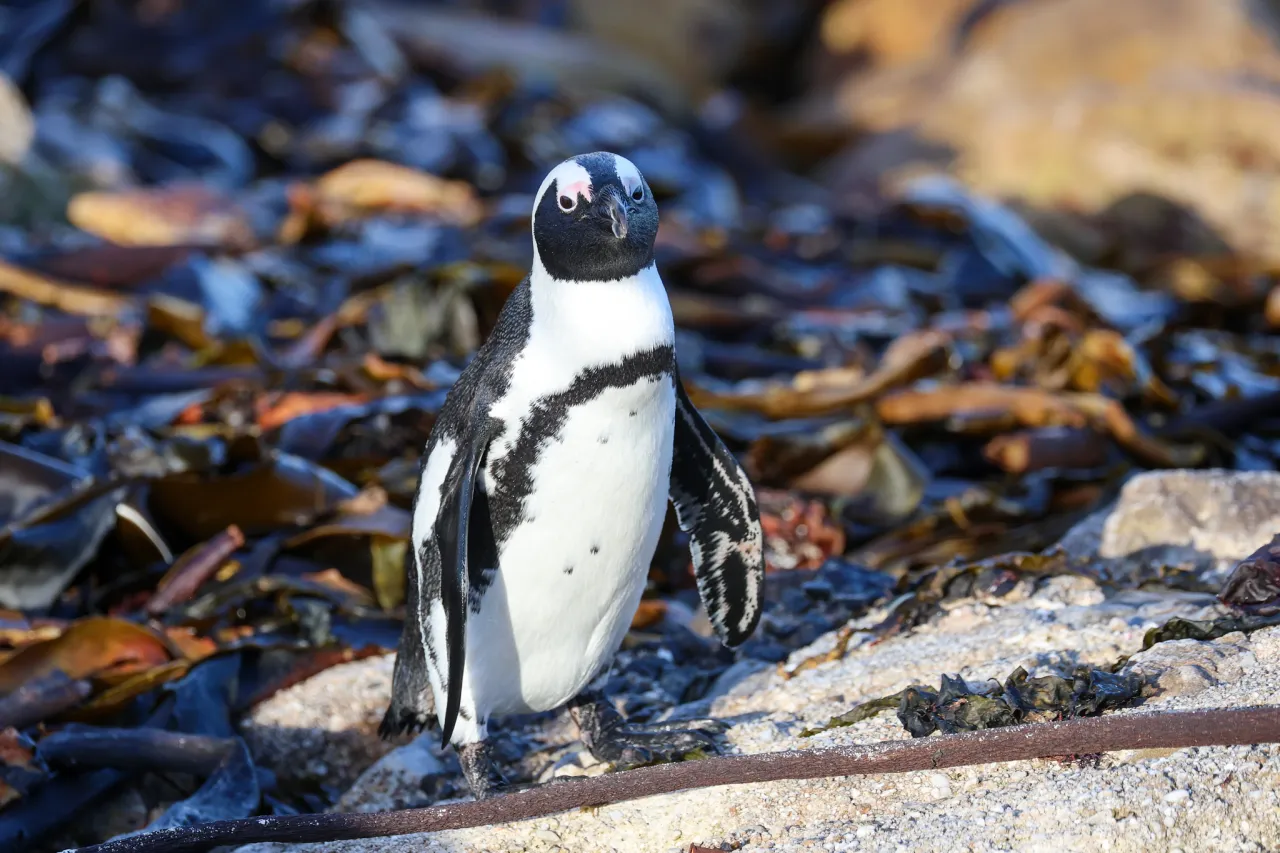
St Croix and Bird Islands, respectively, also house the largest and second-largest remaining African penguin colonies, housing about 30% of this species, which was previously known as the jackass penguin for the distinctive braying sound it makes.
These two breeding grounds are vital for this critically endangered bird, the only penguin species to breed in Africa. There are fewer than 10 000 breeding pairs left, and its numbers continue to dwindle despite desperate efforts to stave off its extinction.
Inspired by this story? Let the Your Africa team turn it into a real experience.